
This site is reader-supported. As an Amazon Associate we earn from qualifying purchases. When you buy through links on this page, we may receive an affiliate commission at no additional cost to you. Our editorial picks are independent of commercial relationships.
Why Paper Choice Matters for Fountain Pens
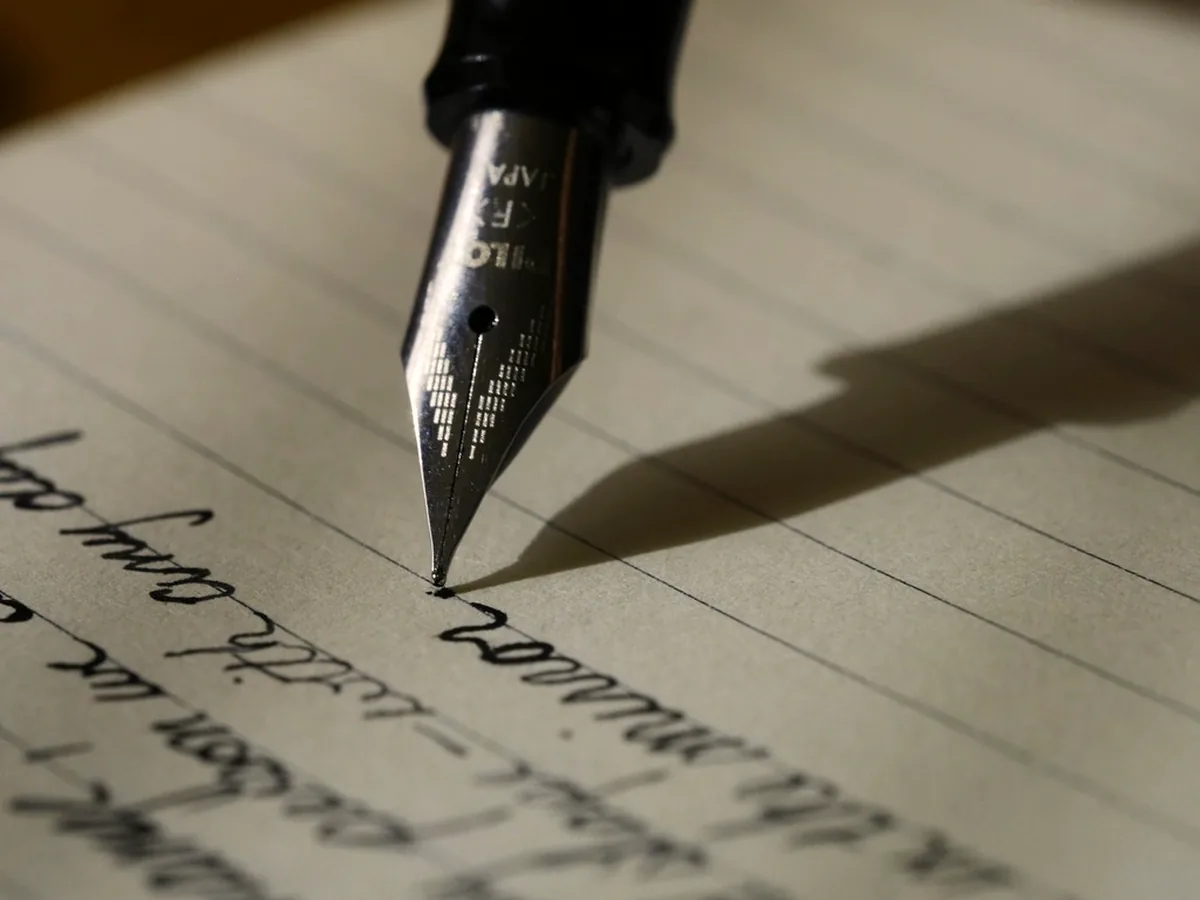
A fountain pen deposits ink differently than a ballpoint or gel pen. Instead of a thick, oil-based paste that sits on the paper’s surface and dries quickly, a fountain pen delivers water-based ink that soaks into the page. How the paper responds to that ink determines whether your writing looks sharp and vivid or ends up feathered, ghosted, or blurred.
Standard notebook paper — the kind used in everyday composition books, spiral-bound pads, and most office supplies — is made with a relatively open fiber structure. Fountain pen ink spreads along those fibers before it dries, producing ragged, fuzzy line edges where clean strokes should be. With a wetter nib or a heavily saturated ink, the problem escalates: the ink can push through the page entirely and make the reverse side unusable.
Fountain-pen-friendly paper addresses both problems through tighter fiber structure, higher paper weight, or both. The result, when paper and pen match well, is noticeably different: sharp lines that hold their edges, vivid ink colors, and subtle characteristics like shading — the natural variation in ink density as the nib lifts — that cheap paper simply wastes.
Choosing the right notebook is not difficult once you know what to look for, and a good notebook makes a meaningful difference in how enjoyable fountain pen writing feels day to day.
What to Look for in a Fountain-Pen-Friendly Notebook
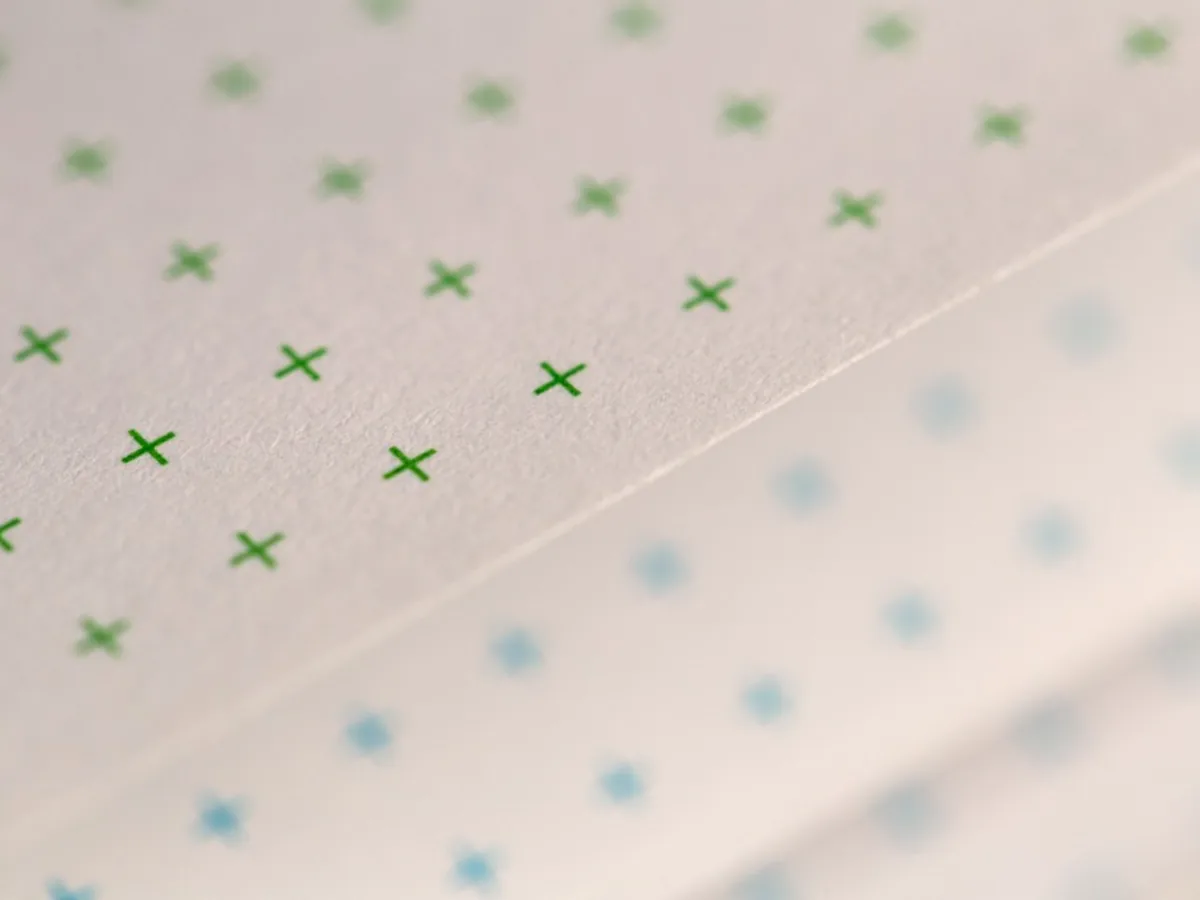
A few measurable properties predict how a notebook will handle fountain pen ink.
Paper weight is measured in grams per square meter (gsm). Heavier paper generally handles ink better because the denser fiber packing holds ink at the surface longer before it spreads. Notebooks designed for fountain pens typically start at 80gsm. Below that, most papers struggle unless they are specifically engineered to handle wet inks.
Surface smoothness matters as much as weight. Smooth paper keeps ink on the surface where it can dry cleanly and sharply. Rough or toothy paper draws ink down into the fibers, promoting feathering even on heavier stock. The best fountain-pen papers feel noticeably different from standard notebook pages — there is a smooth, almost satiny quality to papers like Clairefontaine or Midori MD that is apparent on first touch.
Ghosting and bleed-through are the practical concerns. Ghosting is the faint visible impression of writing from the opposite side of a page — visible under certain lighting but not a barrier to using both sides. Bleed-through is worse: ink completely penetrating the page makes the reverse side unusable. Fountain-pen-specific papers aim to prevent bleed-through entirely; ghosting is harder to eliminate on thinner papers.
Dry time varies between papers and isn’t usually listed as a specification. Smooth papers tend to dry more slowly because the ink sits on the surface rather than being absorbed into the fibers. For most writers this is a minor consideration, but those who drag their hand across fresh writing need to account for it, especially on very smooth papers.
Ink behavior: certain papers bring out characteristics of fountain pen ink that ordinary paper obscures. Ink shading — the lighter-to-darker gradient in a single stroke as nib pressure and the ink supply vary — shows much more clearly on smooth, fountain-pen-friendly paper. Ink sheen, the reflective metallic quality some inks display under raking light, appears almost exclusively on very smooth paper. These qualities are not essential features, but they are part of what makes fountain pen writing distinctive.
Best Everyday Notebooks for Fountain Pens
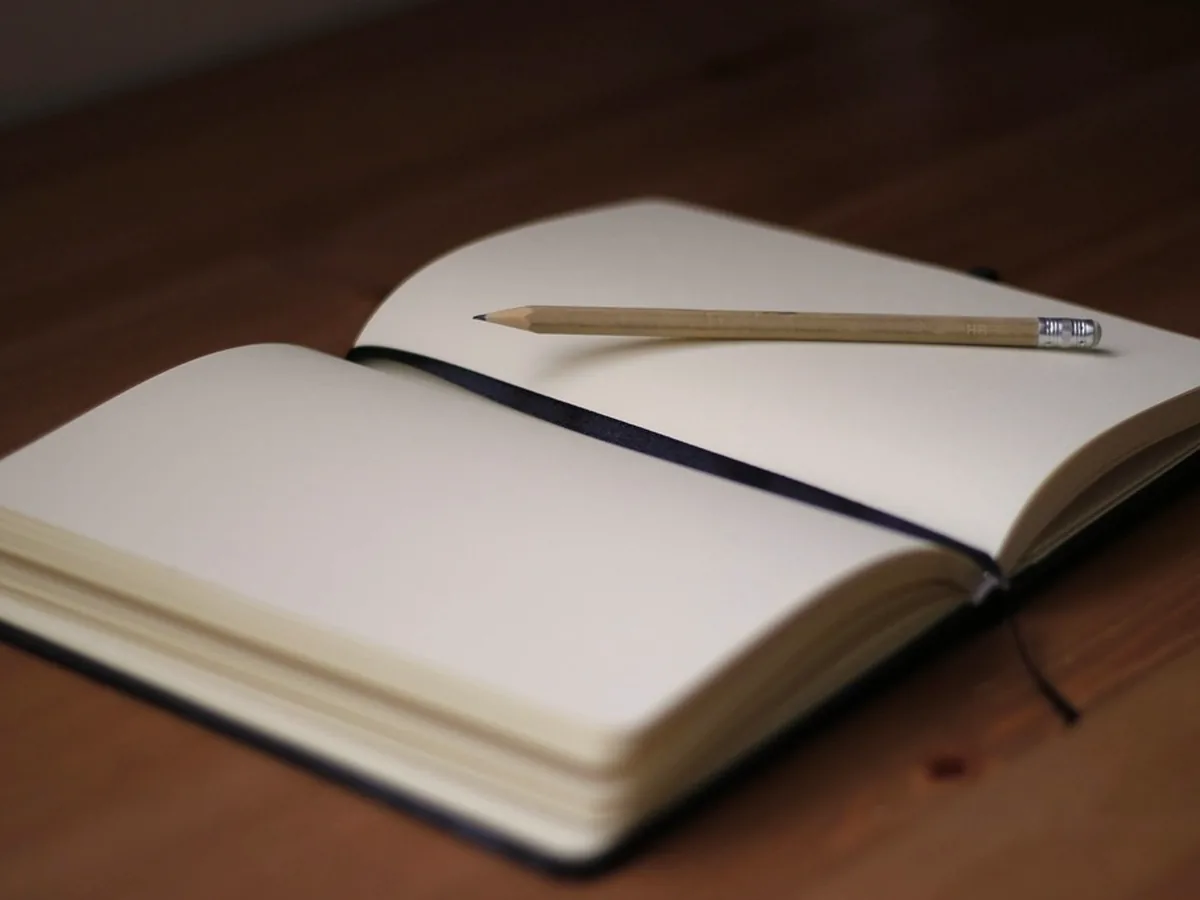
Rhodia is the most commonly recommended starting notebook for fountain pen writers, and the recommendation holds up. The French brand’s notepads use 80gsm white paper with a smooth finish that handles most fountain pen inks cleanly, including moderately wet nibs and standard blue, black, and blue-black inks. Rhodia’s most popular formats — the staple-bound A5 No. 16 and the larger A4 No. 18 — are affordable and widely stocked at fountain pen retailers.
The Rhodia Webnotebook is the bound version: the same paper in a hardcover, thread-sewn format that lays flat reliably. A notebook that springs back toward closed is frustrating with a fountain pen because an unexpected shift in position can drag the barrel through wet ink. The Webnotebook is available in A5 and A6, in ruled, dotted, and blank options.
Clairefontaine makes paper that many fountain pen users describe as the smoothest easily available. The brand’s 90gsm paper has a texture that feels distinctly satiny compared to Rhodia, and fountain pen inks move across it with less resistance. The Clairefontaine Triomphe writing pads and Age Bag notebooks are popular for handwriting practice and correspondence where the writing itself is the point.
The tradeoff: Clairefontaine’s smoothness means ink takes somewhat longer to dry. Very wet nibs and broad stub nibs may smear if the hand or blotter contacts a freshly-written word within the first thirty to sixty seconds. For writers who value beautiful pen feel and vivid ink color over quick drying, Clairefontaine is exceptional.
Leuchtturm1917 deserves mention because it is the dominant bullet-journaling notebook, and many people reach for it as a default. Its 80gsm paper performs adequately with fine nibs and lighter, drier inks. With wet or medium-to-broad nibs, ghosting appears on the reverse side, and bleed-through is possible with heavily saturated inks. Leuchtturm1917 is better than most mass-market notebooks but not in the same category as Rhodia or Clairefontaine for serious fountain pen use.
Premium Japanese Paper Options
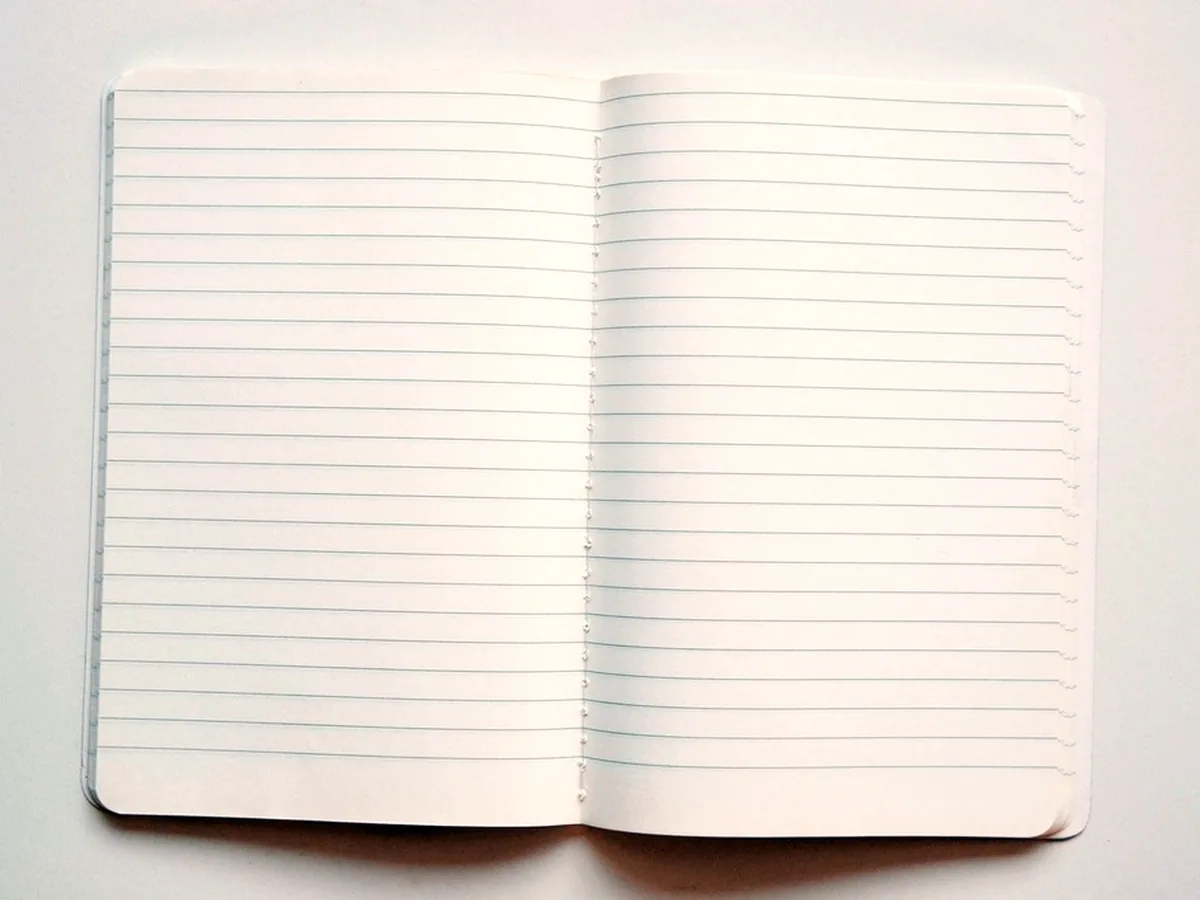
Japan has a strong tradition of premium paper manufacturing, and several Japanese paper brands have earned devoted fountain pen followings.
Midori MD Paper is used in the Midori MD Notebook line. The paper has a distinctive slightly cream tone and an unusually smooth texture that differs from both Rhodia and Clairefontaine — it has a gentle warmth that complements inks with brown, sepia, or warm-grey tones. Ink shading shows clearly on Midori MD. The A5 Midori MD Notebook is available in ruled, dot-grid, and blank variants; all use the same paper.
Midori MD paper dries at a reasonable pace despite its smoothness — faster than Clairefontaine, slower than average for uncoated paper — which makes it well-suited to daily journaling and letter writing. Ghosting is minimal at fine-to-medium nib widths. The notebooks are thread-sewn and lay flat, and the flexible paper covers give them a portable, light character that hardback alternatives lack.
Life L Notebooks use Japanese paper with a strong reputation among fountain pen writers. Life L paper has a smooth, slightly cream character comparable in some ways to Midori MD, and it handles fountain pen inks with minimal feathering and good ghosting resistance. Life L notebooks are less widely distributed outside Japan than Rhodia or Leuchtturm1917, but they are available from fountain pen specialty retailers online and reward seeking out.
Stalogy 365 Notebooks offer thin 80gsm paper in a year-dated planner format that many writers use as a daily journal. Despite the modest weight, Stalogy paper performs well with most fountain pen inks at fine and medium nib widths. Ghosting exists but is manageable; bleed-through with standard inks is uncommon. The neutral design suits both work and personal use.
Tomoe River Paper: The Special Case
Tomoe River paper occupies a category of its own. At 52gsm, it is thin enough that light shows through it easily — thinner than standard typing paper — but it resists bleed-through from fountain pen ink better than paper twice its weight. This works because Tomoe River uses a specialty manufacturing process that keeps water-based inks at the surface rather than allowing rapid fiber absorption.
For fountain pen ink enthusiasts, Tomoe River is the reference paper. Ink sheen — the reflective, metallic quality that some premium fountain pen inks display under raking light — appears most dramatically on Tomoe River paper and is negligible or invisible on more absorbent papers. Ink shading is vivid. Colors appear more saturated and deeper than on papers that absorb more of the pigment into their fiber structure.
The practical limitations are real. Dry time is slow — fountain pen ink on Tomoe River can take a minute or longer to fully dry under normal conditions. Writers who drag their hand across freshly-written lines will smear. Left-handed writers who write under the line rather than above it are particularly affected. The paper’s thinness also means that very wet nibs or heavily saturated inks may still ghost visibly.
Tomoe River paper went through production changes in the early 2020s, and the market now includes paper from multiple sources that use the name. The most accessible way to try Tomoe River paper is the Hobonichi Techo planner, which uses it, and loose-sheet packs sold by fountain pen specialty retailers for ink swatching and practice.
Format and Binding: Beyond Just the Paper
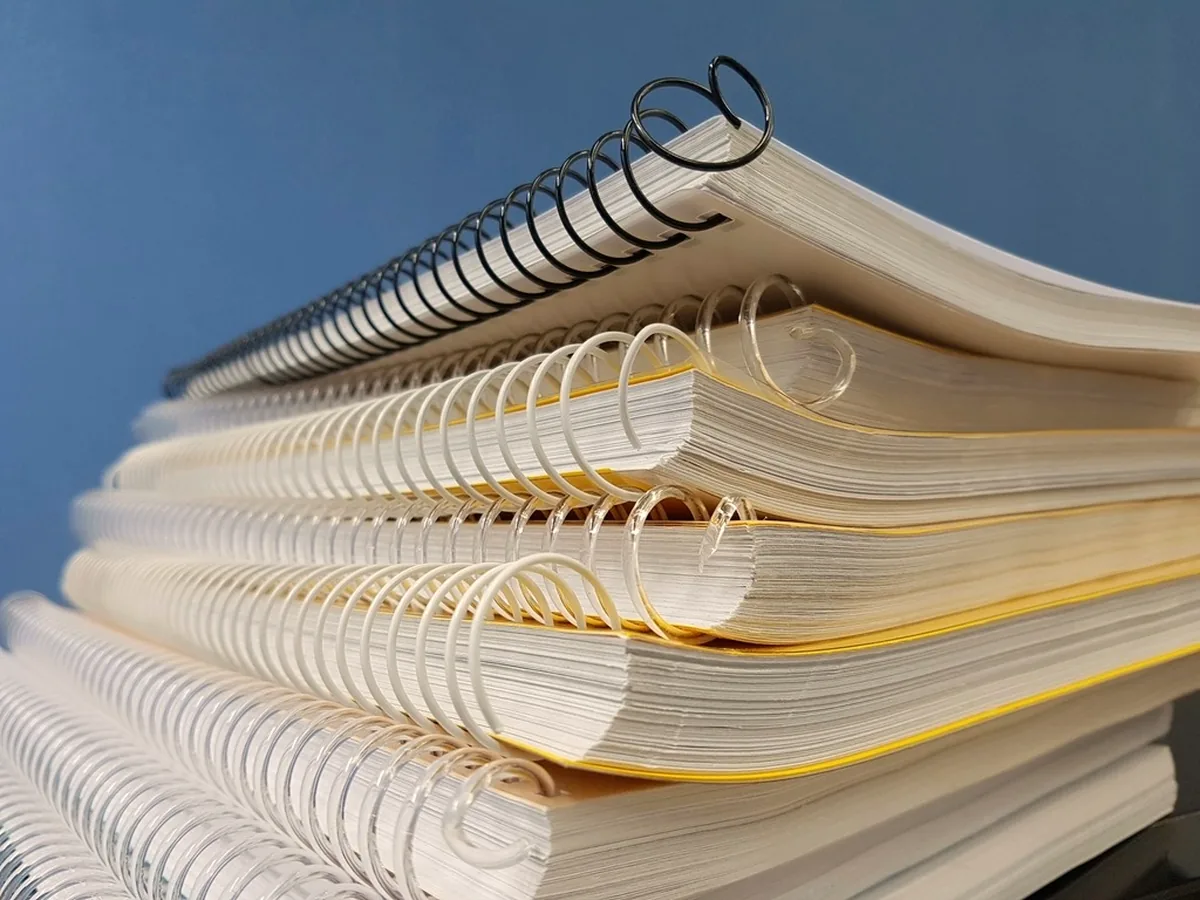
Paper quality is the primary consideration, but a notebook’s physical format shapes the writing experience in ways that matter specifically for fountain pen use.
Lay-flat binding is more important with a fountain pen than with a ballpoint. The nib should meet the page at a consistent low angle, and a book that springs back toward closed forces the hand to compensate — or risks dragging the barrel through wet ink. Thread-sewn hardcover notebooks like Rhodia Webnotebooks, Leuchtturm1917, and Midori MD hardcovers lay flat reliably from the first page. Spiral-bound Rhodia pads also lay flat. Glue-bound perfect-bound books vary significantly, and many don’t open fully when new.
Ruling options matter for fountain pen writing because pen and paper together determine how writing sits on the page. A broad nib on narrow-ruled (5mm) lines produces cramped, difficult writing; a fine nib on wide-ruled paper wastes space and looks sparse. Dot-grid notebooks are the most versatile option: the dots provide orientation without imposing a visual grid, and they work equally well for large and small handwriting, numbered lists, and quick sketches. Most A5 notebooks in 5mm or 6mm ruling suit the widest range of nib sizes.
Notebook size: A5 (roughly half of A4, or approximately 5.8 by 8.3 inches) is the most popular size among fountain pen writers. It is large enough for comfortable writing across a range of nib widths, small enough to carry easily, and a good match for the range of paper-quality notebooks available in that format.
Pen and Paper Pairing Tips
The best notebook for a fountain pen depends partly on which pen you’re using. Some combinations complement each other; others create friction that better choices would avoid.
Nib width and paper texture: Smooth papers benefit from medium and broader nibs. A fine nib on very smooth paper like Clairefontaine can feel slightly scratchy because the paper offers almost no surface resistance — fine-tipped nibs write more comfortably on paper with a very slight texture. Broader nibs, conversely, write better on smooth paper and are more likely to feather on toothy paper.
Ink wetness and paper absorbency: Wetter ink flow increases the risk of ghosting on thinner or more absorbent paper. If a pen writes wet and ghosting is a problem, switching to a heavier or more specifically coated paper resolves it without adjusting the pen. On Rhodia 80gsm and Midori MD, most inks at medium wetness behave well. Leuchtturm1917 is the paper where wet ink is most likely to cause visible ghosting.
Recommended combinations: The Pilot Metropolitan writes at a moderate wetness that pairs well with Rhodia and Clairefontaine; it comes with a cartridge so you can start immediately. The Lamy Safari has a slightly springier nib with moderate flow and pairs well with Midori MD Paper, where the cream page tone complements Lamy’s standard ink colors. The TWSBI ECO is a piston-fill pen with larger ink capacity that suits journal writers going through significant ink per session — its consistent flow works well on Tomoe River, where it shows off shading and sheen that other papers would flatten.
Starting with Rhodia or Midori MD and a medium-nib pen covers the widest range of inks and writing styles without risk of feathering or bleed-through. From that baseline, trying other papers becomes a matter of tuning rather than troubleshooting.