
Proper storage is one of the less glamorous aspects of fountain pen ownership, but it directly affects how reliably your pens write, how long they last, and how much cleaning they need. The rules are not complicated. Most reduce to three principles: keep the cap on, choose the right storage position, and clean the pen before any extended break.
Day-to-Day Storage: What to Do Between Writing Sessions
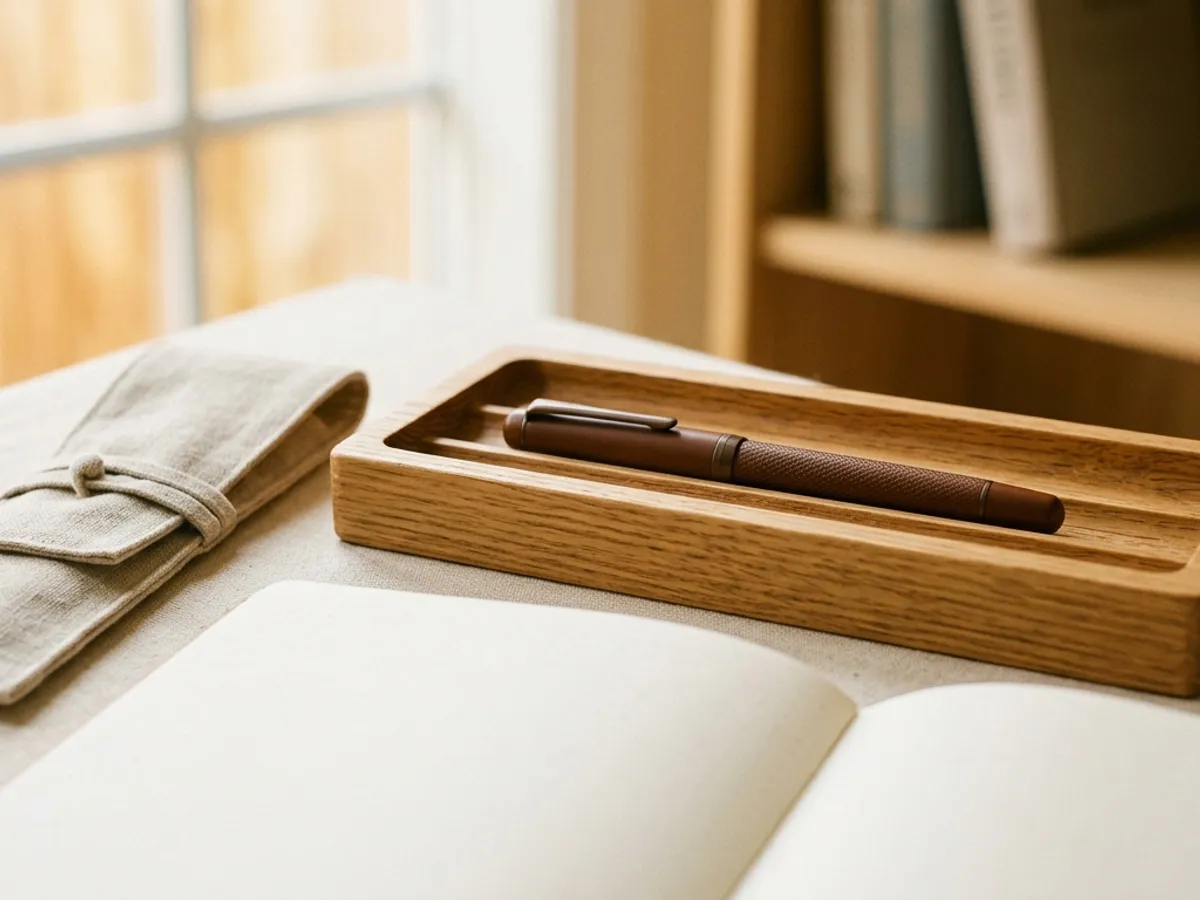
For a pen used regularly — daily or several times a week — the goal is simply to prevent the nib from drying between sessions. A properly designed cap does this automatically.
Always replace the cap when you finish writing. Snap caps seat with a single press; screw caps need a full turn or two to form a proper seal. Either type slows evaporation of the water that keeps ink fluid and flowing. A pen left uncapped for a few hours may skip or write sluggishly until the nib restarts; a pen left uncapped overnight can require soaking before it flows freely again.
Leave the pen inked if you use it regularly. There is no reason to drain and refill a pen between daily writing sessions. Draining wastes ink and creates unnecessary cleaning cycles. If you write at least a few times a week, leave the pen inked and capped.
Use a pen case or pen tray. A pen that rolls off a desk concentrates the fall’s force directly on the nib. Even a simple fabric pen pouch prevents this. Dedicated pen rests keep a pen accessible and visible on a desk without leaving it exposed to rolling onto hard surfaces.
Storage Position: Horizontal, Nib-Up, or Nib-Down?
The storage position question comes up often among fountain pen users. The short answer: horizontal is the safest all-around position, nib-up is acceptable for most pens, and nib-down should be avoided for extended storage.
Horizontal suits virtually all fountain pens. Ink distributes evenly along the reservoir, the feed stays inked, and there is no gravity-driven pressure pushing ink toward or away from the nib. This is the default recommendation for cartridge and converter pens, as well as piston-fill designs.
Nib-up is the preference of some users, particularly for high-capacity pens and inks prone to blobbing at the tip. Gravity draws ink away from the nib, reducing pooling and the risk of the cap filling with ink in warm conditions. Most pens store safely nib-up.
Nib-down concentrates ink at the nib continuously. Over several hours or more, this can cause ink to pool at the tip, require a nib-wipe before each writing session, or — in pens with looser-fitting caps — produce slow leaks. A compact pen briefly carried nib-down in a breast pocket for an hour or two is generally not a problem, but nib-down is not appropriate for desk storage or overnight.
Long-Term Storage: Putting a Pen Away for Weeks or Months
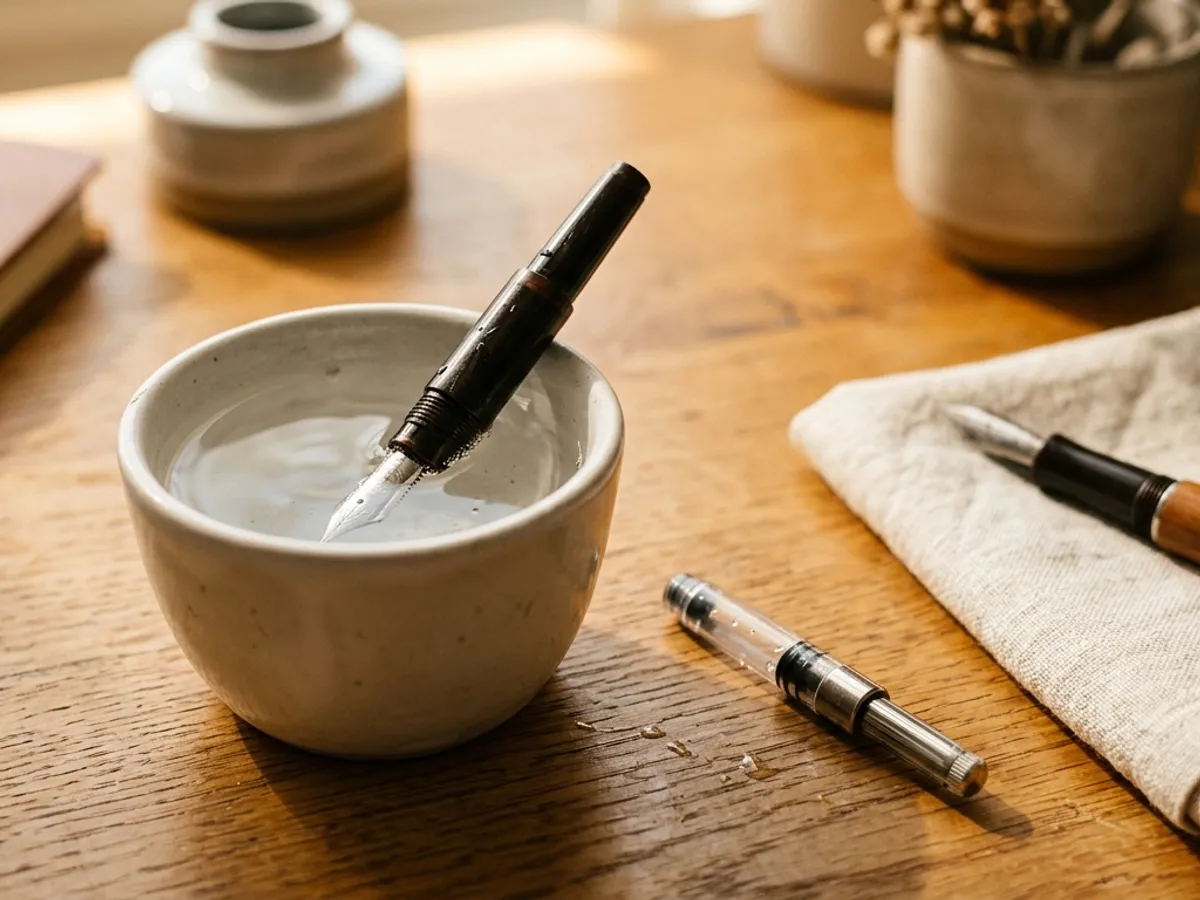
If a pen will sit unused for more than two to three weeks, clean it before storing it.
Ink left in an idle pen evaporates over time. As the water in the ink vehicle drives off, pigment and dye deposits accumulate in the feed channels. What begins as a slow-starting pen can become a pen that needs extended soaking to restore. Iron gall and pigmented inks accelerate this process significantly and should always be flushed if a pen will be idle.
How to prepare a pen for long-term storage:
- Remove the cartridge or converter, or drain the piston or vacuum reservoir.
- Flush the nib and feed with cool, clean water until the rinse water runs clear. This may take several rounds.
- For residue that does not flush out with running water, soak the nib and grip section in a small cup of cool water for one to two hours.
- Shake out excess water and place the pen nib-down on a folded cloth or paper towel to air-dry. Allow several hours; larger pens or those with complex feeds may need overnight drying.
- Store the cleaned, dry pen capped. The cap protects the nib physically even without ink present.
Do not store a pen disassembled. The assembled state keeps small components together and protects the nib from impact.
For a detailed walkthrough of the nib-and-feed flushing process, see our guide on how to fill a fountain pen with ink, which covers the same steps used for thorough cleaning.
Travelling with Fountain Pens
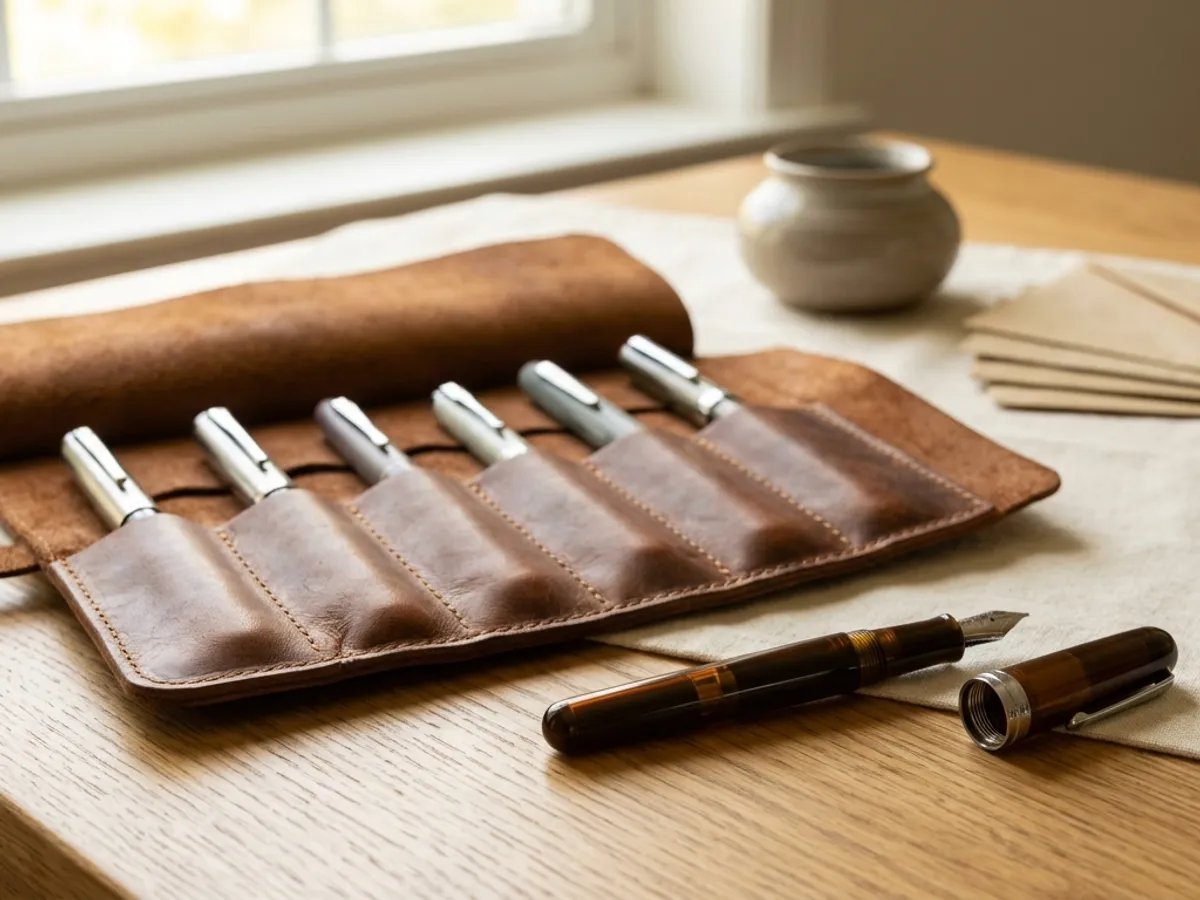
Air travel creates two challenges for fountain pens: physical impact and cabin pressure changes.
Cabin pressure: aircraft cabins are pressurized below sea-level pressure during flight, which causes air trapped in a partially filled reservoir to expand. This pushes ink through the nib and into the cap. The two safest states are a pen filled to capacity (minimal air in the reservoir) or a pen that has been completely drained and cleaned. A half-filled pen is the most prone to leaking during ascent.
Physical protection: pens carried in a bag need to be protected from impact. A dedicated leather pen roll or hard pen case holds each pen in its own channel and absorbs shocks that would otherwise focus directly on the nib. Loose pens sharing a bag with keys, coins, or other hard objects are a reliable way to bend or damage a nib tip.
When flying, orient the pen nib-up where possible. This keeps ink away from the cap seal during pressure changes and reduces the chance of a leak reaching the cap interior.
Compact pens designed for portability — such as the Kaweco Sport, which closes with a tight-fitting screw cap to pocket size — are well suited to travel. Their shorter capped profile and secure cap design reduce the risk compared to larger uncapped pens.
Ink Type and Storage

Ink type affects how safely a pen can sit unused between writing sessions, and how urgently it needs to be flushed before storage.
Dye-based inks — the most common category for both bottled and cartridge inks — are water-soluble and relatively forgiving. A pen filled with a standard dye ink can typically sit capped and unused for two to three weeks in normal room conditions without requiring attention.
Iron gall inks contain tannic acid, which reacts slowly with metal components over time. A pen left filled with iron gall ink and unused for several weeks can develop deposits on the nib and in the feed channels. Iron gall inks should always be flushed if the pen will sit unused for more than a week.
Pigmented inks carry solid particles in suspension. These particles settle and dry in the feed channels much faster than dye-based inks and are more difficult to clear once dried. Pigmented inks — including carbon blacks and some archival document inks — must not be left in a pen that will sit unused. Flush after each extended writing session.
Shimmer inks, which contain metallic particles, present similar risks. They benefit from regular flushing and agitation of the bottle before each fill.
Common Storage Mistakes to Avoid

Leaving a pen uncapped. Even a few hours without the cap causes meaningful evaporation at the nib. Most pens described as “dried out” and refusing to restart are simply pens that were left uncapped too long.
Storing nib-down for extended periods. Ink pooling at the nib leads to skipping on the first stroke, cap staining, and slow leaks in warm or humid conditions.
Keeping iron gall or pigmented ink in a pen that sees irregular use. These inks require regular writing or regular flushing. Leaving them in a drawer pen for a month can produce deposits that need significant soaking — or, in severe cases, disassembly and mechanical cleaning — to clear.
Storing pens in direct sunlight or near heat sources. UV light can yellow or crack celluloid and older acetate barrels over time. Heat can warp plastic pen bodies and may thin ink enough to cause leaks. A closed pen case or desk drawer away from windows is the better option.
Skipping the cleaning step before long-term storage. Dried ink in the feed channels is the most common cause of a pen that will not restart after sitting in a drawer for several months. A pen stored clean and dry will come back reliably when you ink it again — no soaking required.