

A fountain pen rewards you with a writing experience no ballpoint or rollerball can match — but it asks for a different technique. Getting the angle, pressure, and paper right transforms a scratchy, frustrating tool into one that glides. This guide walks through the key skills so you can write well from your very first ink fill.
Getting Ink Into Your Pen
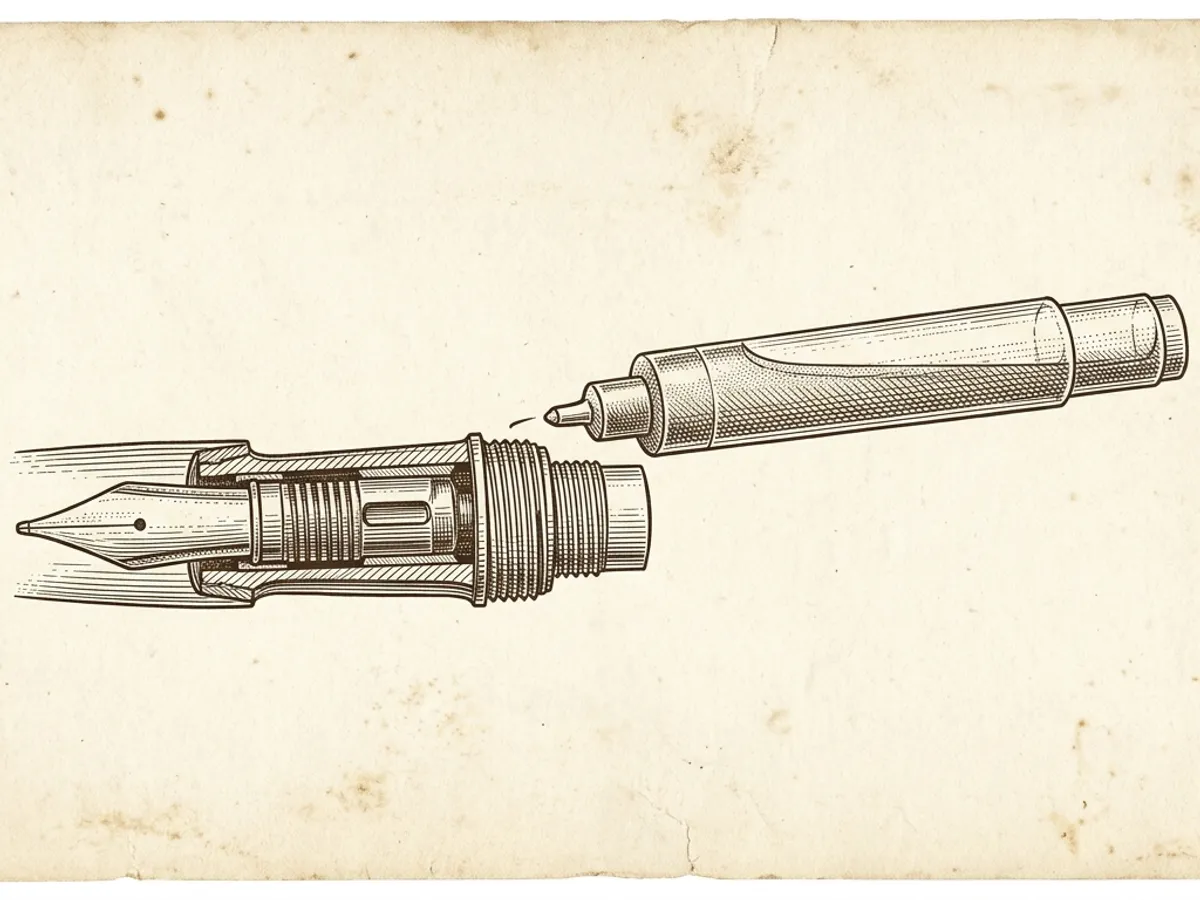
Before you write, the pen needs ink. Most fountain pens accept either a pre-filled cartridge or a converter that draws from a bottle. Cartridges are the simplest start: push the cartridge’s open end firmly onto the section until you feel the seal pop, then point the nib down and wait roughly a minute for ink to travel through the feed by capillary action.
Cartridge compatibility is brand-specific. Lamy pens take the proprietary Lamy T10 cartridge; Pilot pens take Pilot cartridges; Kaweco uses the standard international cartridge format shared by several European brands. The cartridge packaged with your pen is always the correct type.
A fresh fill often needs a few lines of writing on scrap paper before it flows evenly. Patience here is normal — not a sign of a defective pen.
For every filling method in detail — cartridges, converters, and built-in piston fillers — see our guide on How to Fill a Fountain Pen With Ink.
Removing the Cap Correctly
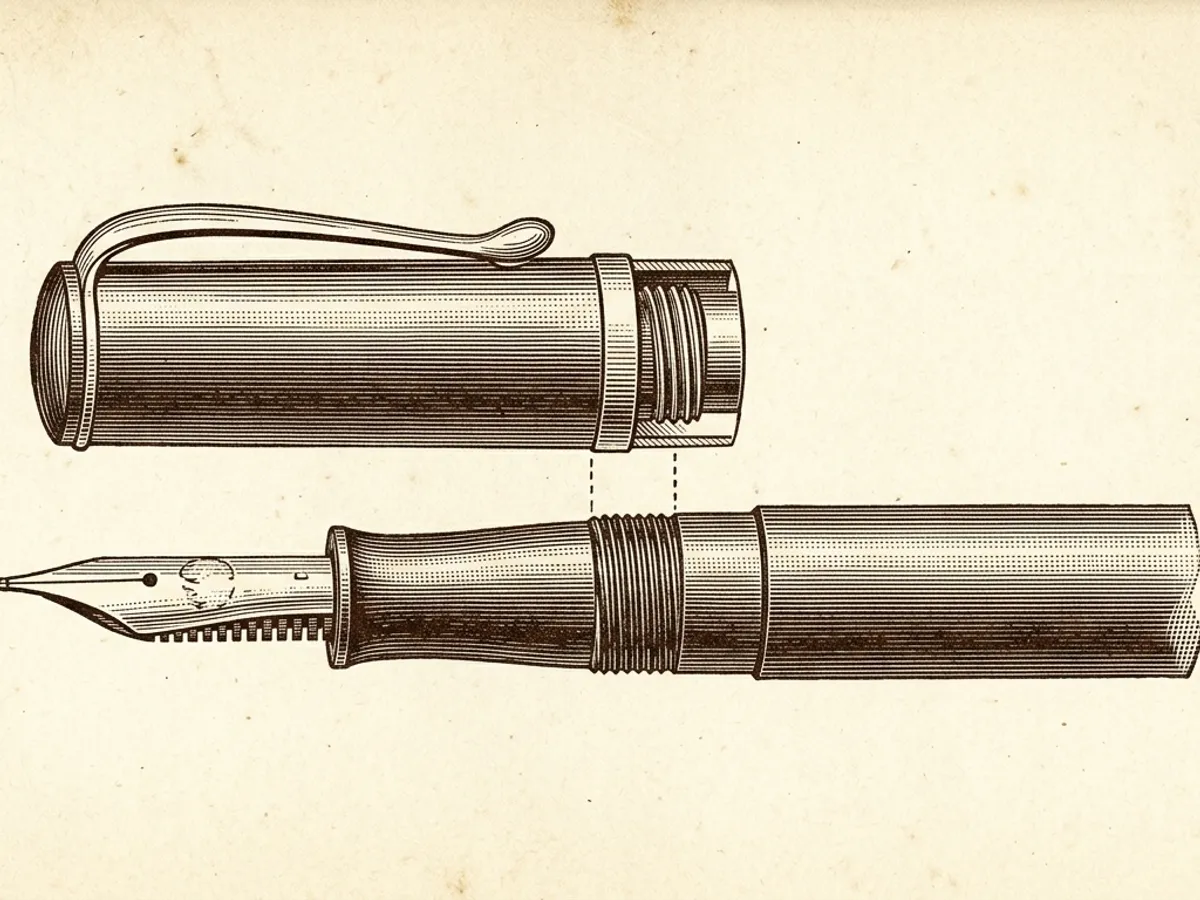
Always pull or unscrew the cap straight off, never at an angle. The cap’s inner section is designed for a straight pull; levering it sideways can stress the clip mounting or scratch the barrel. When you post the cap (press it onto the back of the barrel while writing), push it on firmly so it cannot fall and land on the nib.
Keep the cap on whenever you are not actively writing. Even a few minutes with an uncapped nib can allow the small amount of ink at the tine tips to dry. This causes hard starts on the next stroke — a minor annoyance that is completely avoidable with the simple habit of capping.
How to Hold a Fountain Pen
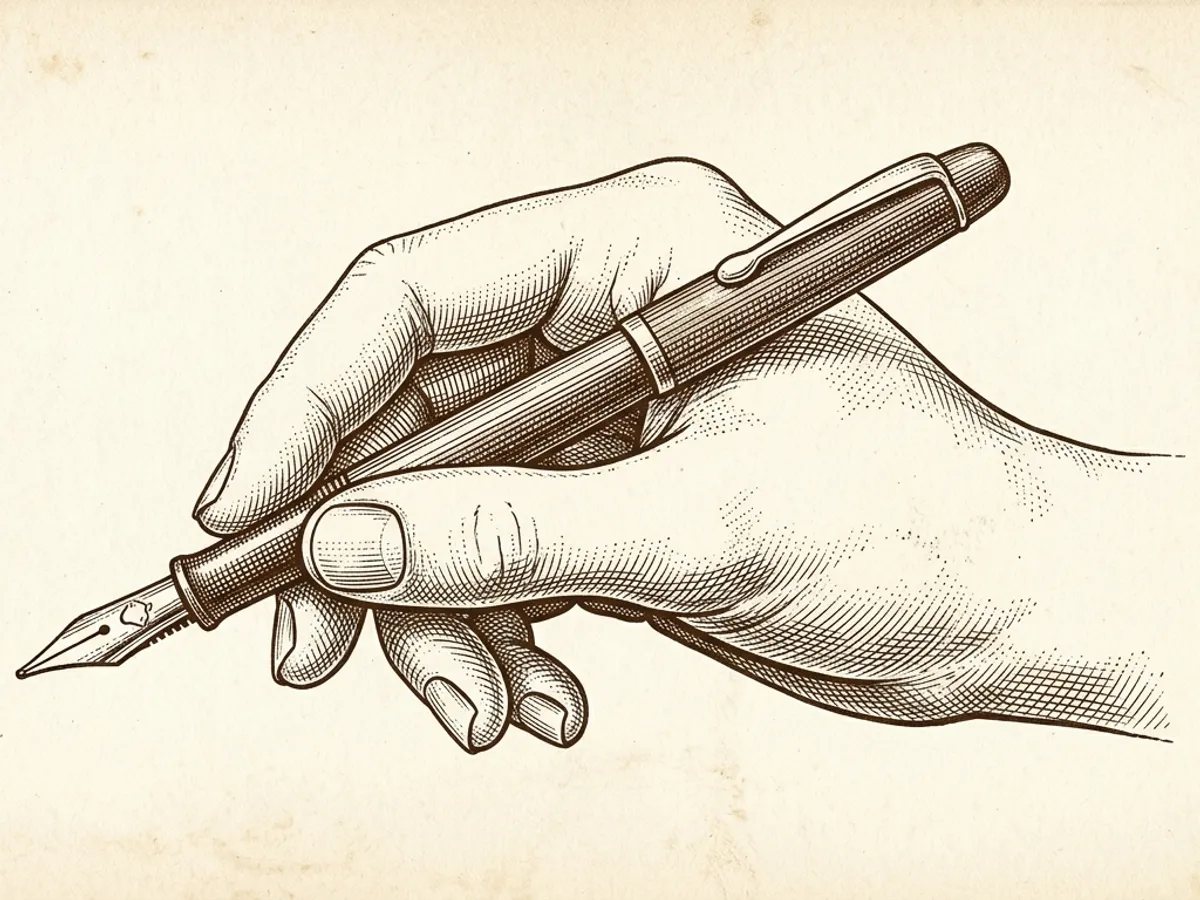
Hold the pen as you would a relaxed pencil: resting in the web between your index finger and thumb, with the middle finger supporting from below. The exact grip style matters less than keeping it loose. Gripping too tightly presses the tines unevenly against the paper and leads to inconsistent flow.
Look at the nib as you hold the pen. One surface is flat and visibly marked with a breather hole; the other is gently rounded. The flat nib face must point away from the paper — the curved underside of the tines is what touches the page. Writing with the pen inverted (flat face pressing into the paper) produces no ink flow and can scratch the tines.
Angle and Pressure: The Two Things That Matter Most
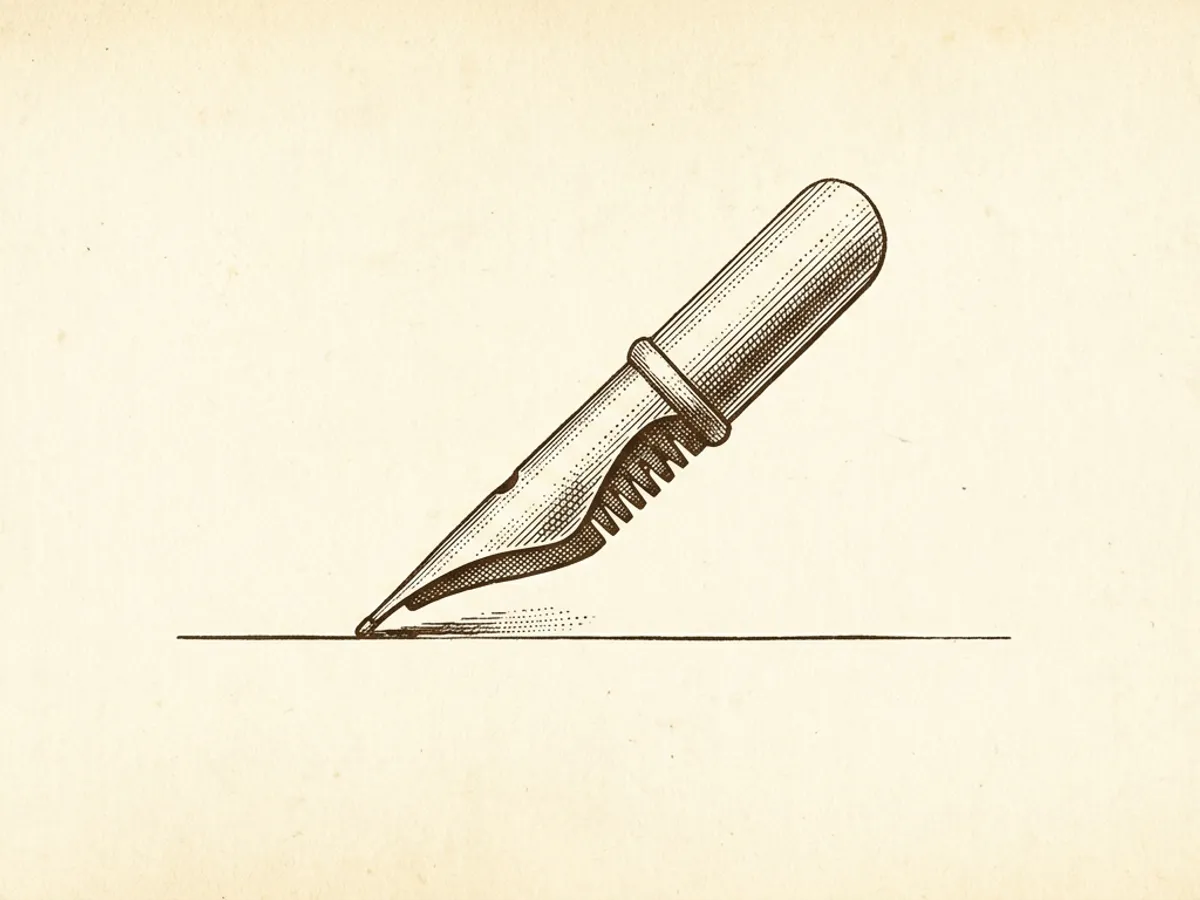
Fountain pens write best at a moderate angle — roughly 40 to 55 degrees from the paper surface. At very shallow angles, the back of the nib can drag on the paper; at steep angles above about 60 degrees, the tines barely contact the surface and ink flow becomes uneven. Most people naturally settle into a comfortable angle within this range without measuring.
Pressure is where new users most often struggle. Fountain pens need almost none. Ballpoints and gel pens require you to push to transfer ink; a fountain pen delivers ink through capillary action the moment the nib contacts paper. Pressing harder does not improve flow — it forces the tines apart, causing two hairline tracks instead of one solid line (called railroading), and will eventually misalign the nib.
Think of the nib as skating across the paper surface rather than pressing into it. If the pen still feels scratchy with a light touch, the problem is almost always the paper — not a need for more pressure.
Paper Makes a Bigger Difference Than You Expect
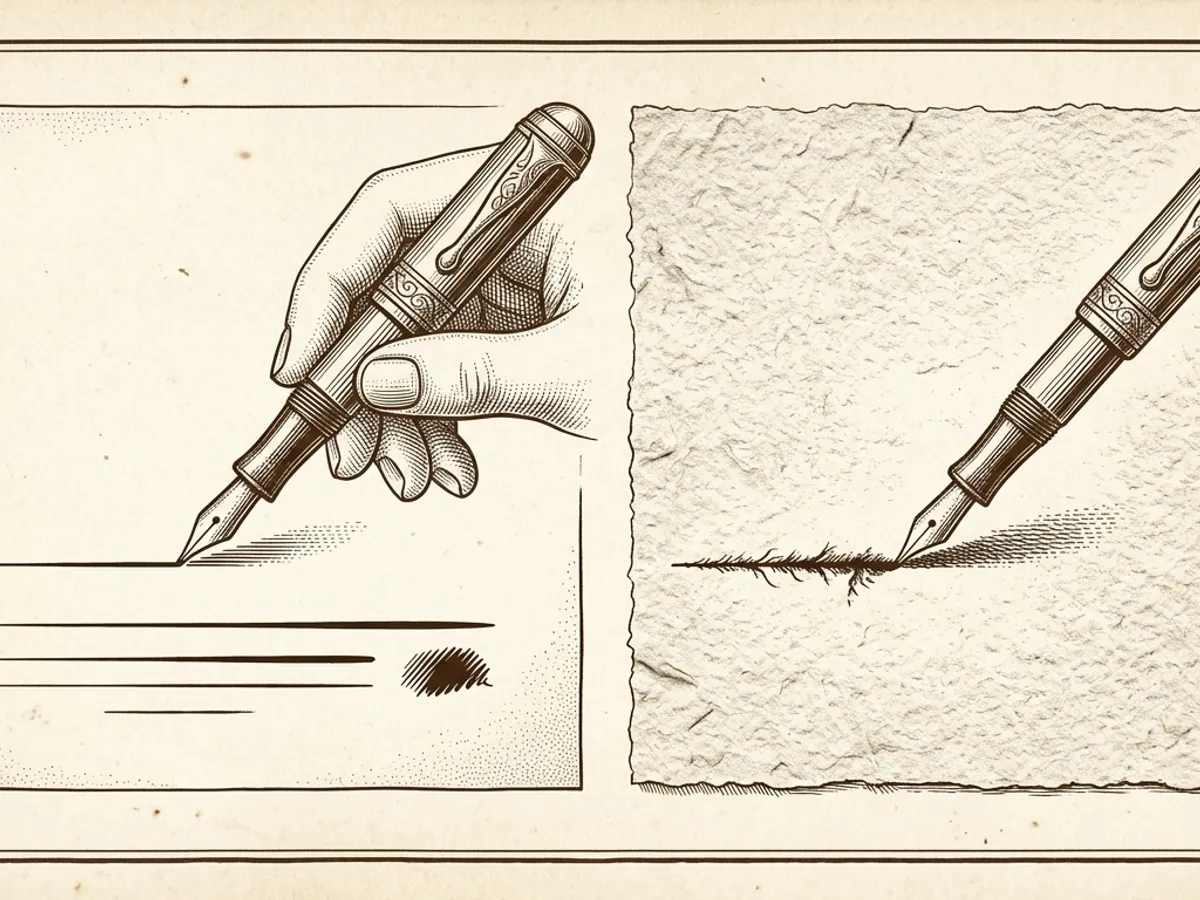
Standard copy paper is designed for laser printing, not fountain pen ink. Its surface is rougher than pen-friendly paper, which snags the tines and causes feathering — ink spreading outward along fibers — and bleed-through. A perfectly well-adjusted pen can feel scratchy and write poorly on cheap copy paper.
Smooth, dense paper changes the experience noticeably. Many fountain pen users favor notebooks and loose sheets with a higher surface finish: the ink sits on top cleanly, dries without spreading, and the nib glides instead of catching. If your pen feels scratchy or the ink smears regardless of technique, try a different paper before concluding anything is wrong with the pen itself.
Caring for Your Pen Between Uses
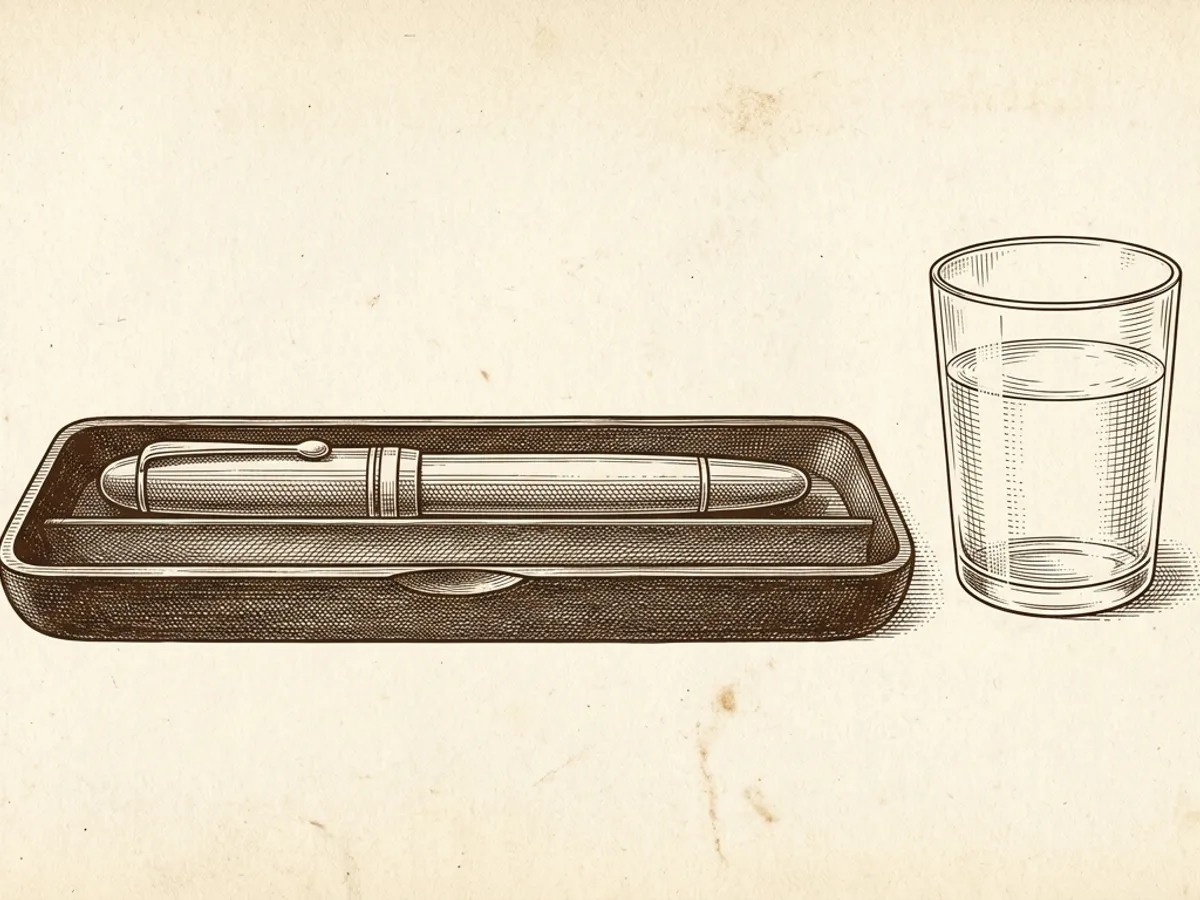
A loaded, capped fountain pen stays ready for weeks. The cap creates an airtight seal that keeps the nib and feed moist, so short breaks between writing sessions — even days apart — cause no problem at all. Leave it loaded and capped when you step away from your desk.
If you will not use the pen for more than two to three weeks, flush it with room-temperature water and store it empty. Ink sitting motionless for months can dry into a gummy deposit in the narrow channels of the feed. Flushing is simple: remove the cartridge or converter, draw clean water in through the nib and expel it repeatedly until it runs clear, then stand the pen nib-down on a cloth to air-dry before reassembly.
When switching from one ink to another — especially from a dark color to a lighter one — flush the pen thoroughly before refilling. Mixing residual ink with a new color in the feed can produce muddy results or clog the channels.
Troubleshooting Common Problems
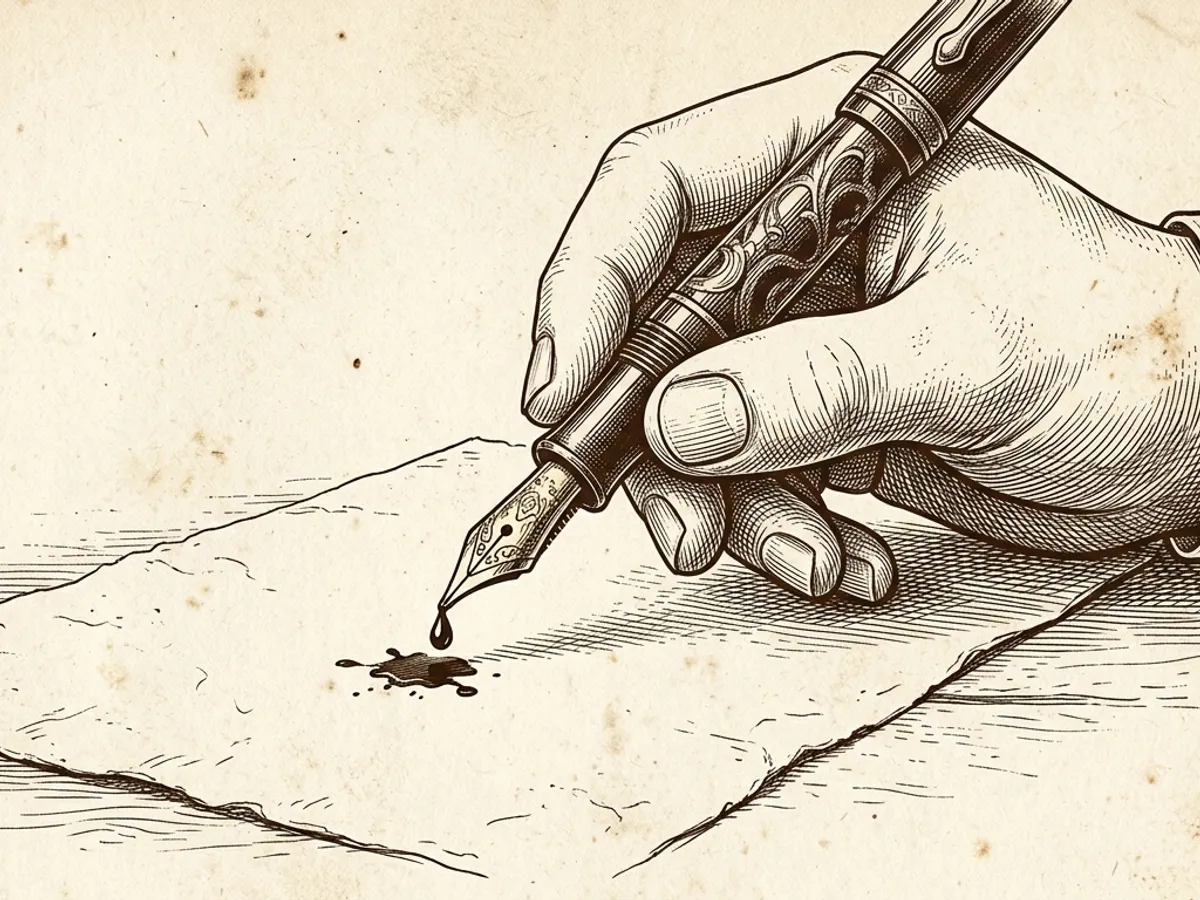
A few issues come up often enough that knowing their causes is worth the time.
Skips or hard starts. The most frequent cause is a small air gap between the ink and the feed. Hold the pen nib-down over scrap paper and let gravity and capillary action draw ink forward; write a few slow loops to encourage flow. Tapping the capped pen gently tip-down also helps settle ink toward the nib. This resolves the issue in most cases.
Persistent scratching. Try different paper first — most scratching is paper-related. If the problem continues across multiple paper types, the nib tines may be slightly misaligned. Minor smoothing by someone experienced with nib work can fix this, but attempting it without practice risks making things worse.
No flow at all. If using a cartridge, the foil seal may not have fully punctured. Re-seat the cartridge firmly until you feel the resistance give, then wait nib-down for one minute. If using a converter, check that the nib was fully submerged during filling to avoid drawing air into the feed.
Ink pooling in the cap. This usually means the pen was stored nib-down in a warm environment, causing ink to expand and migrate forward. Store the pen horizontally or nib-up when it will sit unused for any length of time.
For more on finding the right pen to start with, see our guide to the best fountain pens for beginners.