
This site is reader-supported. As an Amazon Associate we earn from qualifying purchases. When you buy through links on this page, we may receive an affiliate commission at no additional cost to you. Our editorial picks are independent of commercial relationships.
What Is the Lamy T10 Cartridge?
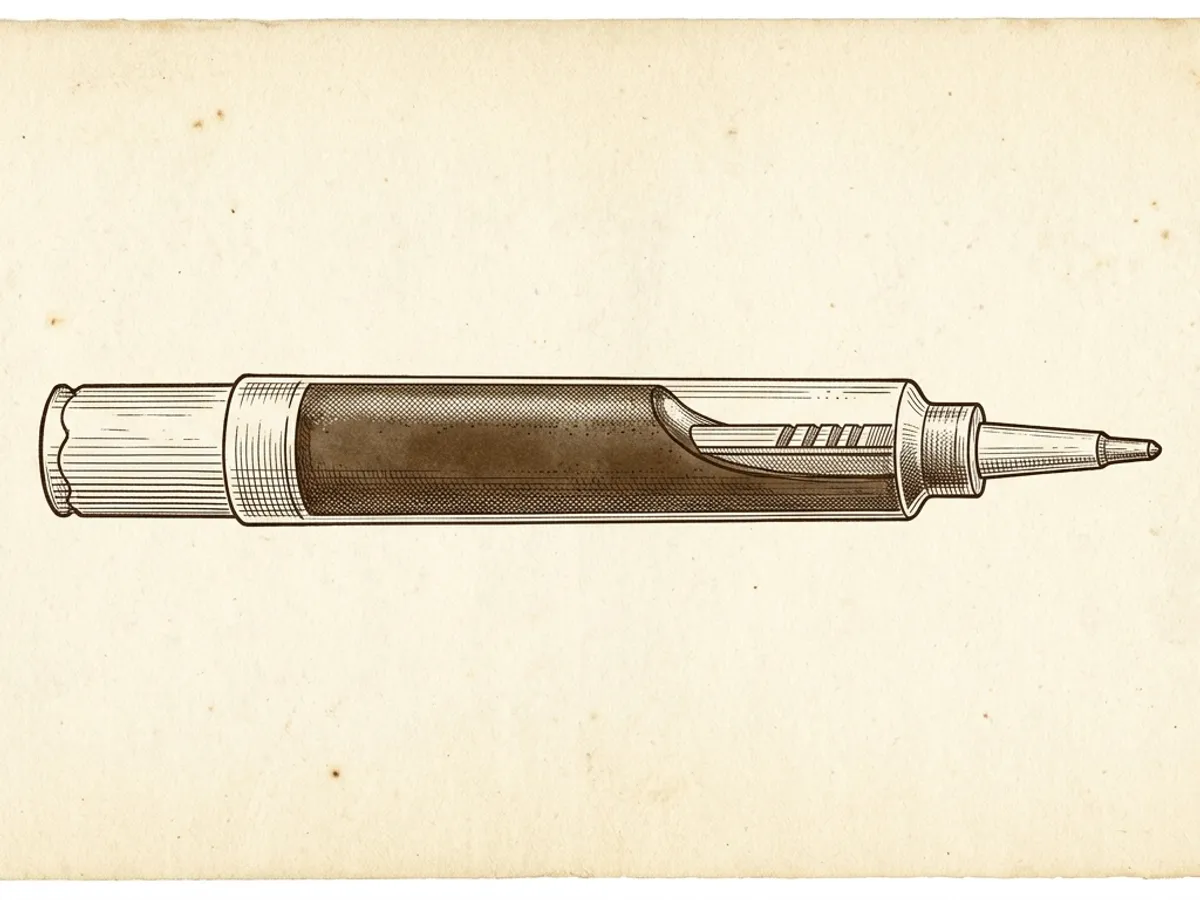
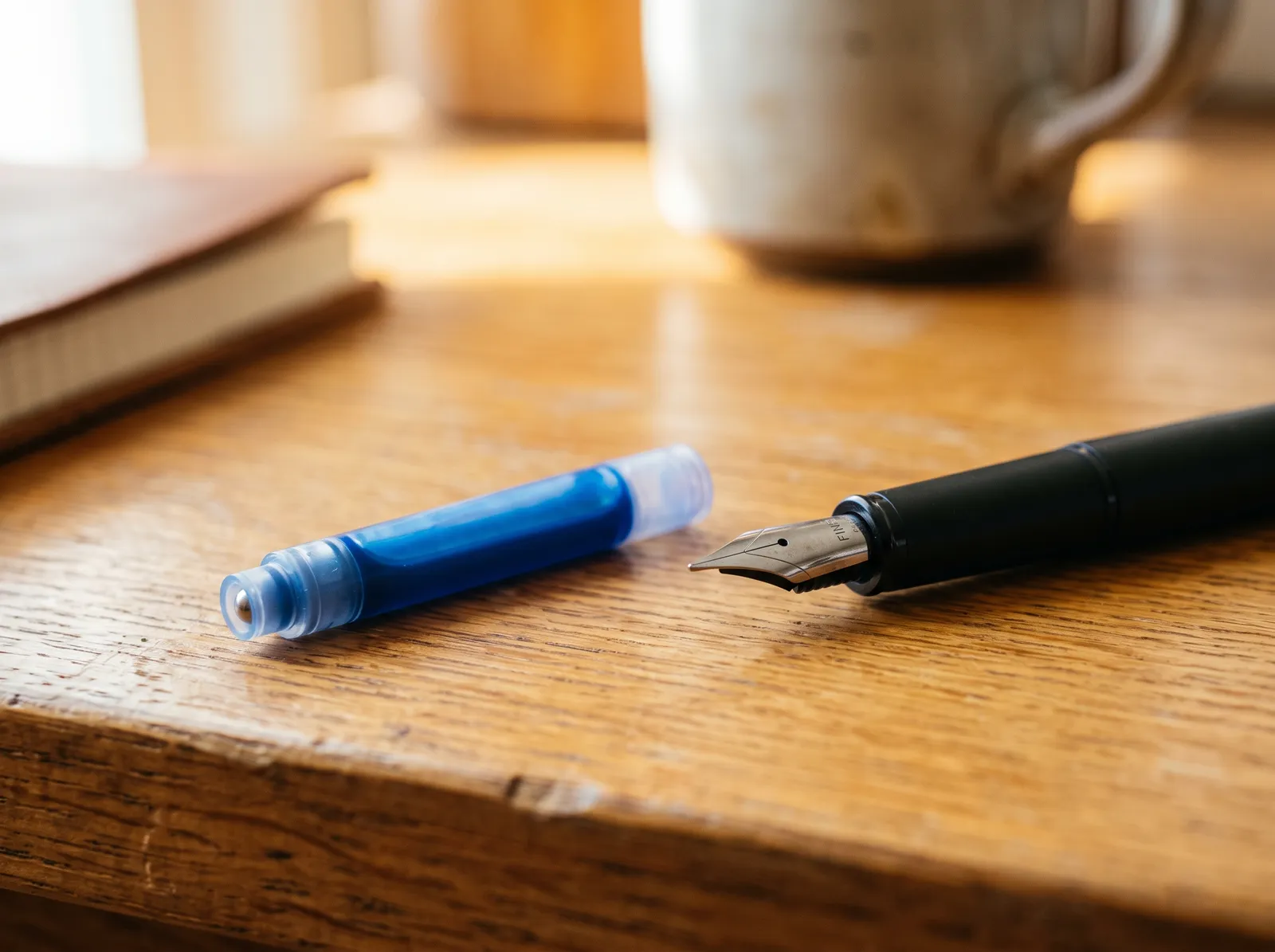
The Lamy T10 is Lamy’s proprietary fountain pen ink cartridge. It is designed exclusively for Lamy fountain pens and is not compatible with pens from other brands that use the standard international cartridge format. If you own a Lamy pen and want to use ink cartridges, the T10 is the only cartridge option — there is no standard international equivalent that fits.
The T10 is a sealed single-use plastic container pre-filled with Lamy’s own dye-based ink. One end is rounded (the tail); the other end has a narrow sealed tip that pierces when inserted firmly into the pen’s grip section, establishing the ink connection to the feed and nib. The mechanism is simple and reliable — seat it in, and the pen is ready to write.
Lamy sells T10 cartridges in 5-packs of a single color. Individual cartridges are available but less common at retail. Each cartridge holds enough ink for several pages of normal writing, though the exact yield depends on nib size and how heavily you write — a broad nib lays down more ink per stroke than a fine one.
The proprietary format is the most important thing to know before buying. A T10 will not fit in a Kaweco pen, a Faber-Castell, a Pelikan, or any other pen that uses the standard international cartridge size. If you own a Lamy pen, T10 cartridges are your match; if you are evaluating Lamy pens and care about cartridge availability, T10 cartridges are reliably stocked at major pen retailers and directly from Lamy.
The alternative to cartridges — for all Lamy pens in the consumer lineup — is a separately purchased converter, which allows you to fill from any bottled ink. The converter option is covered in detail below.
Which Lamy Pens Take T10 Cartridges?
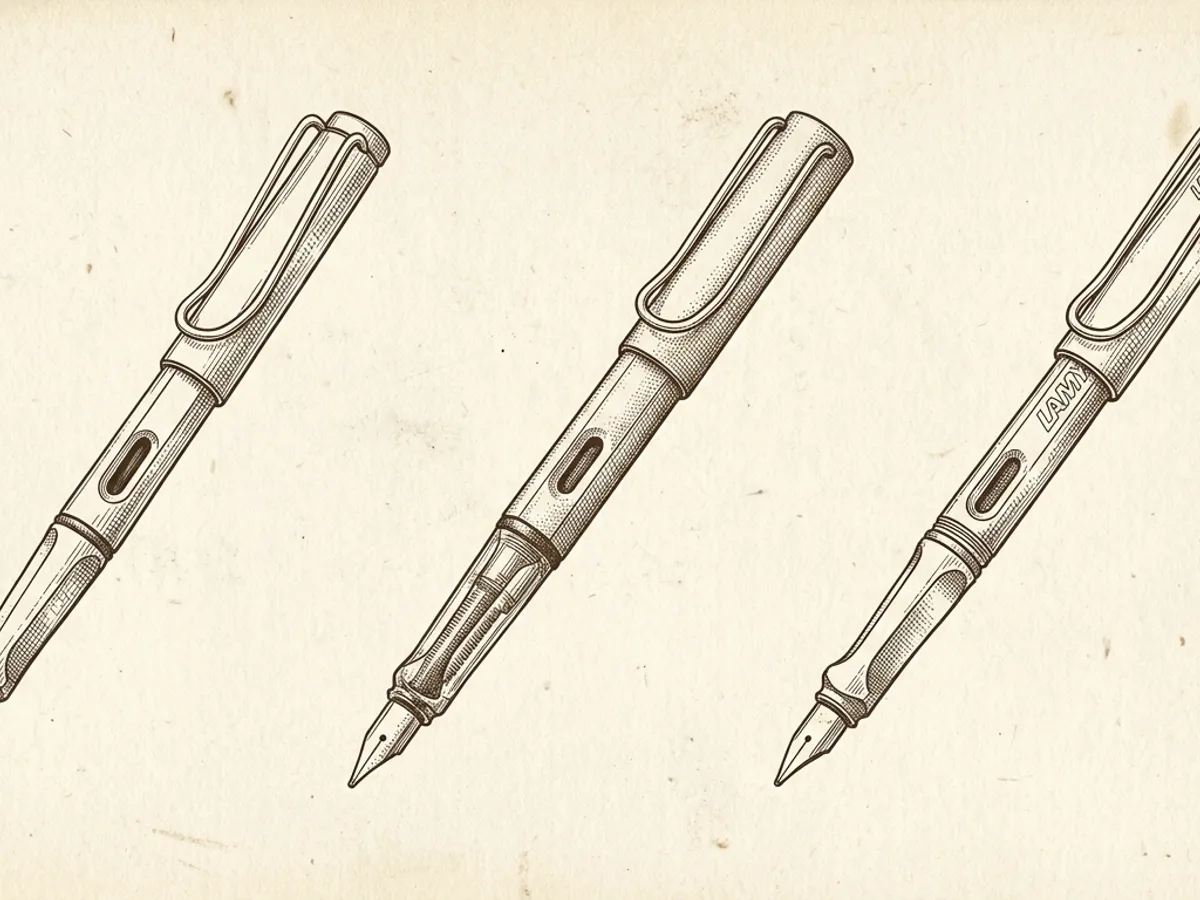
The T10 cartridge is compatible with virtually all of Lamy’s consumer-grade fountain pens. The following are the most commonly purchased Lamy fountain pens, all of which accept T10 cartridges:
Lamy Safari — the most widely sold pen in the Lamy lineup and the entry point for most new Lamy buyers. The Safari’s ABS plastic body comes in a rotating seasonal color selection, and its relatively low price makes it accessible to writers at any stage. The triangular grip section and snap cap make it practical for everyday use, and it accepts T10 cartridges or the Z24 converter. Lamy Safari on Amazon
Lamy AL-Star — the aluminum-body counterpart to the Safari. The AL-Star shares the Safari’s grip section and filling mechanism but uses a lightweight aluminum barrel for a more substantial feel. Many writers prefer the balance and material quality of the AL-Star over the Safari’s plastic body, at a modest price premium. It also accepts T10 cartridges and the Z24 converter. Lamy AL-Star on Amazon
Lamy Vista — the clear-body version of the Safari. The Vista shares the Safari’s dimensions and filling mechanism exactly, with a transparent barrel that lets you monitor your ink supply at a glance. T10 compatible, Z24 compatible.
Lamy Studio — a step up in finish and feel. The Studio features a metal body with a distinctive circular-cross-section grip and a clip that runs the full length of the cap. It accepts T10 cartridges and the Z24 converter.
Lamy Joy — Lamy’s calligraphy-specific fountain pen, built around flat italic nibs in widths from 1.1mm to 1.9mm. Used primarily for calligraphic and expressive writing. T10 compatible.
Lamy CP1 — a minimalist all-metal pen with a clean cylindrical profile, aimed at professional and desk use. T10 compatible.
Lamy abc — Lamy’s children’s writing pen, designed with an ergonomic triangular grip to encourage correct pen hold. Accepts the T10 cartridge.
All of the above accept both T10 cartridges and the Z24 converter. The Safari and AL-Star are by far the most commonly purchased, and both make an excellent starting point for anyone new to the Lamy ecosystem.
For context on how these pens compare to others in the broader fountain pen market, see our guide to the best beginner fountain pens.
T10 Cartridge Colors
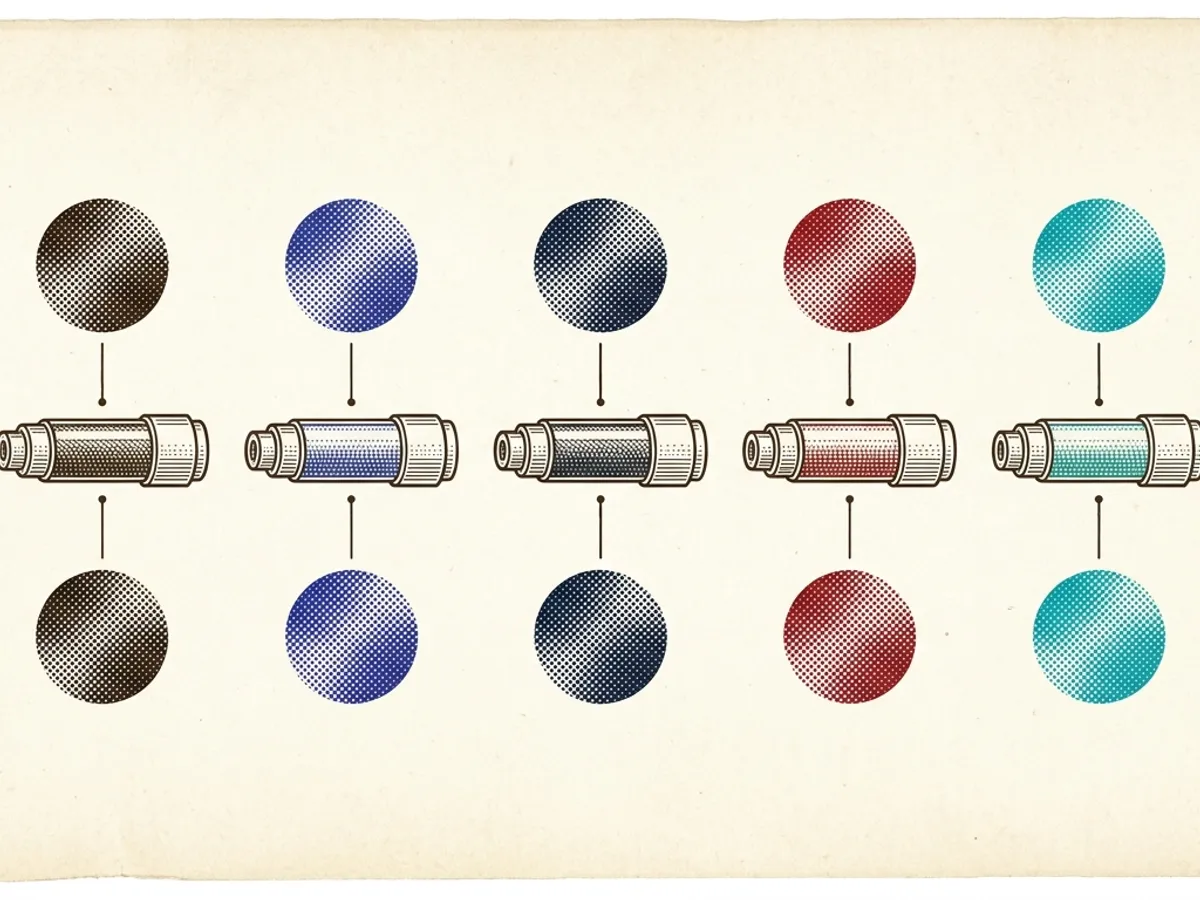
Lamy produces T10 cartridges in several colors, though availability varies by retailer and region. The most reliably available internationally are:
Black — a deep, neutral black suitable for office correspondence, official documents, and any context where a classic ink is expected. Black T10 ink dries reasonably fast and is the default choice for professional writing.
Blue — a medium blue, with the depth and subtle shading that dye inks provide. Suited to everyday note-taking and personal correspondence.
Blue-Black — a traditional blue-black that reads as a near-neutral, professional ink. Among the most widely used cartridge colors for business writing and correspondence.
Red — for annotation, correction markup, and expressive writing. Not typical for general office use but practical for teachers, editors, and anyone who marks up documents.
Turquoise — a bright, medium teal-blue that leans toward expressive and personal writing. Popular for journaling and creative use.
Lamy offers additional colors in some markets — including green, violet, and petrol — but the five above are the most consistently available internationally. If a specific color is not in stock, Lamy’s bottled ink range (used with the Z24 converter) offers a broader selection, including colors that have no T10 equivalent. The Lamy ink bottle line uses a distinctive angular glass bottle with a well at the base designed to make converter filling easier as the ink level drops.
Converter or Cartridge: Which Is Right for You?
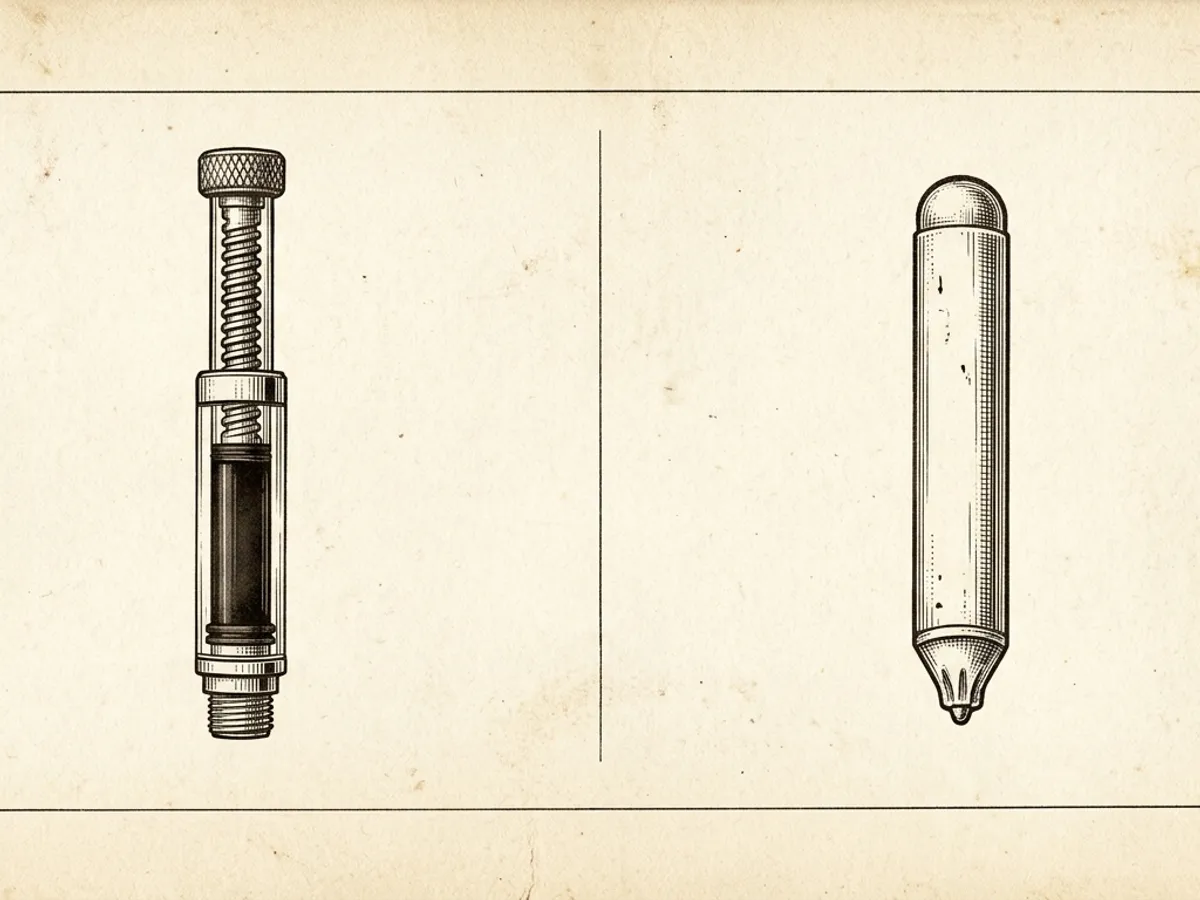
Lamy fountain pens accept both T10 cartridges and the Z24 converter. Understanding the trade-offs helps you decide which approach suits your writing habits — and many Lamy owners use both depending on the context.
Cartridges work better when:
- Convenience is the priority. Cartridges require no preparation, no ink bottle, and no risk of spills. Swapping a cartridge takes seconds.
- You are traveling. A cartridge-loaded pen is self-contained and leakage risk is low with the T10 sealed until pierced. Travelers often find cartridges preferable to managing a converter and a bottle of ink in transit.
- You write infrequently. Cartridges store well in the pen between writing sessions, and the sealed format reduces dry-out compared to a partially-filled converter sitting unused for weeks.
- You want to switch colors without cleaning. Partially-used cartridges can be sealed at the pierced tip with a small piece of tape and stored temporarily, then reinserted later when you want to resume that color.
Converters work better when:
- You want more ink choices. The T10 covers roughly five to eight standard colors. The broader world of fountain pen ink — hundreds of colors, including shimmer, sheen, and unusual formulations — is only accessible through a converter and a bottled ink.
- You write in high volume. Bottled ink is typically cheaper per milliliter than cartridges. For a daily writer who goes through ink quickly, the economics favor a converter and a bottle within a few months.
- You enjoy the ritual of filling. Many fountain pen users find the filling process — nib dipped in an ink bottle, converter wound up, nib wiped clean — a satisfying part of the writing habit. It adds a small amount of time and care, which many writers consider worthwhile.
The Lamy Z24 converter is the standard choice for the Safari, AL-Star, Vista, Studio, CP1, and Joy. It is a twist-piston design: submerge the nib in ink, rotate the Z24’s piston knob counterclockwise to draw ink in through the nib and feed, then twist slightly clockwise to release any trapped air, re-dip, and draw a final fill to top up. Wipe the nib and section clean before writing.
The Z24’s capacity is modest compared to piston-fill or vacuum-fill pens, but it is sufficient for several days of normal writing per fill for most writers.
Changing a Cartridge and Priming the Nib
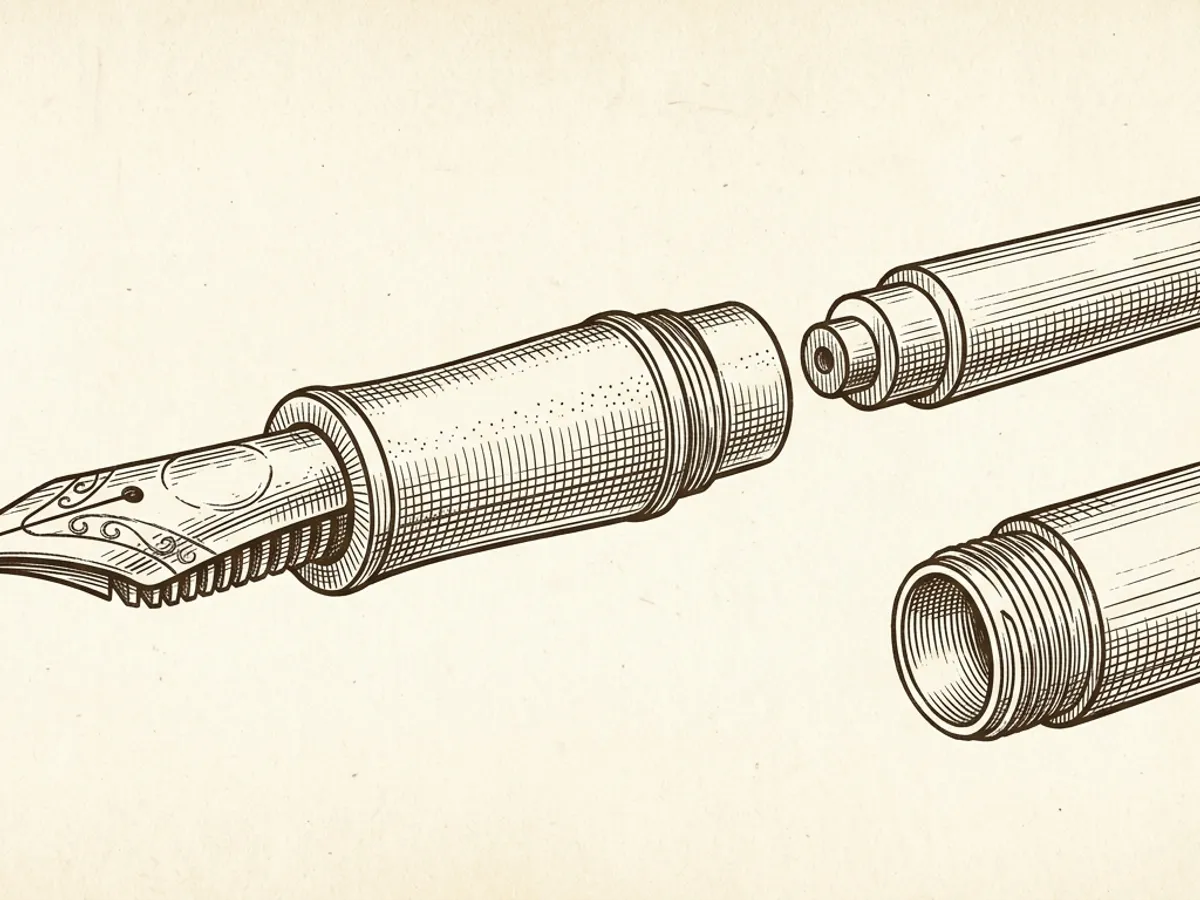
Changing a T10 cartridge is quick, but a few practices reduce the chance of an inky mess.
Disassemble the pen. On the Lamy Safari, AL-Star, Vista, and Studio, the barrel (the main pen body) unscrews from the grip section. Remove the cap first, then unscrew and set the barrel aside. You are left with the grip section, which holds the nib unit and the cartridge socket.
Remove the spent cartridge. The old cartridge will be attached to the interior of the grip section. Pull it free with a gentle twist-and-pull motion. If the cartridge still has ink and you want to save it, cover the pierced tip with a small square of tape or cling film before setting it aside.
Insert the new cartridge. Orient the T10 so the narrow sealed tip faces the grip section socket. Press firmly — the tip pierces as it seats. Press it straight, not at an angle. You should feel the cartridge click into resistance as it locks in.
Reassemble and prime. Screw the barrel back onto the grip section and replace the cap. A new cartridge requires a brief priming period — the ink needs to travel from the cartridge, through the feed channels, to the nib tip. Holding the assembled pen nib-down for a minute or two helps; alternatively, gently flicking the pen downward (nib-down, capped) can encourage the first ink to reach the tip.
Before the first stroke, wipe the nib tip with a soft cloth or paper towel in case any ink has migrated to the outside of the nib. The pen should write from the first stroke once primed. If it does not start immediately, a very gentle squeeze of the cartridge body can encourage ink flow.
Using the Lamy Z24 Converter with Bottled Ink
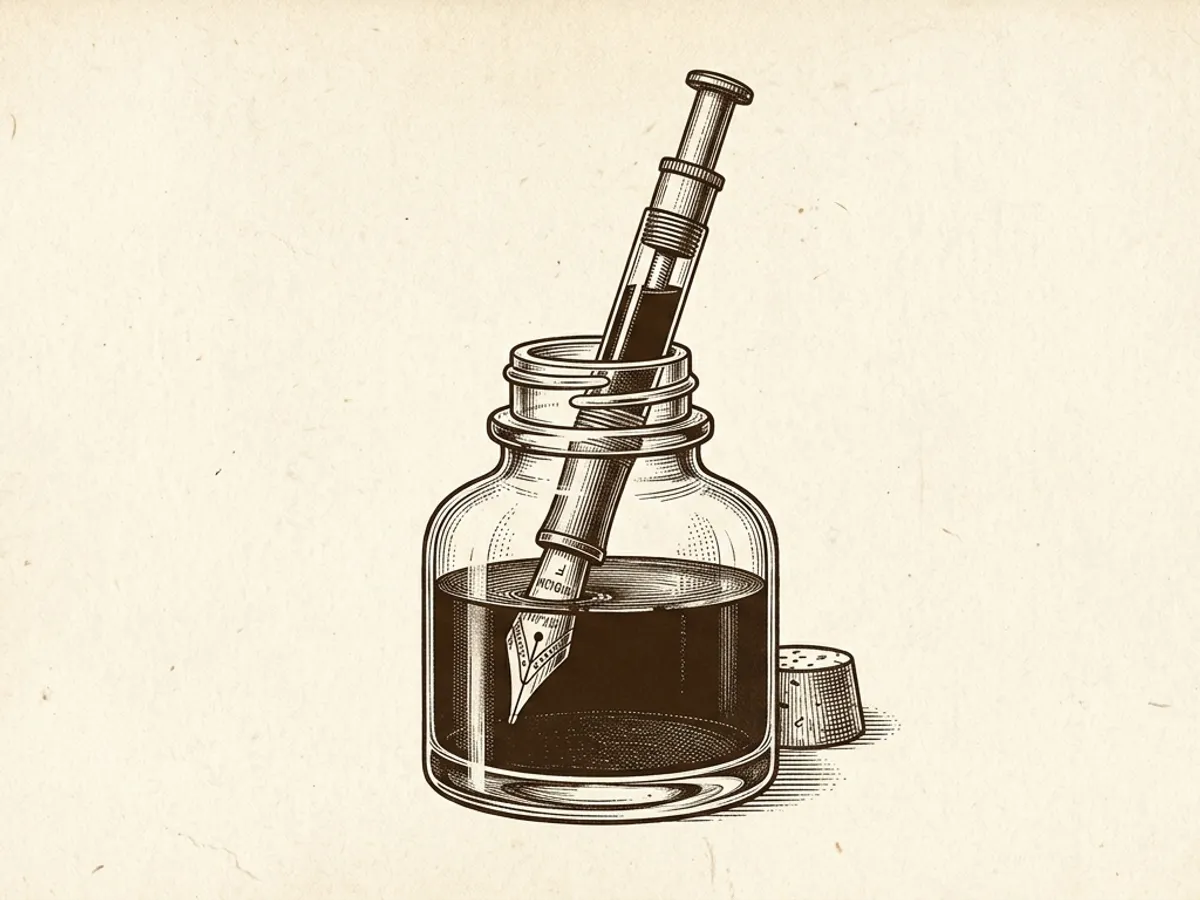
The Z24 converter seats in the same socket as a T10 cartridge and is purchased separately. Once fitted, it allows the pen to draw ink from any bottled fountain pen ink — a straightforward swap that opens the full range of available inks.
To fill from a bottle: ensure the converter is empty and clean. Submerge the pen’s nib fully in the ink bottle — the nib and a portion of the grip section should be below the ink surface. Rotate the Z24’s piston knob counterclockwise to draw ink in. When the converter is full, raise the pen from the bottle, rotate the knob slightly clockwise to expel a small amount of ink back (this releases any trapped air), then re-dip and draw ink in again for a complete fill. Remove the pen from the bottle and wipe the nib and grip section with a damp cloth.
The Z24 is compatible with any water-based fountain pen ink — Lamy’s own bottled inks, Diamine, Pilot Iroshizuku, and the broader range of fountain pen inks available from specialty retailers. Avoid using permanent, india, or pigmented inks not specifically formulated for fountain pens, as these can clog the feed channels.
To clean the Z24 between ink colors, draw clean room-temperature water through the converter repeatedly until it runs clear. Soaking the nib and section in a small amount of water for thirty minutes to an hour speeds the process for more saturated or pigmented inks.
For a detailed walkthrough of the filling process — including how to handle ink bottles with different neck designs — see our guide on how to fill a fountain pen with ink.
If you are choosing between the Lamy Safari and the AL-Star as your first T10-compatible pen, the Safari is the more affordable entry point with no meaningful difference in writing performance. The AL-Star’s aluminum body adds tactile quality if that matters to you. Both use the same nib sizes, accept the same T10 cartridges, and are compatible with the Z24 converter — the choice between them is entirely about budget and material preference.