
This site is reader-supported. As an Amazon Associate we earn from qualifying purchases. When you buy through links on this page, we may receive an affiliate commission at no additional cost to you. Our editorial picks are independent of commercial relationships.
The Lamy Safari is one of the most recommended entry-level fountain pens on the market, and its T10 ink cartridge system makes the out-of-box experience effortless. But cartridges limit you to Lamy’s own color selection and cost more per milliliter than bottled ink over time. Pairing the Safari with the Lamy Z24 converter opens access to hundreds of bottled fountain pen inks from any brand — a meaningful upgrade for writers who use their pen regularly. This guide covers the setup process, the best inks to start with, and how to decide between cartridges and a converter for your specific writing workflow.
Why Pair a Lamy Safari with a Converter?
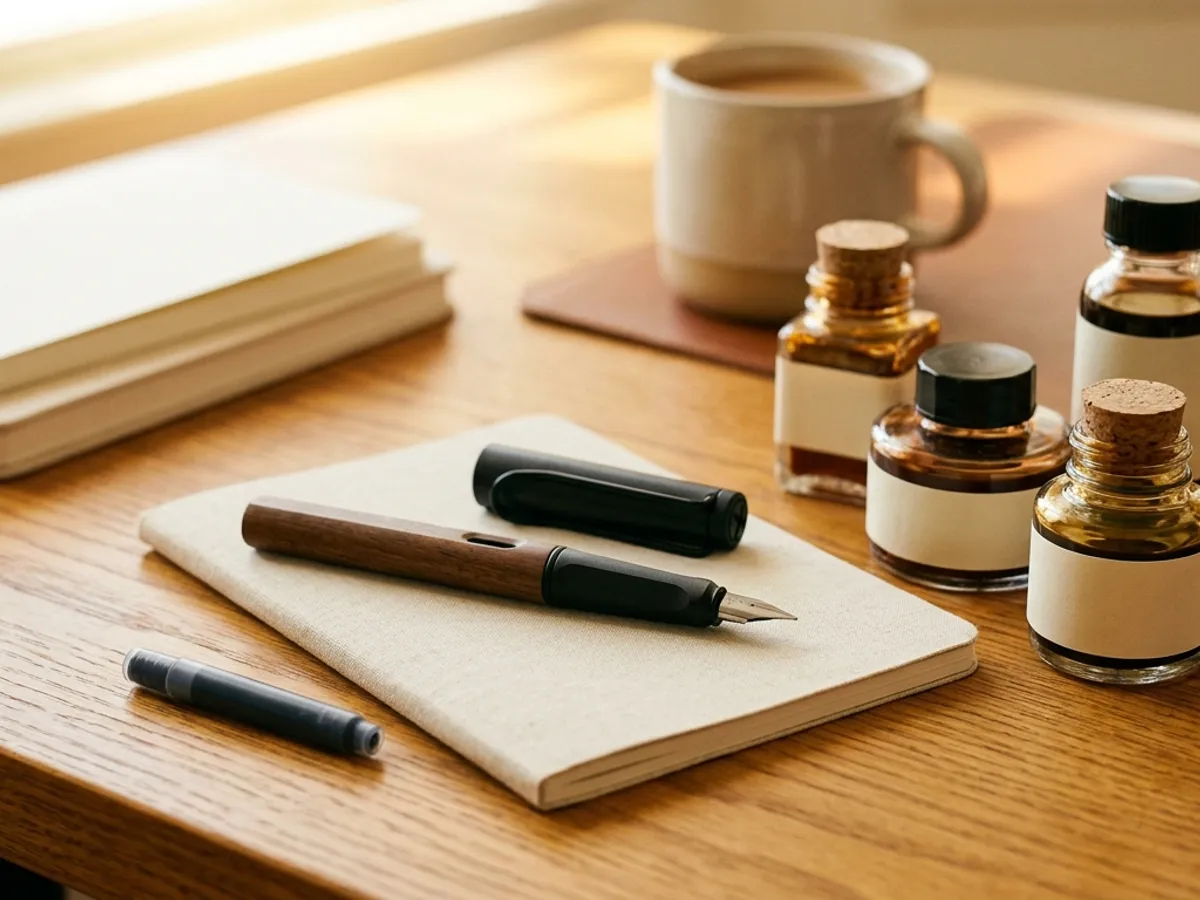
The Lamy Safari’s T10 ink cartridge system makes getting started effortless: slot in a cartridge, and the pen is ready to write. Lamy’s T10 cartridges are clean to handle, easy to replace, and available in several core colors — black, blue, blue-black, red, and occasional limited-edition additions. For a new fountain pen user, this simplicity is genuinely useful.
But as the Safari becomes a daily writing tool, the cartridge format’s limitations become apparent.
The T10 is a Lamy-proprietary format. Only Lamy’s own cartridges fit — no third-party alternatives. This means the ink selection never grows beyond what Lamy manufactures in T10 form. The bottled ink market, by contrast, offers hundreds of colors from Diamine, Pilot, Noodler’s, Waterman, Sailor, and many others, with dramatically different properties: shading inks that show tonal variation across a single stroke, iron gall inks formulated for permanence, fast-dry inks suited to lefthanders, and carbon inks designed for archival use.
For regular writers, there’s also an economic case. A 50ml or 80ml bottle of quality everyday ink represents many complete converter fills, and the per-milliliter cost of bottled ink is noticeably lower than replacement cartridges over time.
The Lamy Z24 converter resolves both the selection and cost constraints in one component. It fits the same cartridge chamber as a T10, uses the same connection mechanism, and adds a twist-piston that draws ink directly from any bottled fountain pen ink. The Safari’s nib, feed, and writing feel remain completely unchanged — the only difference is that the pen can now be filled from any ink bottle on the market.
What You Need: The Lamy Z24 Converter
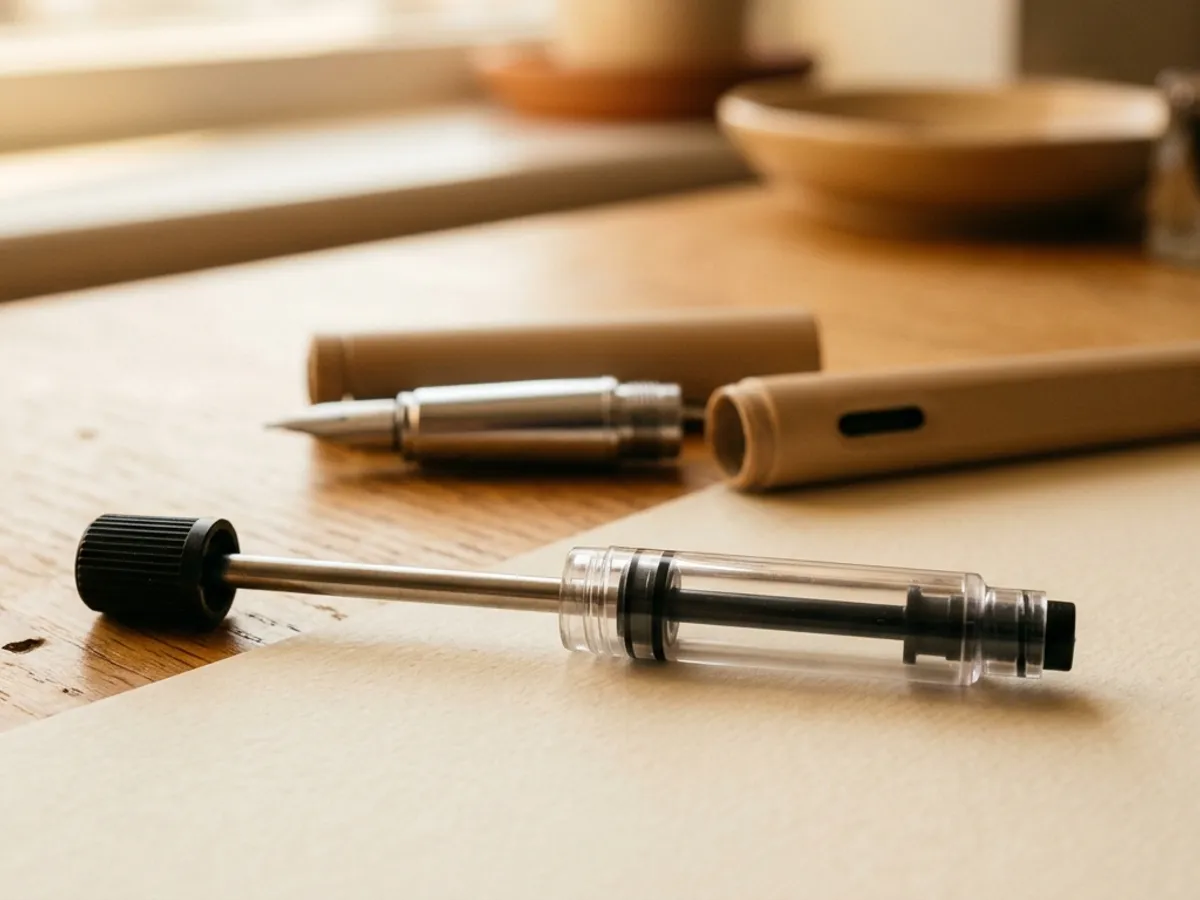
The Lamy Safari accepts one specific converter: the Lamy Z24. Converters are proprietary components — the Z24 is designed exclusively for the Lamy cartridge/converter interface and fits the Safari, AL-Star, Studio, Vista, CP1, and other Lamy pen models that accept the T10 cartridge. It will not fit Pilot, Kaweco, Platinum, Sheaffer, or other brand pens, which each use their own converter formats.
The Z24 uses a twist-piston mechanism. A knob at the top of the converter rotates to extend or retract a cylindrical plunger. Extending the plunger pushes air out of the converter chamber; retracting it creates the vacuum that draws ink in through the nib and feed. The motion is smooth and requires minimal maintenance beyond periodic rinsing.
The Z24’s converter body is transparent, which lets you see the ink level and color as the pen fills. This is a practical advantage when using a new ink — you can watch the fill and confirm the color looks as expected. It also makes it straightforward to tell at a glance how much ink remains before a writing session.
When purchasing a Lamy Safari, check whether the package includes the Z24. Some configurations are sold as converter-equipped bundles; others ship with only a T10 cartridge. If the listing doesn’t specify, assume you’ll need to purchase the Z24 separately. It’s easy to add to the same order, and it’s the single component that makes the full bottled-ink experience possible.
How to Fill Your Lamy Safari with Bottled Ink
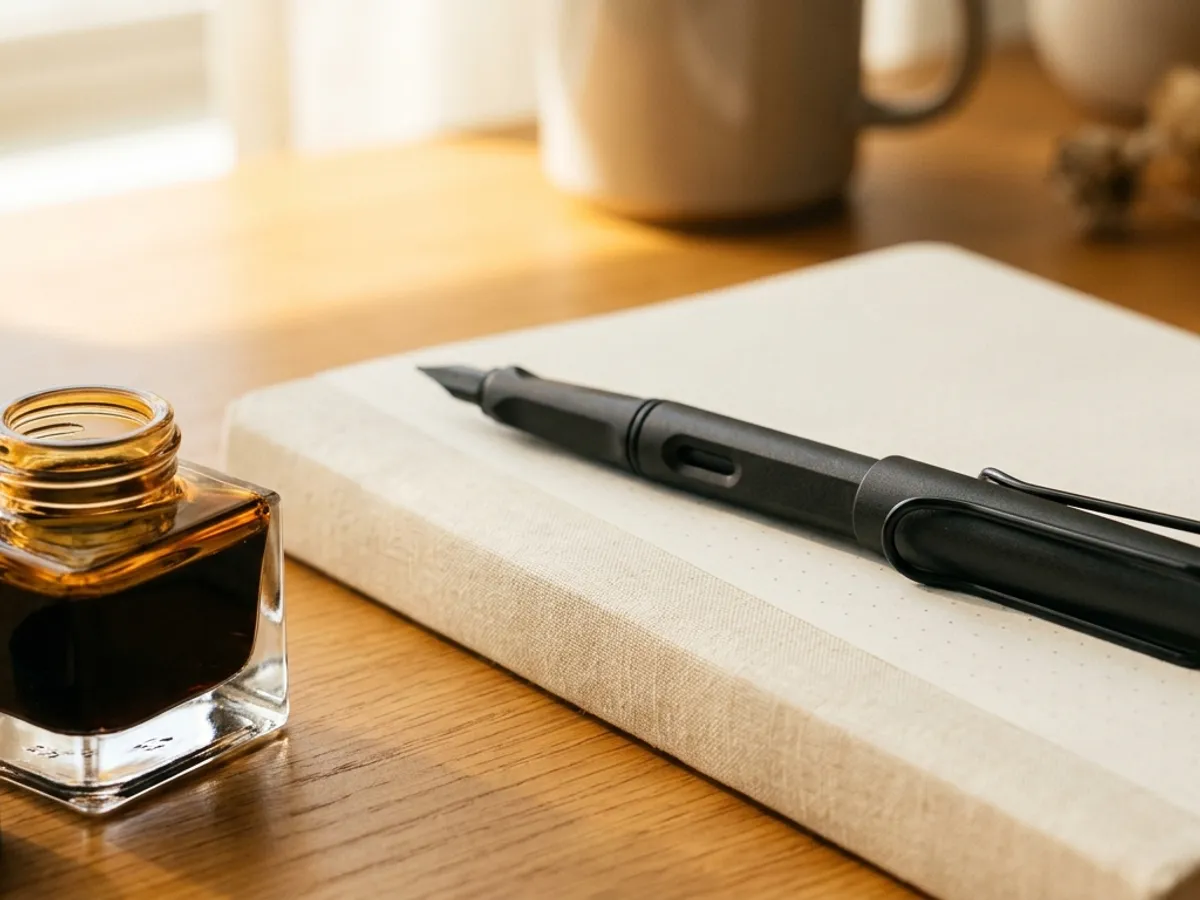
Filling the Safari with a converter in place takes about a minute once the process is familiar. No disassembly of the pen is needed — the nib and feed assembly stay in place throughout.
Start with the converter empty and the plunger fully extended. This readies the mechanism to draw ink in. If the plunger is partially retracted from a previous fill, extend it completely before starting.
Open your ink bottle. Submerge the Safari’s nib and grip section into the ink. The nib tip and the air channels on the underside of the feed should be below the ink surface — not just the nib tip alone. Shallow insertion can introduce air bubbles and produce an uneven fill. Aim to submerge to approximately the bottom of the grip section.
With the nib below the ink surface, slowly retract the plunger by twisting the knob. Watch ink rise into the converter through the transparent body. When the plunger is fully retracted, the converter is filled to capacity.
Lift the pen from the bottle. Hold it briefly over the bottle in case of minor drips, then wipe the nib and grip section exterior with a lint-free cloth or paper towel. The inside of the nib is inked; the outside should be clean before capping.
One practical note on capacity: the Z24 converter holds less ink by volume than a T10 cartridge. High-output writers — those filling several pages daily — will find the converter needs refilling more often than a full cartridge. This is the one genuine tradeoff of the converter format.
Between ink changes, flush the converter with water until the water runs clear. This is good practice regardless of ink type — some colors leave more residue in feeds than others, and regular flushing prevents buildup. A well-maintained converter will last many years of regular use.
The Best Bottled Inks for the Lamy Safari
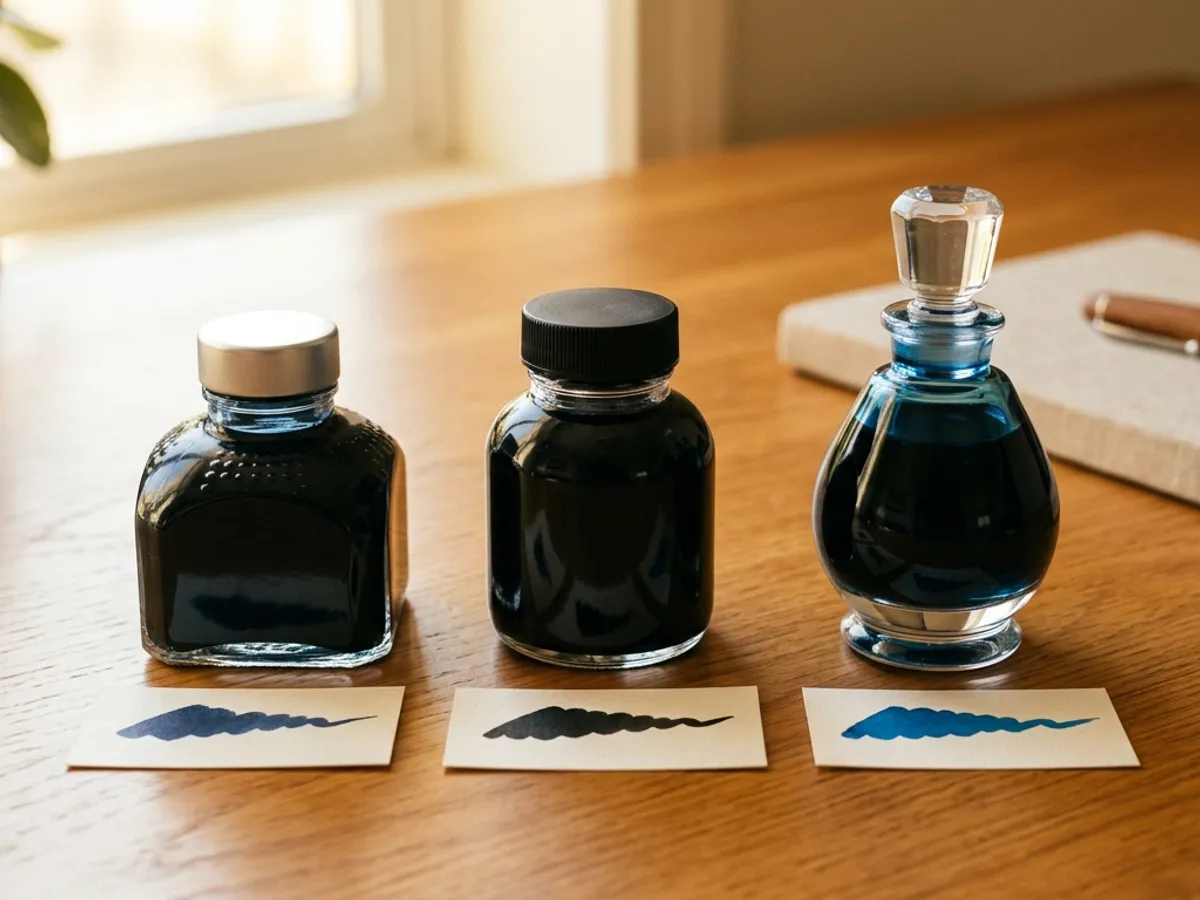
The Safari’s steel medium nib works reliably across a wide range of bottled ink properties. It isn’t particularly sensitive to viscosity differences, which makes the Safari a forgiving test bed for exploring new inks. Three options are especially worth knowing about as starting points.
Diamine Blue-Black is the default recommendation for everyday professional writing. It reads as a classic blue-black with a slight greenish undertone in certain lighting — authoritative on paper and legible in virtually any context. It flows smoothly through the Safari’s feed, doesn’t stain aggressively, and is available in an economical large-format bottle. The Diamine Blue-Black 80ml is a consistently recommended choice for regular writers who want a reliable professional color.
Noodler’s Black is the choice for writers who need a highly durable black. The Bulletproof formulation is designed to bond to cellulose fibers in paper, making the dried ink highly resistant to water and many solvents. For contracts, field notes, or any writing that might encounter moisture, this offers a level of permanence that standard dye inks don’t. The Noodler’s Black 3oz bottle is generously sized and economically priced for the capacity.
Pilot Iroshizuku Kon-peki (deep sky blue) is the entry point to premium ink. This distinctive cerulean blue shades visibly across medium-nib strokes — lighter on minimal pressure, darker with increased contact — producing expressive, varied writing even at everyday writing speeds. It represents the upper tier of well-behaved dye inks: clean in feeds, resistant to staining, and visually rewarding. The Pilot Iroshizuku Kon-peki 50ml is one of the most popular bottled ink purchases across the enthusiast community.
For new bottled-ink users, starting with an everyday color before exploring specialty inks is the sensible approach. Once the filling process feels routine and the Safari’s behavior with bottled ink is familiar, branching into shading inks, iron gall inks, or more distinctive colors becomes part of the enjoyment.
One note on iron gall inks: they tend to be more acidic than standard dye inks and can stain feeds more aggressively. The Safari is generally resilient, but flushing the pen thoroughly between ink changes is good practice regardless of ink type.
Converter vs. T10 Cartridges: Which Should You Use?
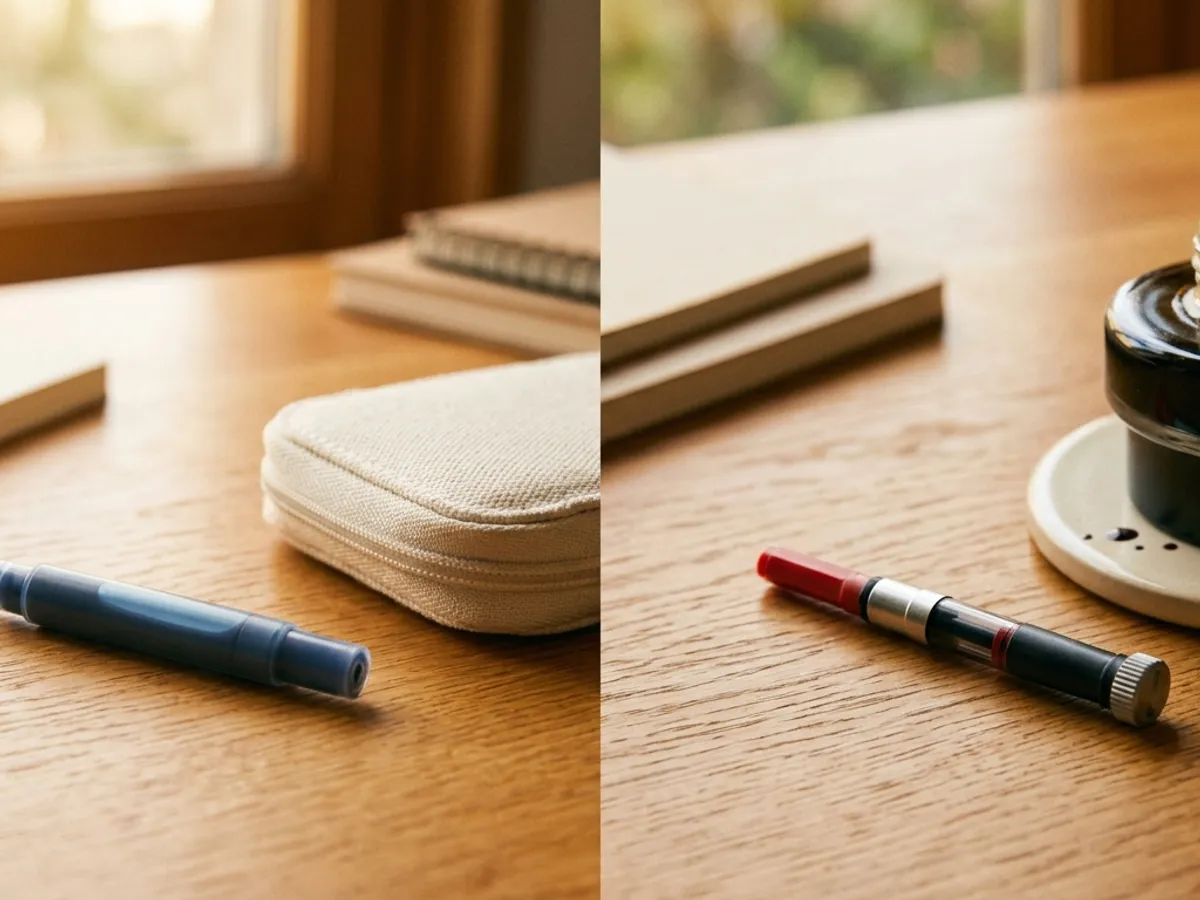
The T10 cartridge and the Z24 converter each suit different writers and situations. Neither is inherently superior — the right choice depends on how and where you use the pen.
Use T10 cartridges when:
- Setup speed is the priority. A cartridge slots in without a bottle, filling equipment, or any preparation time.
- You’re traveling. Cartridges are self-contained and carry no risk from an open ink bottle in a bag.
- The pen will be used infrequently. A T10 in a capped pen maintains readiness over time without concern about ink evaporation from the converter.
- Lamy’s color selection covers your needs. If blue, blue-black, or black is sufficient, cartridges are a clean and efficient solution.
Use the Z24 converter when:
- You want access to the full bottled ink market — hundreds of colors and ink types beyond what Lamy produces in T10 form.
- You write consistently. The per-milliliter economics strongly favor bottled ink over cartridges for daily writers.
- You’re exploring the hobby seriously. Working with bottled ink is the standard workflow for committed fountain pen users.
- You want to use different inks for different purposes — one color for notes, another for correspondence, a third for journaling.
Many Safari owners use both in rotation: T10 cartridges for travel or for keeping the pen ready without a nearby bottle, the Z24 converter for regular desk use. Switching between them takes only a moment, and the pen accommodates each equally.
For more on Lamy’s T10 cartridge options, colors, and compatibility across the full Lamy pen family, see the guide to Lamy fountain pen cartridges.
Our Pick: Which Lamy Safari to Buy
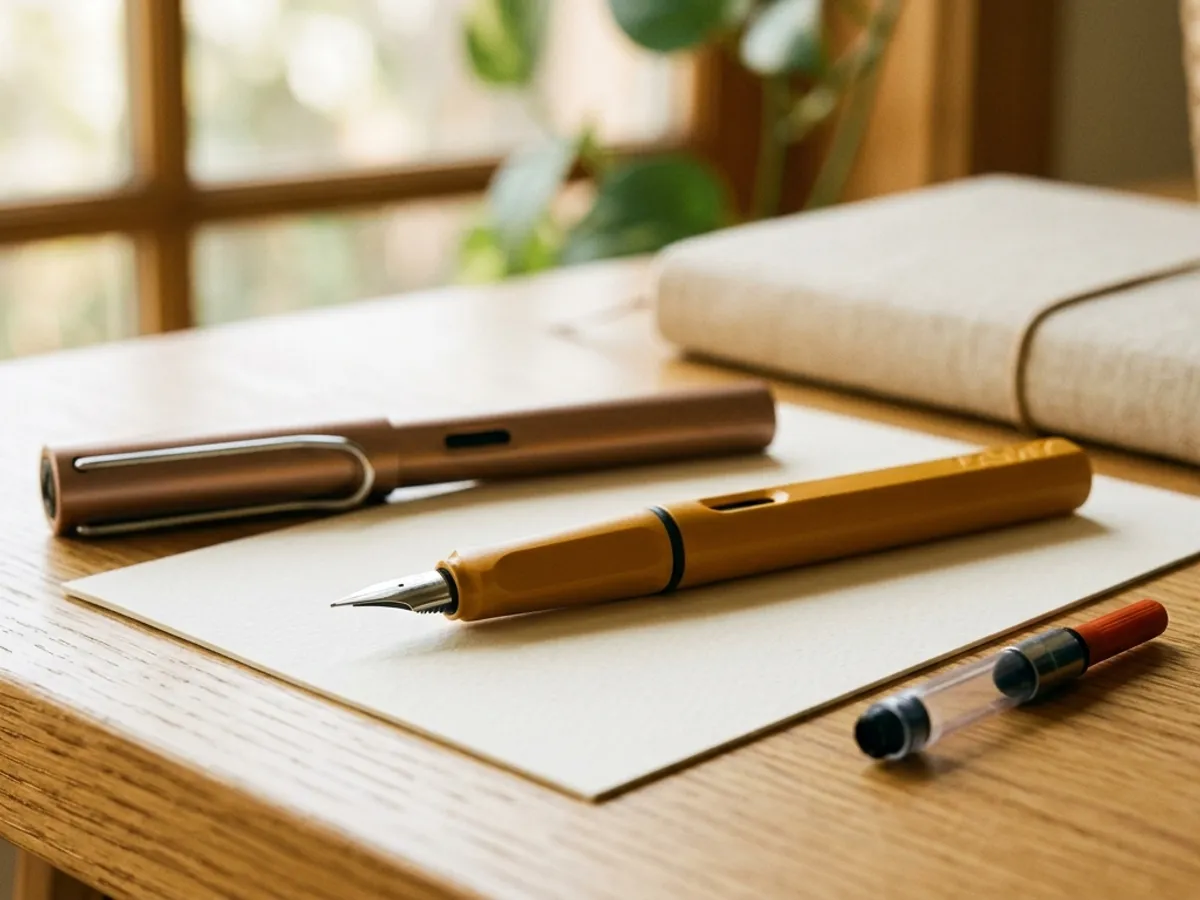
For a Safari set up for bottled ink from day one, the Lamy Safari fountain pen paired with the Z24 converter is the clear recommendation. The medium nib is the most versatile starting configuration — it works across most bottled inks and produces a confident, readable line on quality paper.
Writers who prefer thinner lines should look at the fine-nib Safari. Those interested in expressive stroke variation can consider the 1.1mm italic nib, which produces noticeably different line widths depending on stroke direction and suits calligraphy-adjacent writing styles — though its behavior is distinctly different from a standard round nib.
For writers who want a more substantial feel in hand, the Lamy AL-Star uses the same T10/Z24 ink system as the Safari and behaves identically pen-to-paper. Its aluminum body gives it noticeably more weight, which some writers find more comfortable for extended sessions.
The Lamy Safari is available in a broad range of colors and seasonal finishes. The body color has no effect on writing performance or ink compatibility — choose whichever appeals and add the Z24 converter. Confirm the package includes it or order separately. The full guide to the Lamy Safari covers color options, nib choices, and the broader Lamy lineup in more detail.