
This site is reader-supported. As an Amazon Associate we earn from qualifying purchases. When you buy through links on this page, we may receive an affiliate commission at no additional cost to you. Our editorial picks are independent of commercial relationships.
What Makes a Great Fountain Pen Ink
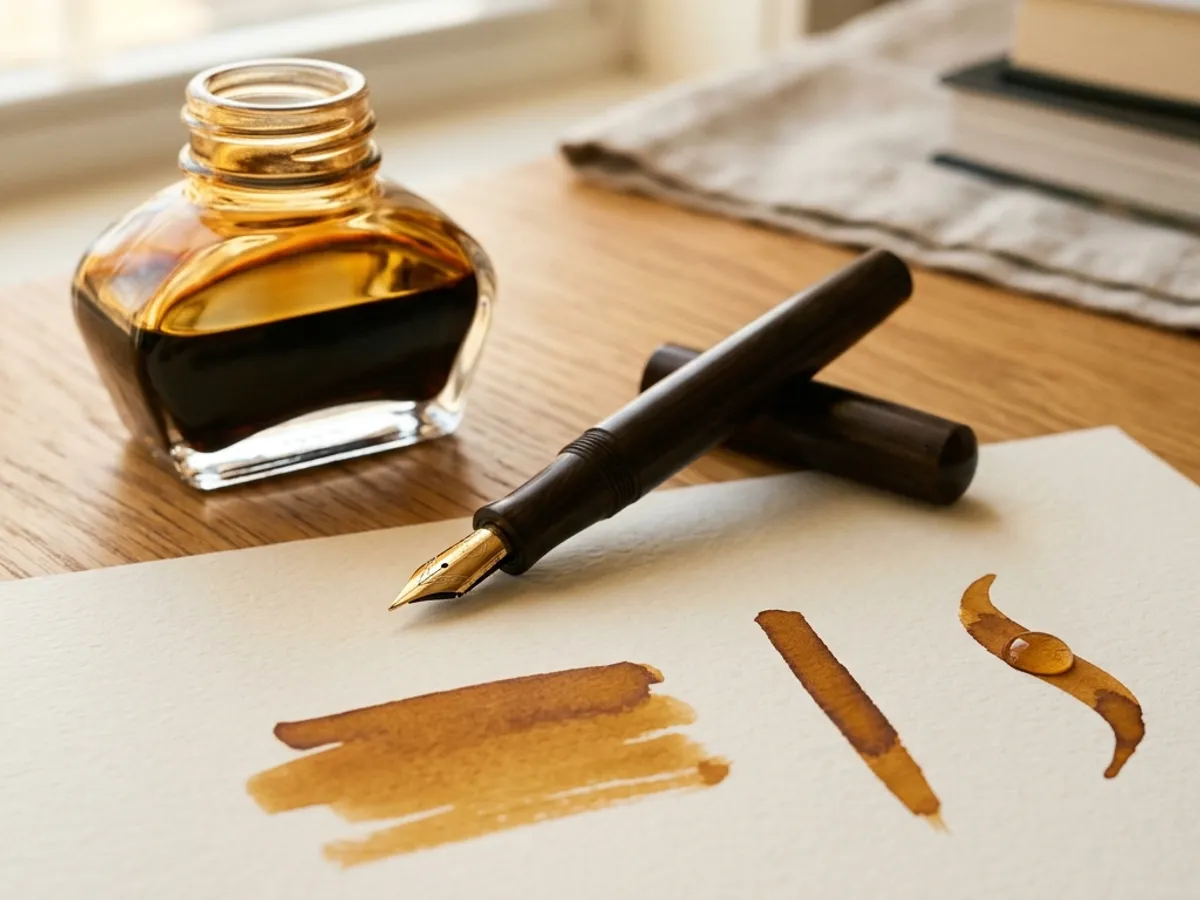
The phrase “best fountain pen ink” depends almost entirely on what you are writing, what pen you are using, and what you want the finished page to look like. A great everyday ink sits quietly in the background: it flows reliably, dries in a reasonable time, and washes out of the feed if you flush the pen after a few weeks. A great showcase ink does the opposite — it layers color, throws a secondary hue under raking light, and turns each page into something worth looking at twice.
Three properties determine whether an ink is a good fit for a given use:
Flow and lubrication. Ink that flows too dry skips across fast writing. Ink that flows too wet bleeds through thin paper or saturates the feed, making a mess on particularly wet nibs. Most bottled inks from established brands sit in an acceptable range; the differences become most visible in the context of wet nibs and absorbent papers.
Dry time. Faster-drying inks are more practical for left-handed writers and anyone who works in a spiral notebook where the hand grazes the page immediately after writing. Slow-drying inks — typically wetter and more saturated — produce richer color on the right paper but smear easily in the seconds before they set.
Water resistance. Standard dye inks wash out cleanly on contact with water. Iron-reactive inks — sometimes called “bulletproof” — become permanently bonded to cellulose fibers once dry, making them practical for documents that might get wet or that need to last decades. Pigmented inks offer a third path: archival permanence and excellent lightfastness, but requiring more attentive pen care to prevent pigment from settling and blocking the feed.
These three properties shape every recommendation in this guide. The inks selected here are chosen for documented, reliable performance across a breadth of real-world writing conditions, not for novelty or visual spectacle alone. For inks that prioritize optical interest, see our guide to the coolest fountain pen inks.
Best Blue-Black Ink: Diamine Blue/Black
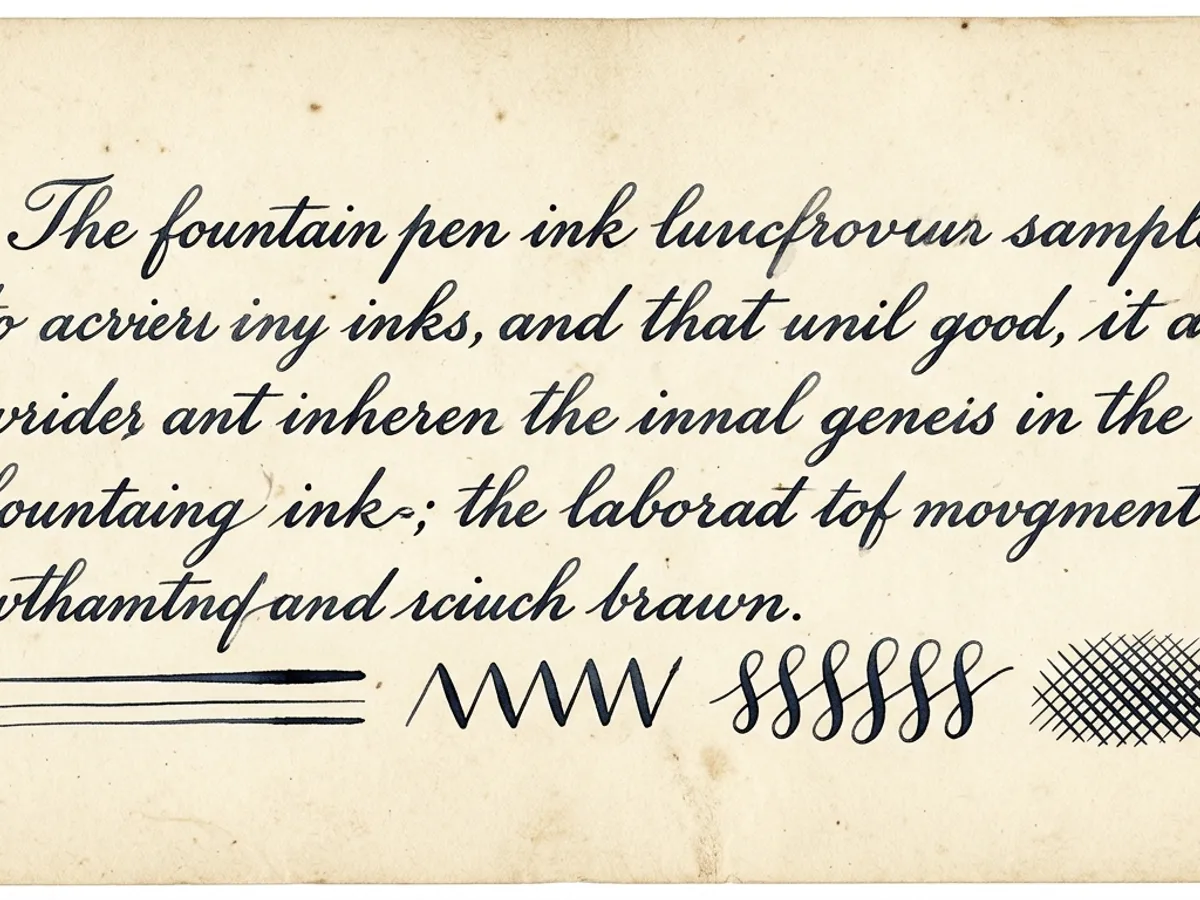
For everyday correspondence, academic work, and any writing where the color needs to read as professional without being stark matte black, blue-black is the gold standard. Diamine’s Blue/Black is the most straightforward recommendation in this category: a well-behaved, affordable ink that delivers deep, slightly blue-tinted black strokes on most papers without drama or maintenance overhead.
Diamine is a British manufacturer with a consistent product line and a long history of bottled fountain pen inks. The Blue/Black formulation is a standard dye-based ink — not waterproof once dry, but it cleans from a pen easily and causes no feed damage during normal use. The color sits closer to black than to navy in most artificial lighting, shifting subtly blue-toned under natural daylight. On cream or warm-white papers, this reads as a slight warmth in the black line; on bright white stock, the blue tone is more apparent.
Independent reviewers and owner reports consistently describe Diamine Blue/Black as a forgiving daily writer across the common range of fountain-pen-friendly papers — Rhodia, Leuchtturm, Clairefontaine — without feathering or significant show-through on 80gsm stock. The 80ml bottle provides strong value for a writer who commits to a single color; it lasts a long time even for consistent daily users.
Diamine Blue/Black Fountain Pen Ink on Amazon
Best suited for: Everyday note-taking, correspondence, journaling, and any writing context where a classic blue-black result is appropriate. Compatible with any fountain pen that accepts bottled ink via a converter.
Less suited for: Writers who need waterproof permanence for documents, or who want a richer blue-black with visible shading in the dried stroke.
Best Color and Shading Ink: Pilot Iroshizuku Kon-Peki

Pilot’s Iroshizuku line is among the most consistently reviewed premium bottled ink lines available for fountain pens, and Kon-Peki — “deep cerulean” — is frequently cited as one of the standout entries. It is a vibrant, saturated cerulean blue that shades noticeably in medium and broad nibs, meaning the color deepens and lightens within a single stroke as ink concentrates and thins.
Shading is an aesthetic property specific to fountain pen writing. Unlike gel or rollerball inks, which deliver a flat, uniform color line, certain fountain pen inks respond to the way ink distributes through a stroke — pooling where the nib moves slowest, thinning where it moves fastest. Kon-Peki’s formulation makes this effect pronounced enough to reward attention in journaling, personal correspondence, and calligraphy practice, while remaining controlled enough to read cleanly in smaller nibs and faster everyday writing.
Pilot packages the Iroshizuku line in 50ml glass bottles with a hinged lid and narrow neck that seal well and prevent evaporation during long-term storage. Independent reviewers across multiple platforms note that the formulation stays stable over years of intermittent use. Kon-Peki is a standard dye ink — not waterproof — and compatible with any pen that accepts bottled ink via a converter. Pilot’s own pens pair naturally with it, but the ink performs identically in any other brand’s converter-equipped pen.
Pilot Iroshizuku Fountain Pen Ink on Amazon
Best suited for: Writers who journal or correspond by hand and want an ink that rewards attention — a blue that reads differently under morning light versus lamplight, and that develops visual character across a page. Particularly expressive in pens with medium, broad, or stub nibs.
Less suited for: Writers who want a single workhorse everyday ink that stays visually consistent and predictable. Kon-Peki’s saturation and shading are appealing in personal writing; they can draw attention in professional documents where color uniformity is expected.
Best Permanent Black Ink: Noodler’s Black
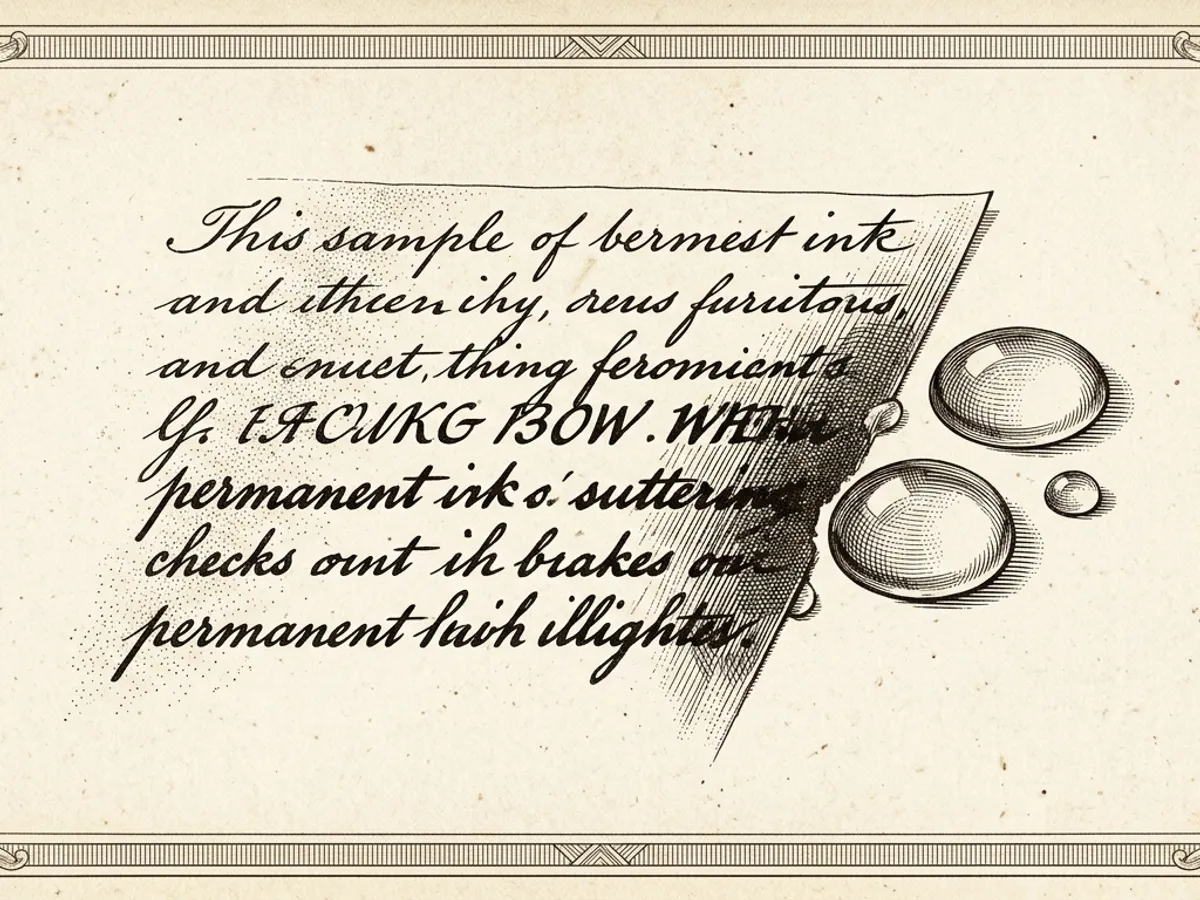
Noodler’s Black is the reference-standard permanent fountain pen ink. It uses a “bulletproof” formulation — Noodler’s term for inks that bond to cellulose fibers in paper through a chemical reaction, producing a mark that resists water, bleach, and most solvents once dry. A line written in Noodler’s Black cannot be removed by soaking or standard cleaning agents after it has set; it is an archival mark.
The practical applications are specific: signed documents that may encounter water or humidity, handwritten records intended to last for decades, field notes written in damp conditions, and professional correspondence where permanence is a stated or implicit requirement. For these applications, Noodler’s Black performs reliably and is cost-effective relative to European premium ink lines.
The trade-offs are real and documented across owner reports and independent reviews. Noodler’s Black is slow to dry, particularly on coated papers and in wetter nibs, making it a smear risk for left-handed writers and a poor fit for fast note-taking on glossy journal paper. The formulation also stains some pen materials over extended exposure; Noodler’s itself recommends against long-term use in demonstrator pens with clear plastic sections, where permanent discoloration of the internal chamber is a realistic outcome. Regular flushing every two to three weeks is more important with this ink than with standard dye inks.
Owner reports consistently verify both the claimed permanence — tests involving soaking written paper in water, rubbing with a damp cloth, and applying cleaning agents routinely fail to disturb the dried ink — and the maintenance requirements. This is not an ink that tolerates inattentive pen care.
Noodler’s Black Fountain Pen Ink on Amazon
Best suited for: Writers who need reliable waterproof black for documents, records, and field use, and who flush their pens on a regular schedule. A practical choice for anyone who signs important correspondence by hand.
Less suited for: Left-handed writers (slow dry time), writers with demonstrator pens (staining risk), and anyone looking for a low-maintenance daily ink that cleans out easily.
Other Inks Worth Considering

The three inks above cover the major writing need categories, but the market includes notable alternatives worth knowing.
Diamine Registrar’s Blue-Black. An iron gall ink that occupies a distinct position from standard Diamine Blue/Black. The iron gall component makes it water-resistant on paper once oxidized, offering much of Noodler’s Black’s permanence in a traditional blue-black shade. Iron gall inks require attentive pen maintenance — the iron chemistry can affect steel nib feeds over extended periods without flushing, and gold nibs are not meaningfully affected. For a writer who wants permanent, archival blue-black rather than permanent black, this is the serious option to consider.
Platinum Carbon Black. A pigmented carbon black ink developed by Platinum for use in its pen line, though reviewers use it in other pens with consistent results when the pen is flushed regularly. Pigmented carbon black inks are the most lightfast and archival option available in the fountain pen format; the trade-off is that pigment can settle and block feeds in pens left unused for more than a few weeks. Recommended only for pens used daily and flushed completely on a regular schedule.
Pilot Iroshizuku in other colorways. The full Iroshizuku catalog includes over twenty inks, most sharing the base formulation quality and shading behavior of Kon-Peki. Tsuki-yo (blue-green), Murasaki-shikibu (soft purple), and Momiji (brick red) are frequently cited as favorites among enthusiast reviewers. If Kon-Peki’s cerulean blue is not the right shade, the rest of the line is worth exploring with the same confidence in formulation quality.
For a broader breakdown of ink types — dye-based, iron gall, pigmented, and shimmer — see our Best Fountain Pen Inks: A Complete Buying Guide.
Matching Ink to Your Pen
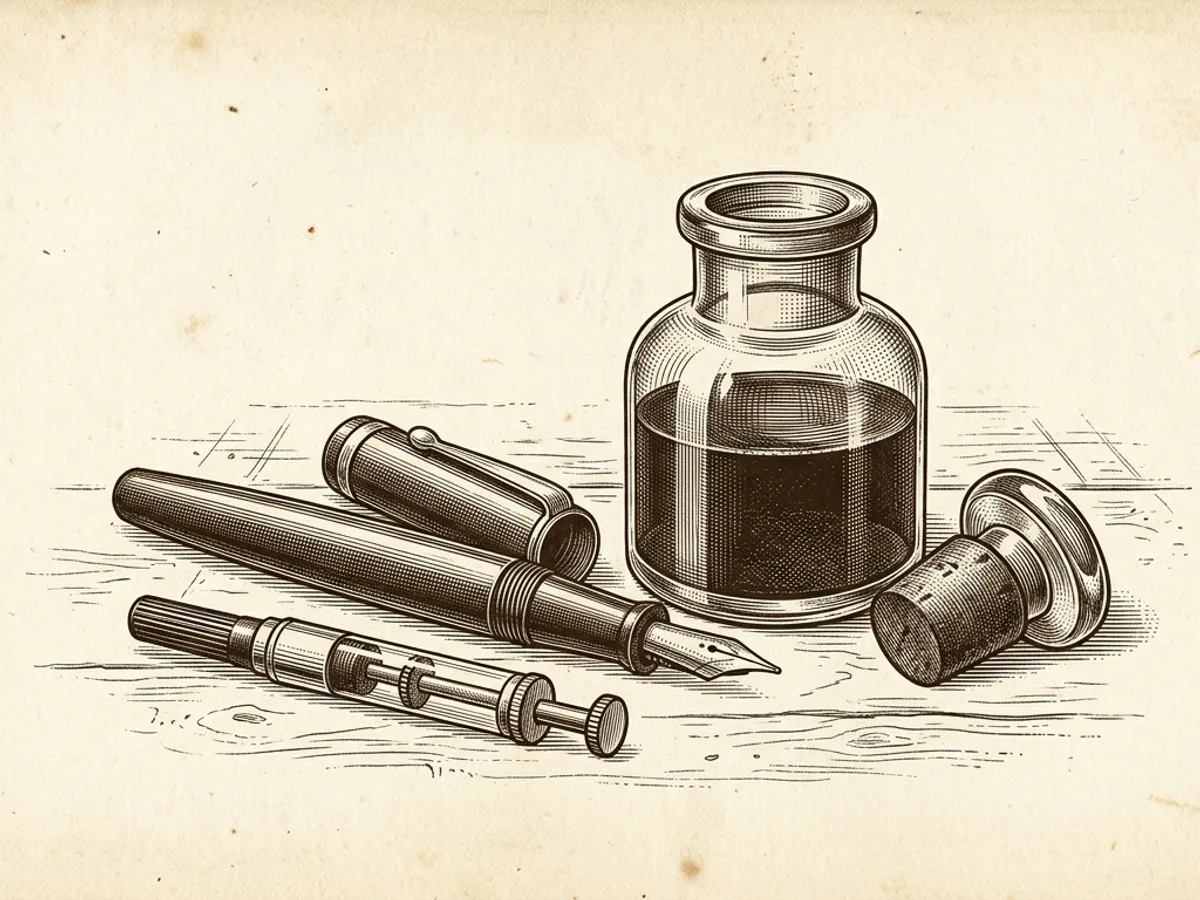
The inks covered in this guide are bottled inks, meaning they require a pen equipped with a converter or a piston-fill mechanism. Converter-equipped pens draw ink into the converter from the bottle; piston fillers draw it directly into the barrel reservoir. Our How to Fill a Fountain Pen With Ink guide walks through both methods step by step.
A few properties determine whether a specific bottled ink is a good fit for a specific pen:
Wet versus dry nib behavior. A wetter nib amplifies the shading and saturation of inks like Iroshizuku, making its expressive qualities more visible. The same generous flow means that a slow-drying ink like Noodler’s Black takes longer to set and carries a higher smear risk. A drier nib partially counteracts slow dry time but suppresses the shading effects that make showcase inks visually rewarding.
Maintenance requirements and pen use frequency. Standard dye inks tolerate intermittent use — a pen left for a month with Diamine Blue/Black will typically clean out with running water and a few flushes. Pigmented and iron gall inks do not tolerate the same inattention. If a pen will sit unused for more than two weeks, flush the ink before storing the pen. This rules out pigmented and iron gall options for pens used intermittently, regardless of nib material.
Nib metal. Standard dye inks, including the Iroshizuku and Diamine main ranges, are safe across all nib metals under normal use. Iron gall inks can interact with steel feeds and nibs over extended periods without flushing; gold nibs and feeds are not meaningfully affected by iron gall chemistry.
Storing Your Ink Properly
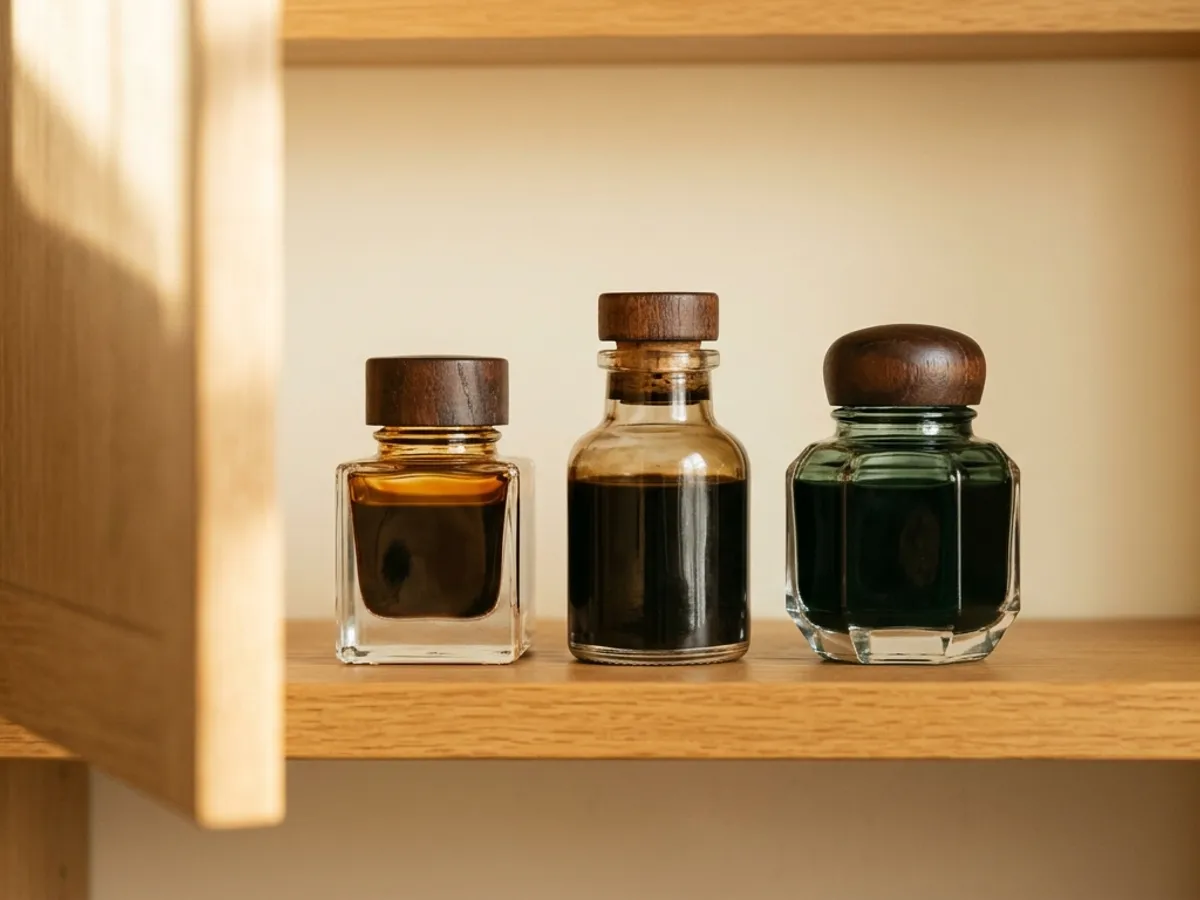
Properly stored bottled fountain pen inks last for years — often a decade or more — without significant degradation. The practical rules are simple and consistent across ink types.
Store bottles upright. Ink resting on its side keeps the cap seal in contact with liquid or vapor indefinitely, increasing the risk of gradual evaporation and seal degradation over months and years. An upright bottle keeps the seal dry and the ink settled at the bottom.
Keep ink out of direct sunlight and away from heat sources. Ultraviolet light fades dye-based inks over sustained exposure, and heat accelerates water evaporation from the formulation, which concentrates the dye and changes how the ink flows and behaves in the feed. A drawer, cabinet, or closed storage box at normal room temperature is adequate for all inks in this guide; no refrigeration is needed.
Recap bottles firmly after each use. Brief air exposure during filling is unavoidable; prolonged air access between uses leads to gradual evaporation and, in warm conditions, can introduce mold into water-based formulations. A snug cap after every use is all the protection an ink needs.
If an ink develops sediment after long storage, gently swirl or invert the bottle before use. Dye-based inks that have settled are typically restored to normal consistency this way. An ink that smells noticeably off or that has developed visible growth should be discarded rather than used in a pen.
Our Top Picks at a Glance
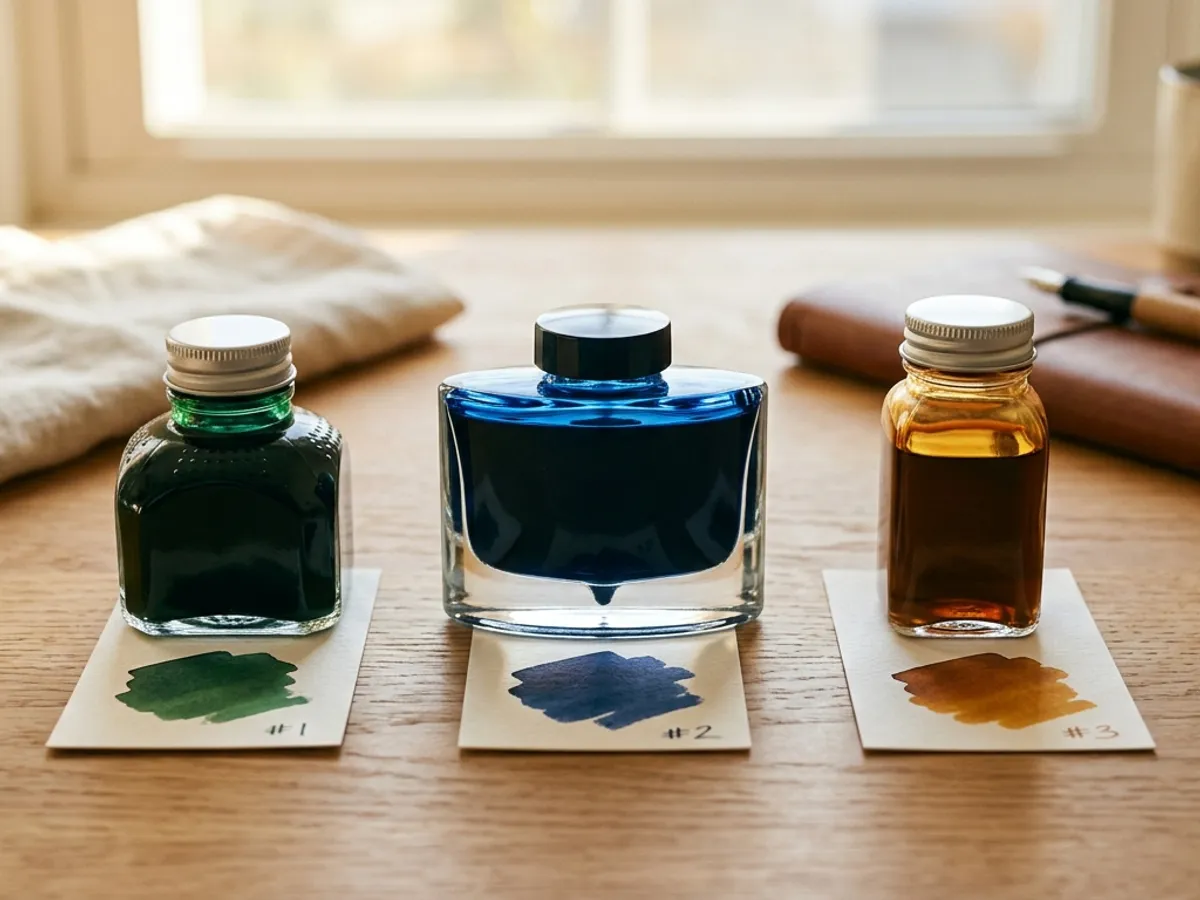
The three inks in this guide cover the essential range of what most fountain pen writers need:
For everyday writing in all contexts — correspondence, notes, planners, journals, documents where a classic result is the goal — start with Diamine Blue/Black. It is affordable, forgiving across nibs and papers, and suitable for any pen that accepts a converter. The 80ml bottle makes it one of the most economical quality inks available.
For expressive personal writing — journaling, calligraphy, personal correspondence where you want the writing itself to reward attention — Pilot Iroshizuku Kon-Peki delivers the shading and color depth that makes fountain pen writing visually rewarding as well as practical.
For documents that need to survive water, time, or physical stress — signed letters, field notes, permanent records — Noodler’s Black is the most proven permanent fountain pen ink available at its price. Flush the pen on a regular schedule, avoid demonstrator bodies, and it will perform reliably for years.
Most fountain pen writers eventually keep a small set rather than committing to a single ink — one reliable everyday color and one or two showcase inks for writing occasions that reward a more expressive choice. These three cover that range cleanly and work in any pen that accepts a bottled ink converter. If you still need a converter-ready pen to pair with them, our guide to The Best Budget Fountain Pens covers reliable options at every price point.