
This site is reader-supported. As an Amazon Associate we earn from qualifying purchases. When you buy through links on this page, we may receive an affiliate commission at no additional cost to you. Our editorial picks are independent of commercial relationships.
What Fountain Pen Ink Actually Is
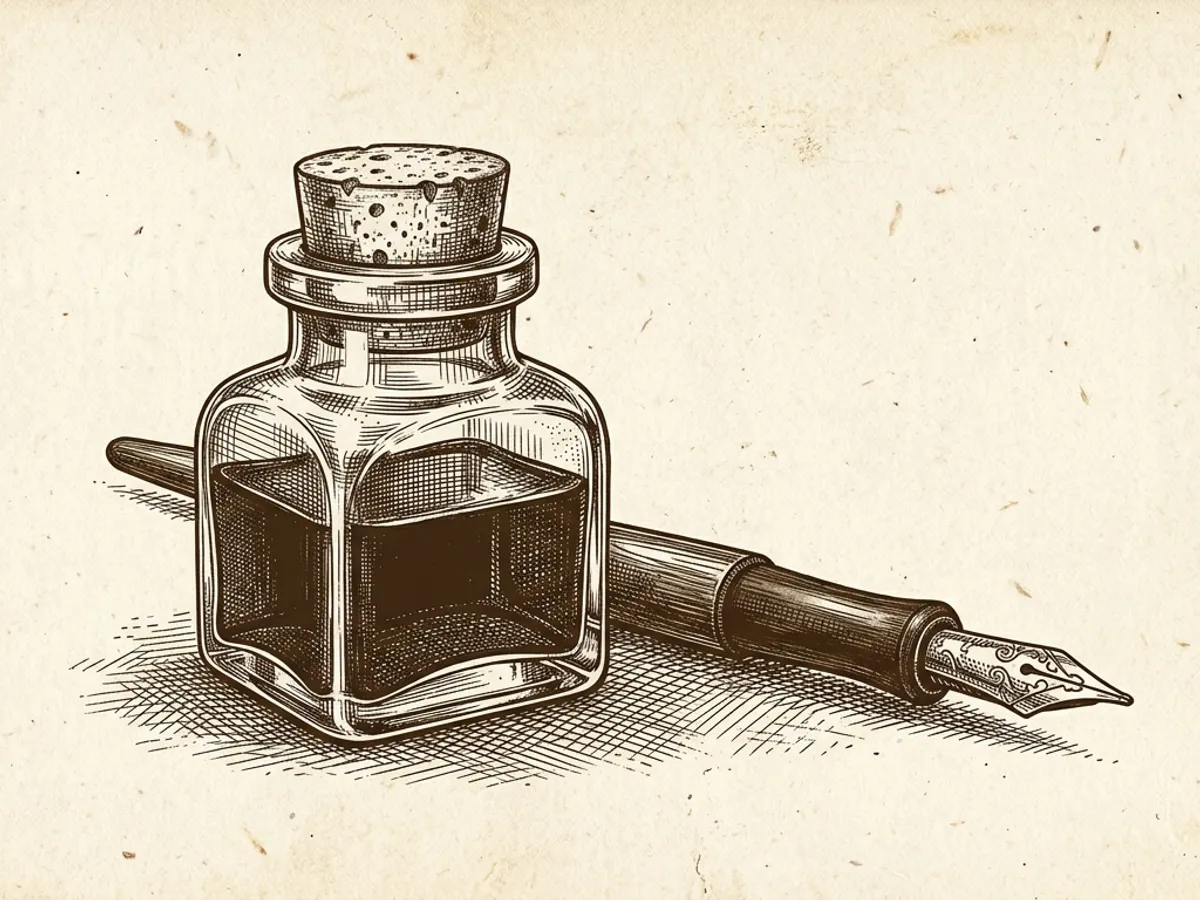
Fountain pen ink is a water-based, free-flowing liquid engineered to move through a pen’s feed by capillary action — pulled forward by surface tension alone, without pressurized cartridges or a thick paste. It needs to be thin enough to flow reliably at the nib tip but viscous enough to stay in the reservoir when the pen is uncapped and set down on a desk.
This balance is what separates fountain pen ink from other writing fluids. India ink, acrylic inks, and most drawing inks are not safe for fountain pens: they dry too quickly, gum up the internal feed channels, and can permanently clog a nib. Printer ink is formulated for completely different delivery mechanisms and is not a substitute. Fountain pen ink from a reputable brand is developed specifically for the demands of a fine feed and a pen that may sit capped for hours between uses.
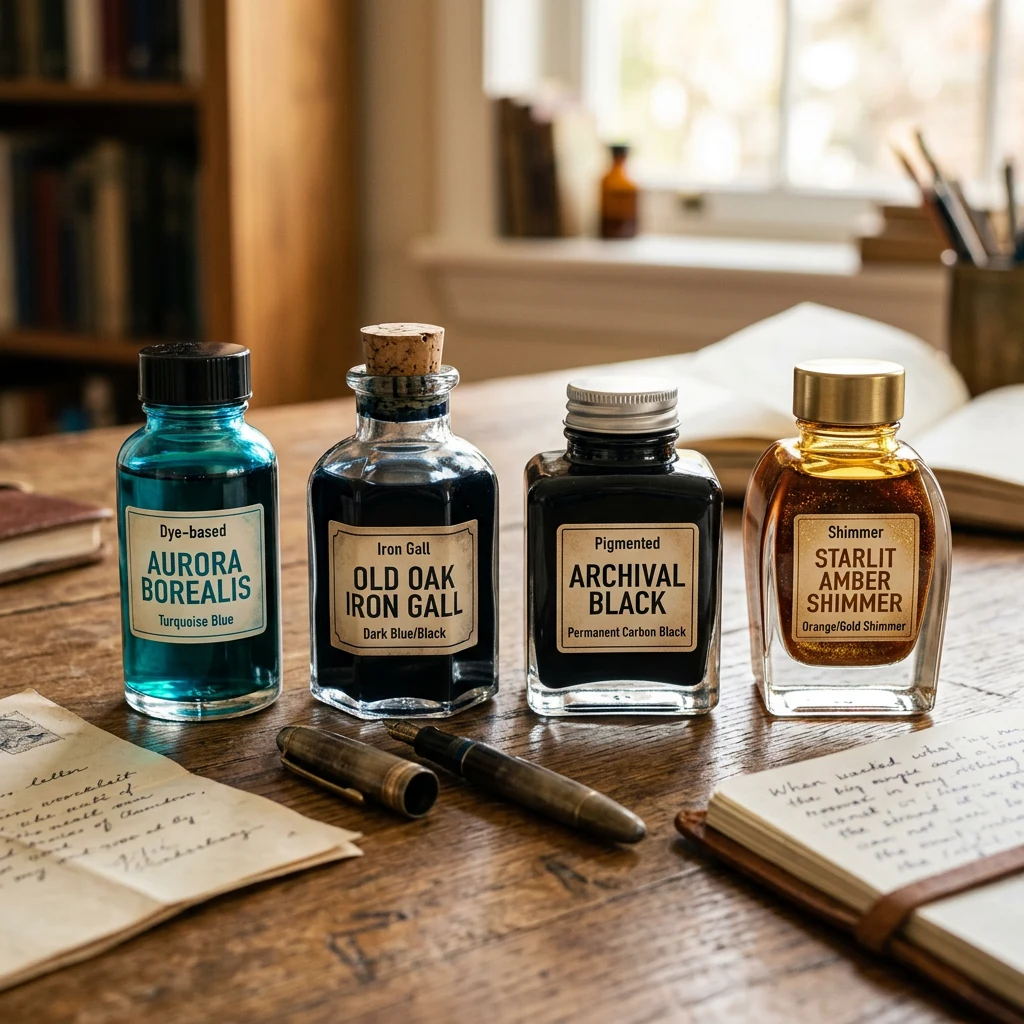
Most fountain pen inks are water-soluble dye solutions. Others suspend microscopic particles in the carrier fluid — these are called pigmented inks — or contain iron compounds that react with paper over time to create a permanent mark. Each formula has distinct properties: flow speed, dry time, water resistance, and how it behaves in a stored pen. Understanding these types makes choosing ink straightforward rather than overwhelming.
The practical upshot: stick to inks explicitly marketed as fountain pen safe, avoid anything designed for dip pens or brushes, and you will not go wrong.
Types of Fountain Pen Ink
Dye-Based Inks
Dye-based inks are the default for most fountain pen users. The colorant is fully dissolved in the water carrier, leaving no particles to settle or clog the narrow channels of a feed or nib. They flow smoothly, clean out quickly when you flush a pen with room-temperature water, and produce vivid, consistent color from the first stroke. Dry time on most papers is measured in a few seconds.
The one limitation is water resistance. Most dye-based inks will smear or run if wetted, and the more vivid colors may fade gradually over years in direct sunlight. For journaling, note-taking, letter-writing, and everyday correspondence, this rarely matters. For documents you need to survive accidents or archival storage, look at other formulations.
Popular dye-based lines include Diamine (made in the UK), J. Herbin (France), Robert Oster (Australia), and Waterman. Between them, they offer hundreds of colors across every price point, from very affordable 80ml bottles to smaller artisan runs.
Iron Gall Inks
Iron gall ink has been in continuous use since at least the 15th century. Traditional formulas combined iron sulfate with tannins extracted from oak galls in an acidic solution. Modern versions are diluted to reduce their corrosive potential, but the core chemistry remains: the ink penetrates into the paper’s cellulose fibers and reacts with them over hours, producing a darkening of the color and genuine water resistance once fully cured.
Iron gall inks typically write as a blue-black or gray-black, then shift to a deeper, richer tone as they dry and react. The color shift is one of the quiet pleasures of writing with them. The tradeoff is that the same mild acidity that makes iron gall inks durable can be slightly hard on metal pen components if ink is left sitting in the pen for weeks. Writers who refill regularly and flush their pens periodically find iron gall inks entirely trouble-free.
Diamine Registrar’s Blue-Black and Rohrer & Klingner Salix are well-regarded iron gall options with a good balance between permanence and pen safety.
Pigmented Inks
Pigmented inks suspend microscopic color particles in the carrier fluid rather than dissolving them. The result is exceptional lightfastness — pigmented inks resist fading for decades — and waterproofing that activates quickly once the ink dries on paper. Platinum Carbon Black is the benchmark: it dries genuinely waterproof and permanently black, used by architects, calligraphers, and letter-writers who need their writing to last.
The catch is that suspended particles can settle and dry in place if the pen sits unused for more than a few days. Pigmented inks work best in pens used daily. They should be thoroughly flushed before storing a pen for any extended period, and they are not recommended for very narrow nibs or feeds that are difficult to disassemble and clean.
Shimmer and Sheen Inks
Shimmer inks are dye-based inks with added mica particles that glitter on the paper surface. Sheen inks are specially formulated dyes that produce a secondary color at the edges of dried strokes — a red ink with green sheen, a blue with copper highlights. Both types are decorative rather than functional additions.
Shimmer inks need periodic shaking to keep particles in suspension and can catch in very fine nib channels; they work best in medium or broader nibs. Sheen inks require smooth, coated paper to show their effect clearly — on absorbent or rough paper the phenomenon mostly disappears. Diamine’s Shimmertastic range and J. Herbin’s 1670 series are two popular lines in these categories.
What to Look for When Buying
Water resistance. Ask yourself whether it matters if the writing gets wet. For documents, letters, or anything archival, iron gall and pigmented inks offer meaningful protection. For everyday notes and journaling, standard dye-based inks are entirely suitable.
Dry time. Faster dry times suit quick writers and left-handed writers who smear wet ink as the hand follows across the page. Iron gall inks typically dry faster than most dye-based inks. Very wet-flowing inks can take several seconds on coated or heavily sized papers.
Bottle size and value. Fountain pen ink goes a long way. A 50ml bottle lasts most writers several months of regular use; an 80ml bottle can last a year or more. Diamine’s 80ml bottles and Noodler’s larger bottles offer strong value per milliliter. Premium Japanese inks such as Pilot Iroshizuku are priced higher per ml but deliver flow properties and color depth that many writers find worth the premium.
Color range and character. The color variety available in fountain pen inks has no equivalent in ballpoints or rollerballs. Blue-blacks that shift from cool to warm as they dry, greens with red sheen at the stroke edges, rich burgundies, and blacks that carry subtle depth — choosing an ink is one of the genuine pleasures of the hobby. Most specialty pen retailers sell ink samples in small vials, letting you try a dozen inks for a few dollars before buying a full bottle.
Pen compatibility. Most fountain pen inks from established brands work safely in all fountain pens. Shimmer inks should be avoided in very fine nibs where particles can catch. Pigmented inks should be reserved for pens used daily. Any ink not specifically designed for fountain pens — India ink, acrylic ink, undiluted calligraphy ink — should never be used; the consequences range from slow degradation of the feed to a permanently ruined pen.
The Best Fountain Pen Inks Worth Buying
Diamine Blue-Black is the reliable, versatile choice for everyday writing. Blue-black sits between a formal black and an expressive blue, readable in most contexts, and suits both correspondence and note-taking equally well. Diamine inks flow smoothly in any nib size, dry quickly on most papers, and are available in generous 80ml bottles. Diamine Blue-Black is available on Amazon.
Pilot Iroshizuku is the benchmark line for premium dye-based inks. Every color in the range is named after a natural phenomenon — Tsuki-yo for moonlight, Fuyu-gaki for winter persimmon, Shin-ryoku for new foliage — and each delivers near-perfect flow properties. Iroshizuku inks are consistently well-lubricated, meaning nibs feel smoother than they are, and the color depth on quality paper is genuinely impressive. They come in elegantly designed 50ml glass bottles. Pilot Iroshizuku inks on Amazon.
Noodler’s Black is the most widely used all-purpose black in the fountain pen community, and with good reason. It is water-resistant once fully dry, broadly available, and the cost per milliliter is among the lowest of any quality ink. The formulation is deliberately simple to maximize compatibility across different pen models and nib widths. Noodler’s is an American brand with a devoted following; their range includes dozens of archived colors with varying properties, but Black is the one nearly every fountain pen user eventually keeps on hand. Noodler’s Black on Amazon.
Platinum Carbon Black is the ink to reach for when permanence is not optional. As a pigmented ink, it dries genuinely waterproof and resistant to light for many years. Architects, calligraphers, and anyone who signs documents or addresses envelopes that must survive handling use it as a first choice. Use it only in pens you write with regularly and flush the pen thoroughly before any storage. Platinum Carbon Black on Amazon.
Diamine Registrar’s Blue-Black is the iron gall option for writers who want archival permanence without switching to a pigmented ink. It writes as a steel blue and shifts to a rich blue-black over the following hours. The color shift is pleasing, and the resulting mark becomes water-resistant once fully cured. Available in large 100ml bottles at a price that makes it practical for high-volume correspondents and daily writers alike. Diamine Registrar’s Blue-Black on Amazon.
For a closer comparison of the top picks and where each one fits, see The Best Fountain Pen Inks of 2026: Expert Picks for Every Writer.
Ink and Pen Compatibility
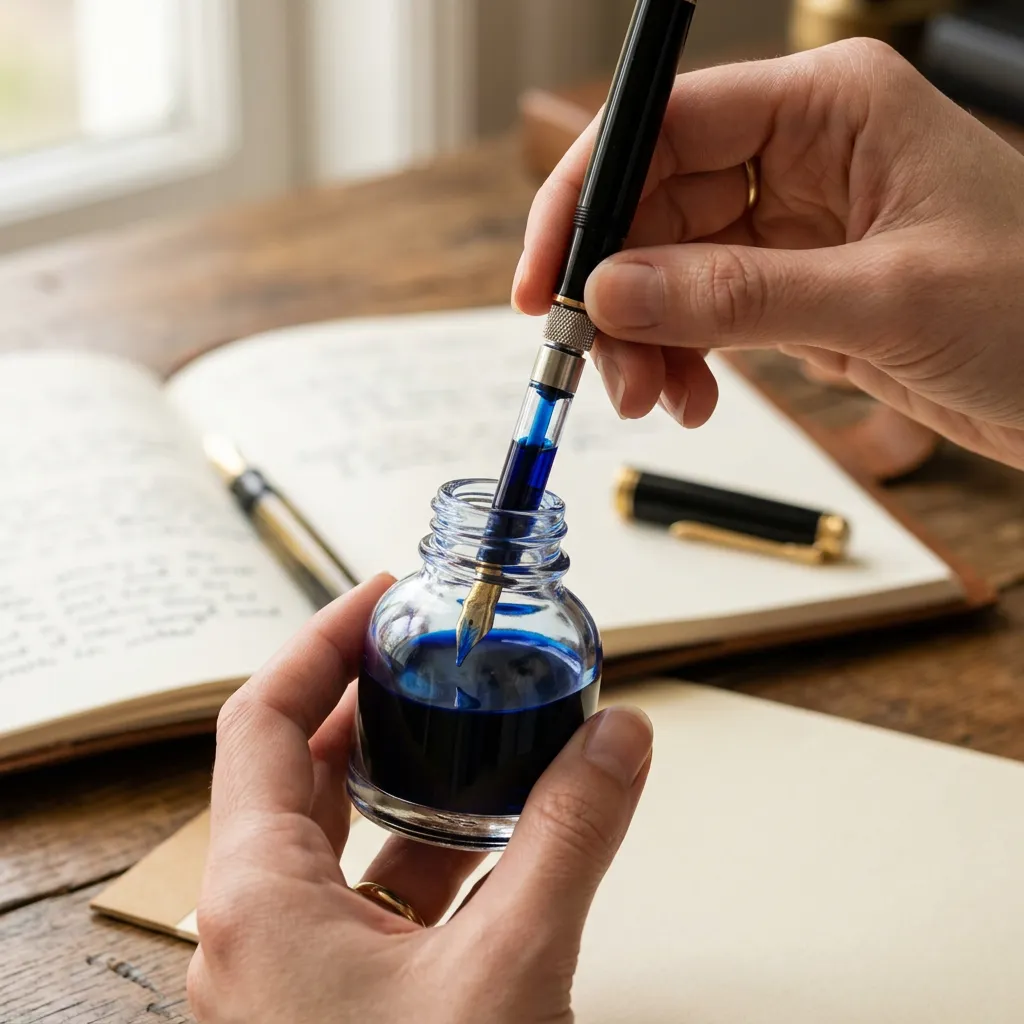
One detail worth understanding before filling a pen for the first time: the ink does not need to match the pen’s brand. Diamine ink flows fine in a Pilot Metropolitan. Iroshizuku works perfectly in a Lamy Safari. Noodler’s Black can go in any pen that accepts bottled ink. What matters is the fill method — whether you use cartridges or a converter — not whether the ink and the pen share a manufacturer. If you are still choosing a first pen to pair with an ink, our Best Beginner Fountain Pen guide covers the top options for new writers.
What is brand-specific is the cartridge format. Lamy pens use Lamy’s proprietary T10 cartridge and the matching Z28 converter. Pilot pens accept Pilot’s own cartridge format and the CON-40 or CON-70 converter. Platinum pens have their own cartridge and converter format. None of these cartridge formats are interchangeable with each other. Kaweco uses the standard international cartridge size, shared by several brands including Faber-Castell, and standard international converters are widely available. Our Fountain Pen Ink Cartridges guide covers these formats in detail.
If you want to use bottled ink in any fountain pen, you need the correct converter for that specific brand. Once you have a converter, any bottled fountain pen ink — regardless of who made it — can go in the pen.
For a detailed walk-through of filling methods including converters, piston fillers, and eyedroppers, see How to Fill a Fountain Pen With Ink.
Storing Your Ink
Bottled ink stores well with minimal effort. Keep bottles upright, capped tightly, and away from direct sunlight in a cool location. Most dye-based inks remain perfectly usable for years in sealed bottles. Iron gall inks and pigmented inks have somewhat shorter shelf lives after opening and are best used within a year or two.
Wipe the bottle rim clean after each use so dried ink does not prevent a full seal on the cap. If you notice floating debris or stringy material in a bottle that was previously clear, discard it — some inks can develop bacterial or mold contamination over time, particularly if exposed to an unclean pen or a pen that was used with a different ink.
Small ink samples stored in vials should be used within a few months. The reduced volume evaporates faster than a full bottle and is more vulnerable to contamination once the seal is broken.
For ink stored inside a pen, dye-based inks left unused for several weeks will often dry partially in the feed and require a flush with room-temperature water before the pen writes reliably again. Iron gall inks can leave deposits if left for extended periods. Pigmented inks are the most prone to drying in place. If you are setting a pen aside for more than a week or two, flush it before putting it away — it takes two minutes and saves significant cleaning effort later.