
How each pen works
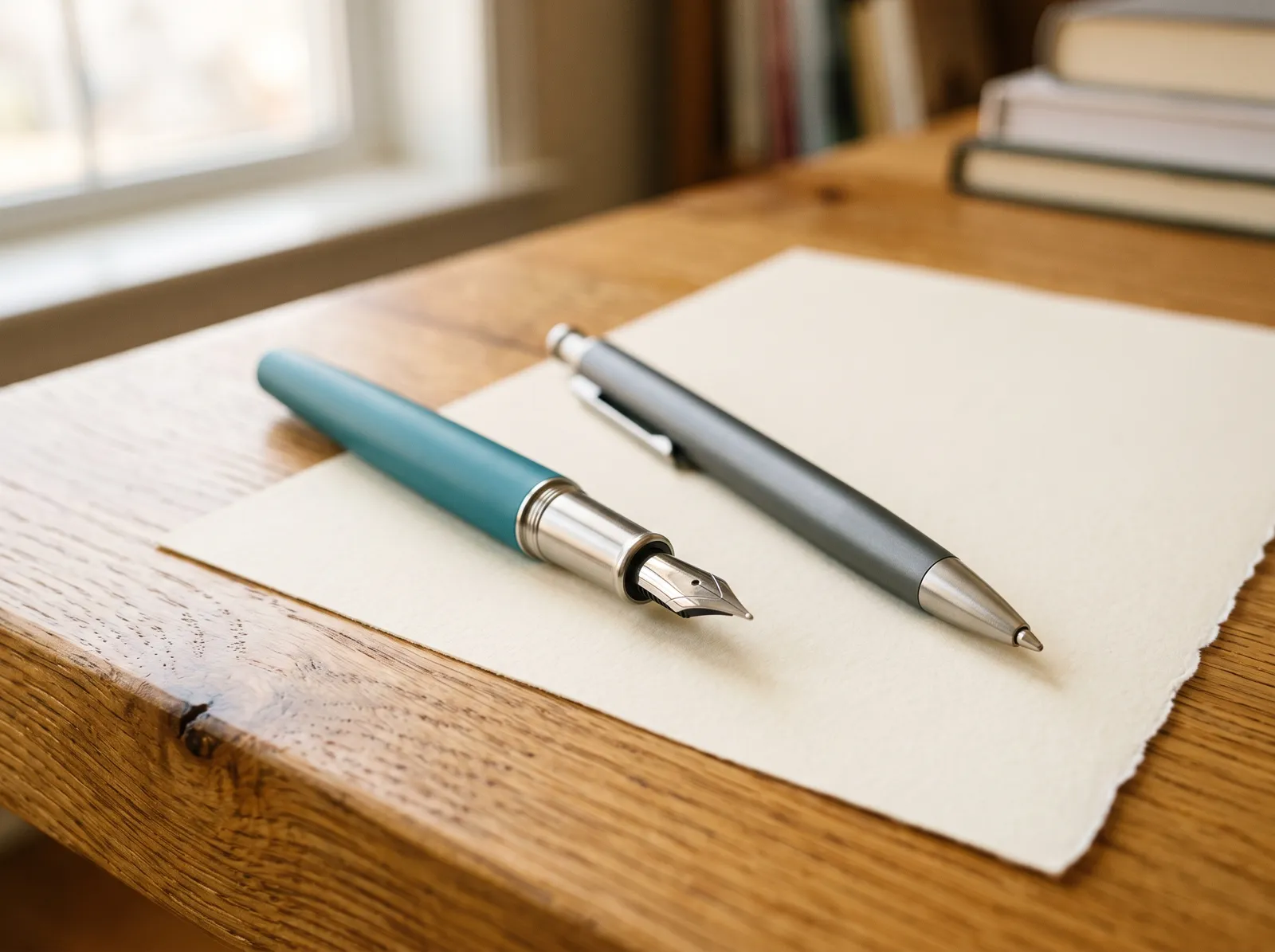
A ballpoint pen stores oil-based ink in a sealed reservoir. As you write, a tiny metal ball at the tip rotates, picking up ink and rolling it onto the paper. The ink is viscous and dries almost on contact, which is why ballpoints resist smearing and write reliably on most surfaces — including rough or slightly damp paper.
A fountain pen uses water-based ink, either dye-based or pigment-based, stored in a removable cartridge, converter, or built-in piston chamber. Ink travels from the reservoir through an internal feed channel to the nib — the metal writing tip — by a combination of gravity and capillary action. The nib’s split tines allow ink to flow onto the page with minimal pressure from the writer.
Writing experience compared
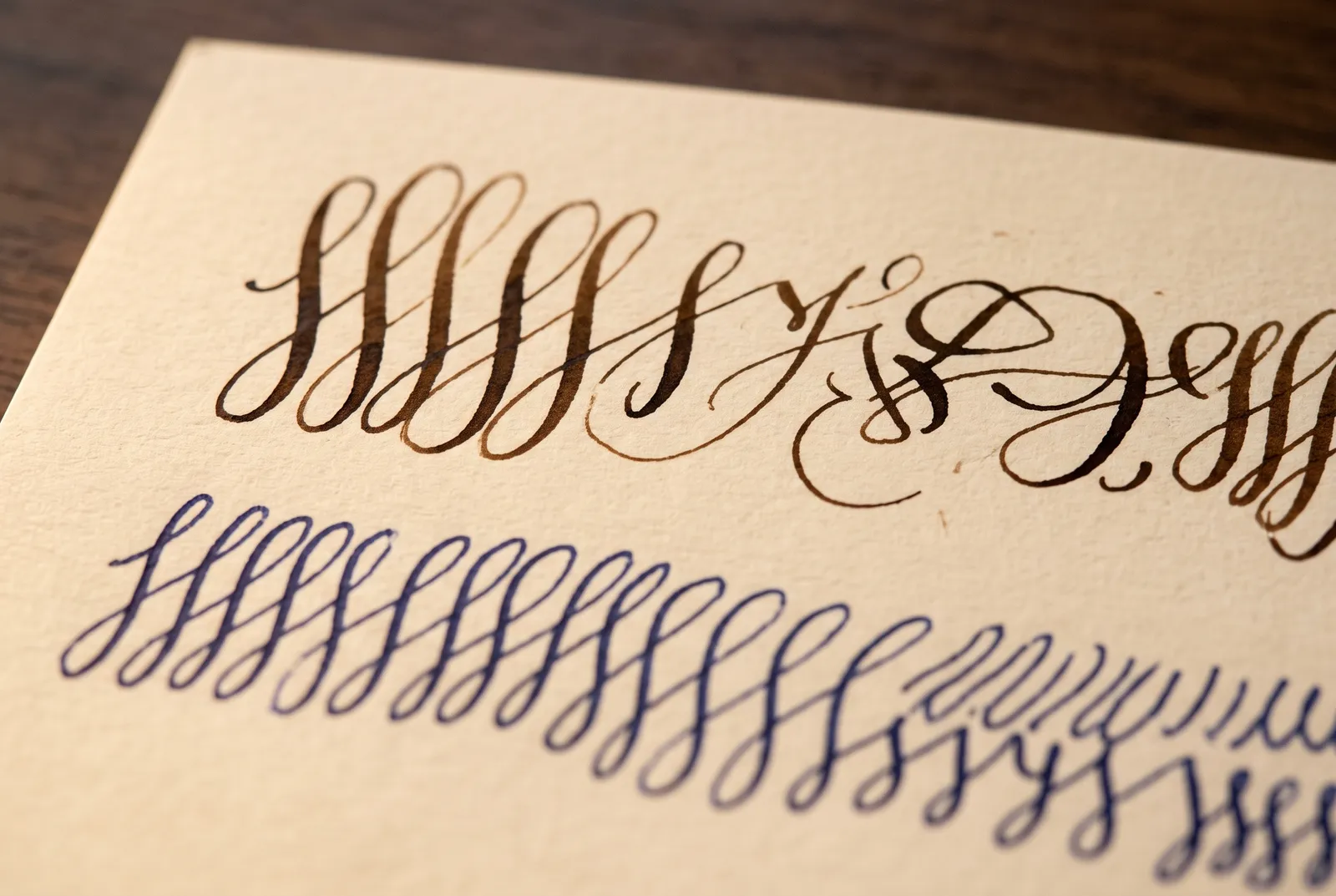
The difference in feel between the two pens is immediately noticeable.
Ballpoints require a small but consistent downward pressure to rotate the ball and push viscous ink onto the paper. Most writers apply this pressure unconsciously — but over a long writing session, the cumulative load on the fingers and wrist can become fatiguing. Line width stays consistent throughout, which is predictable and often desirable.
Fountain pens write with almost no applied pressure. Because ink flows freely through the feed by capillarity, the hand guides the nib rather than pressing it. Writers who switch from ballpoints to fountain pens frequently report reduced hand fatigue during extended note-taking sessions. Depending on the nib, there may be modest line variation: a slight widening on downstrokes and finer lines on horizontal cross-strokes.
Paper quality matters more with a fountain pen. Standard copy paper, with its rough surface and absorbent sizing, often causes water-based ink to feather or bleed. Fountain pens perform best on smoother, fountain-pen-friendly stock. Ballpoints are far more tolerant of paper quality, writing consistently on most surfaces.
Cost and long-term value

The upfront cost comparison can be misleading.
A box of reliable ballpoint refills or disposables costs only a few dollars. But ballpoints are consumed and discarded continuously — a regular writer can replace a dozen or more each year without tracking the cumulative spend.
A quality entry-level fountain pen typically costs in the $20–$40 range. A 50 ml bottle of fountain pen ink, which holds far more ink than a cartridge, generally costs $15–$25 and can last many months of regular writing. Once the pen is purchased, the per-page cost of fountain pen writing is very low.
For anyone writing frequently, a fountain pen often becomes the more economical choice within a year or two of purchase. For occasional writers, a ballpoint remains more practical simply because it requires no attention between uses.
Maintenance and convenience
Ballpoints hold a clear advantage here.
A ballpoint needs essentially no maintenance. Cap it, leave it in a drawer for several months, and it will almost certainly write when you pick it up again. The oil-based ink does not dry at the tip.
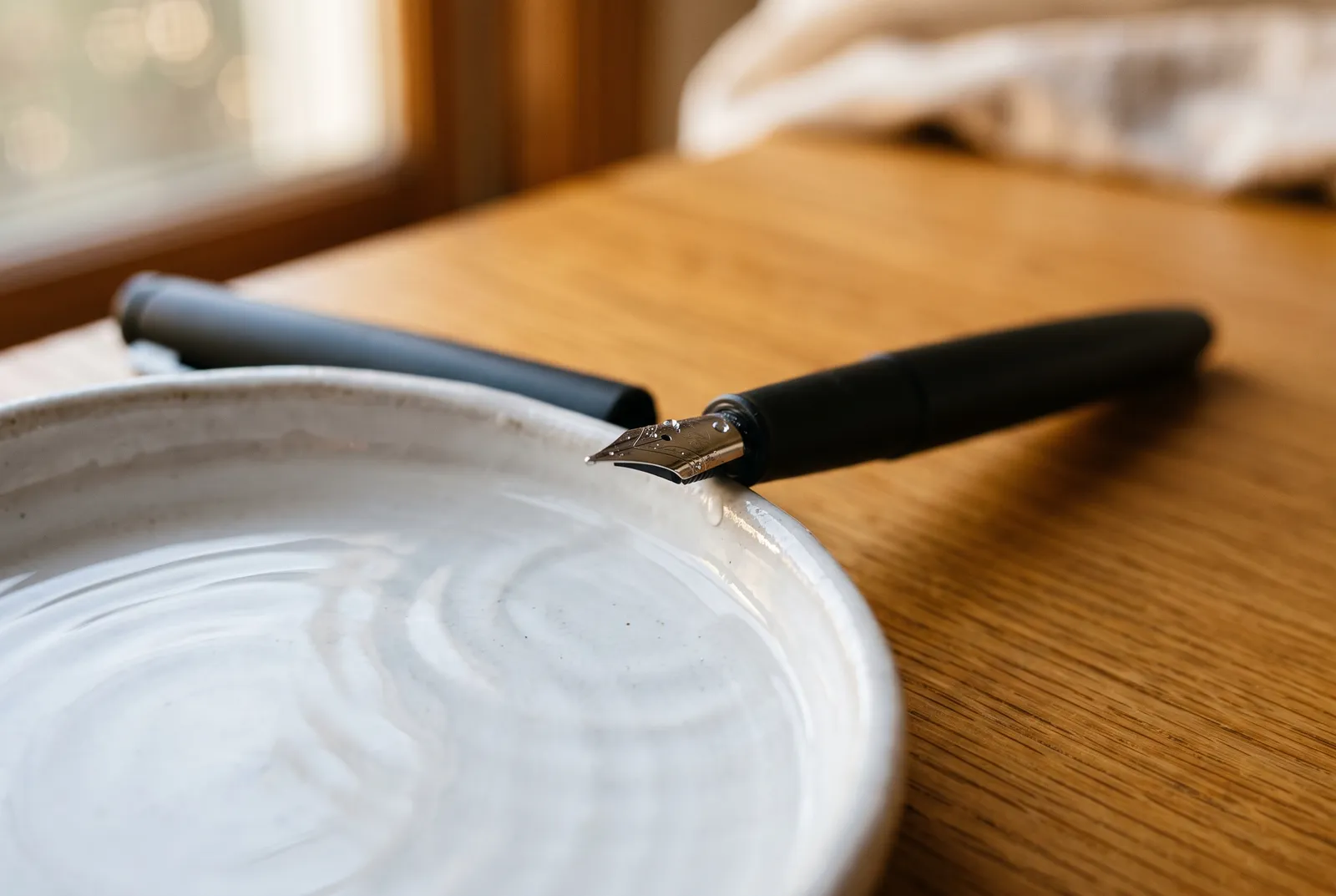
A fountain pen asks more of its owner. Water-based ink can dry in the feed if a pen sits unused for several weeks. Most fountain pens benefit from a brief flush with cool water every few weeks during periods of non-use. If storing a pen for longer, flushing and air-drying it completely is good practice. The process takes only a few minutes but is a genuine maintenance commitment that ballpoints don’t require.
Orientation also matters: fountain pens write best held nib-horizontal to nib-up. A ballpoint will write in almost any orientation, including upside down.
Best use cases for each
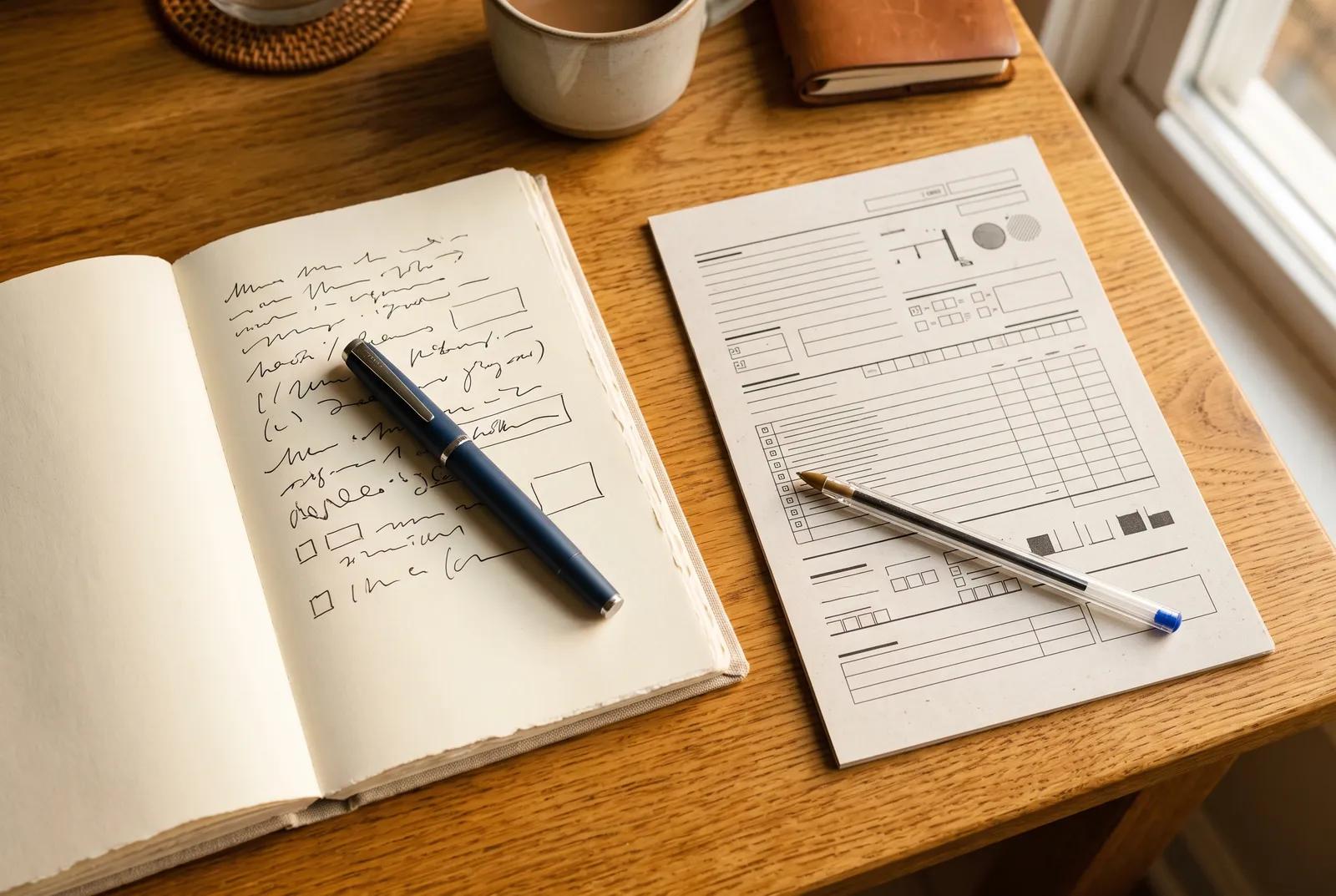
There is no universal winner. Context determines the better tool.
Fountain pens are well suited for:
- Extended journaling, letter writing, and lengthy note-taking where writing comfort matters
- Writers who want a wide variety of ink colors and properties, or who treat the writing instrument as part of the experience
- Reducing single-use plastic waste — a refillable pen and bottled ink produce far less landfill than a continuous supply of disposables
- Desk use, where the pen can stay in a consistent environment between sessions
Ballpoints are the better choice for:
- Forms, receipts, and carbonless copy paper, which typically require more pressure or a different ink type than fountain pens provide
- Travel or situations where a pen may sit unused for weeks at a time
- Left-handed writers who write with an underhand grip and drag across wet ink — though fountain pens work well for left-handed overwriters and sideways writers (see our guide to fountain pens for left-handed writers)
- Shared environments where the pen may change hands frequently and consistent, no-fuss performance is the priority
Which should you choose

If you write for extended periods regularly — journaling, annotating, or taking detailed notes — a fountain pen is worth trying. The writing experience is different from a ballpoint in a way that many writers find genuinely better, and entry-level pens keep the investment low.
If you need a workhorse — a pen for signing documents, marking up printouts, or passing around an office — a ballpoint remains difficult to beat for sheer reliability.
Many fountain pen users keep both: a fountain pen at the desk for their primary writing, and a ballpoint for situations where the fountain pen’s requirements aren’t practical. Choosing between them doesn’t have to be permanent.
If you’re considering making the switch, see our guide to fountain pens for beginners for reliable starting points with minimal maintenance demands, so you can evaluate whether fountain pen writing suits your habits.