
Why Left-Handed Writing and Fountain Pens Clash
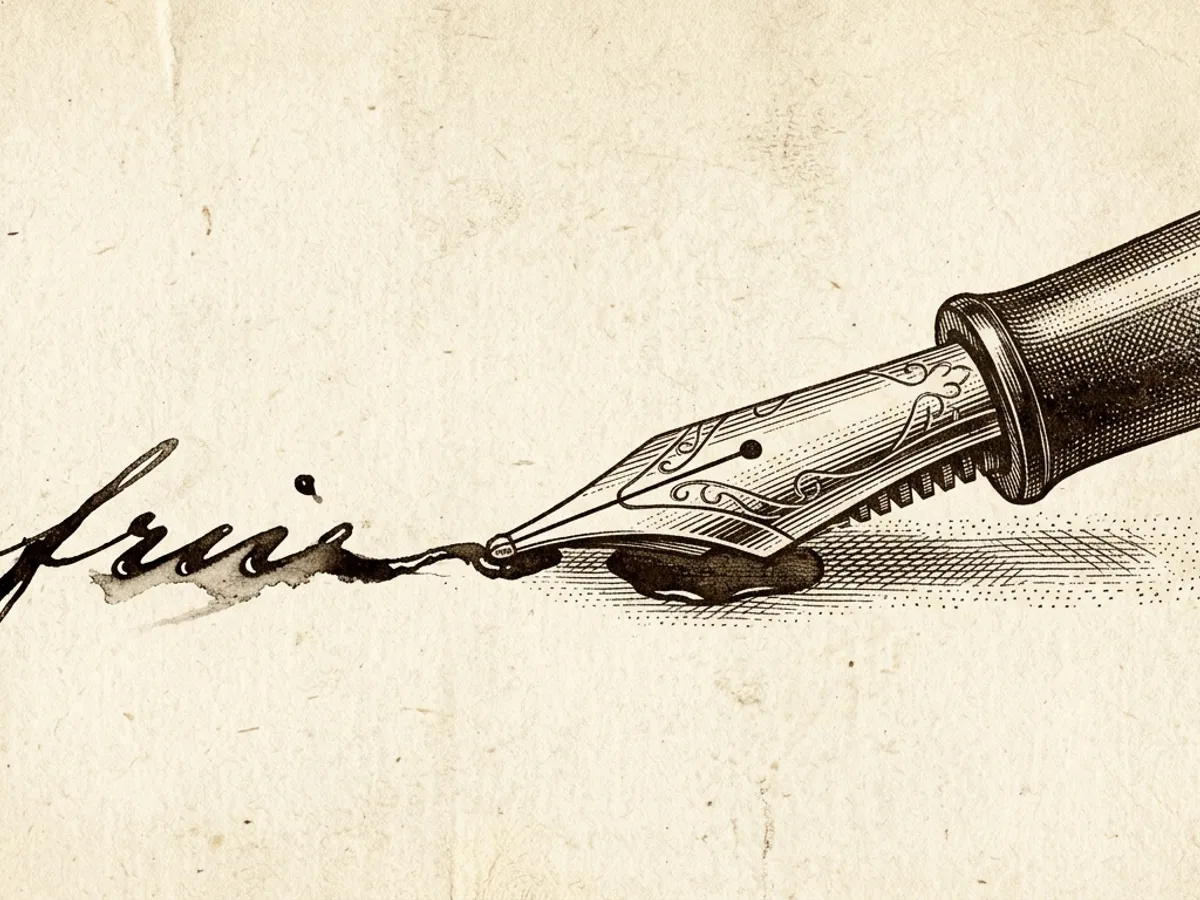
The root problem is direction. Right-handed writers pull the pen away from their just-written words; left-handed writers push into fresh ink, then often drag their palm across what they have just written. Water-based fountain pen ink can take anywhere from a few seconds to over a minute to fully absorb into paper — plenty of time to smear.
This does not mean fountain pens are off-limits for left-handers. Millions use them happily. But it does mean being deliberate about three things: the nib you choose, the ink you choose, and how you position the pen on the page.
The Three Left-Handed Writing Styles
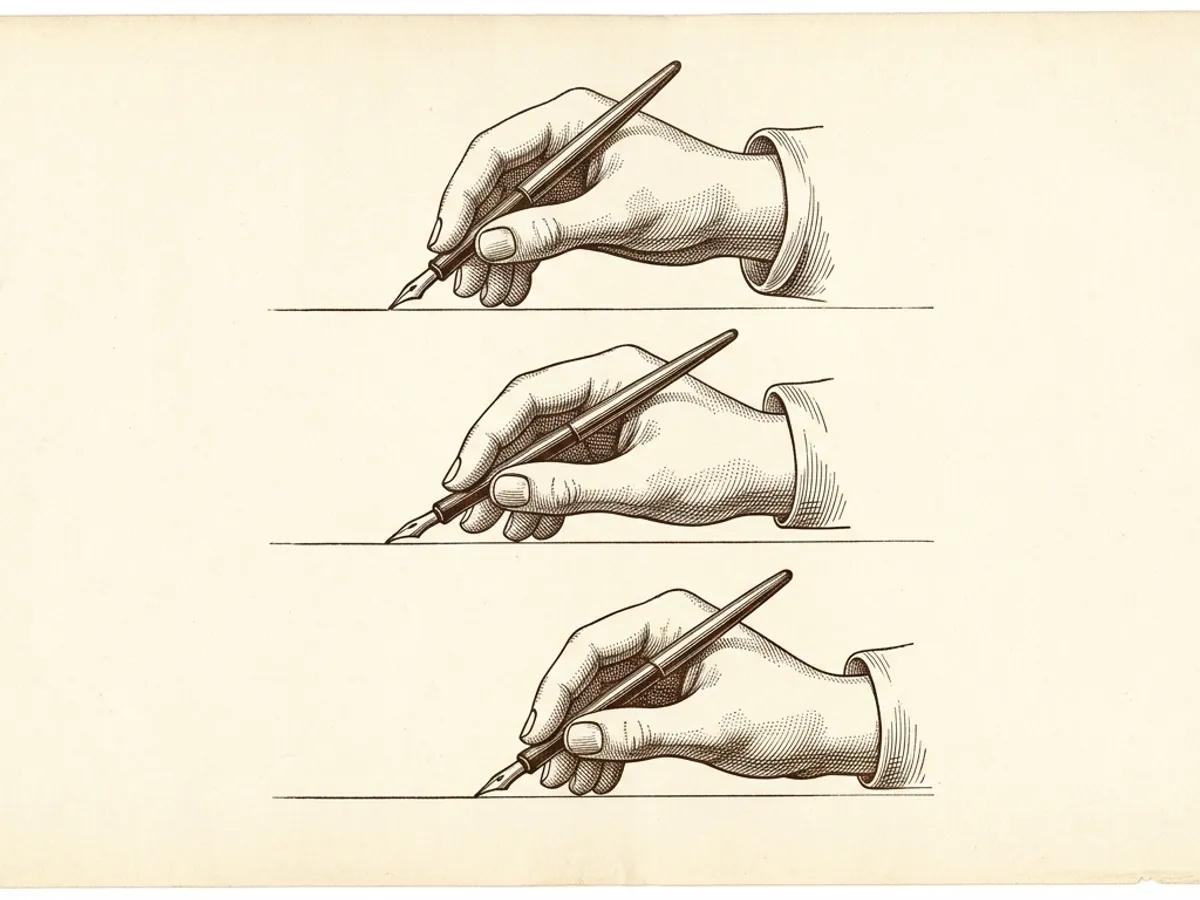
Left-handers are not a monolith. How you hold the pen determines how much the smear problem affects you.
Overwriters curve the wrist above the writing line and write with the hand hooking downward. The hand passes directly over fresh ink. This style causes the most smearing with fountain pens.
Underwriters keep the hand below the writing line and approach the paper from below — somewhat like a right-hander rotated 180°. The hand moves away from fresh ink as you write, not through it. This style works best with fountain pens because the hand rarely contacts wet ink.
Sidewriters extend the arm outward at an angle, writing with the page tilted significantly clockwise. The hand approaches from the side rather than hovering over the line. This style is moderately smear-prone depending on how extreme the tilt is.
If you are an overwriter, even small adjustments — rotating the page, choosing a faster-drying ink — can make a meaningful difference.
Nib Size and Type: Smaller Is Usually Better
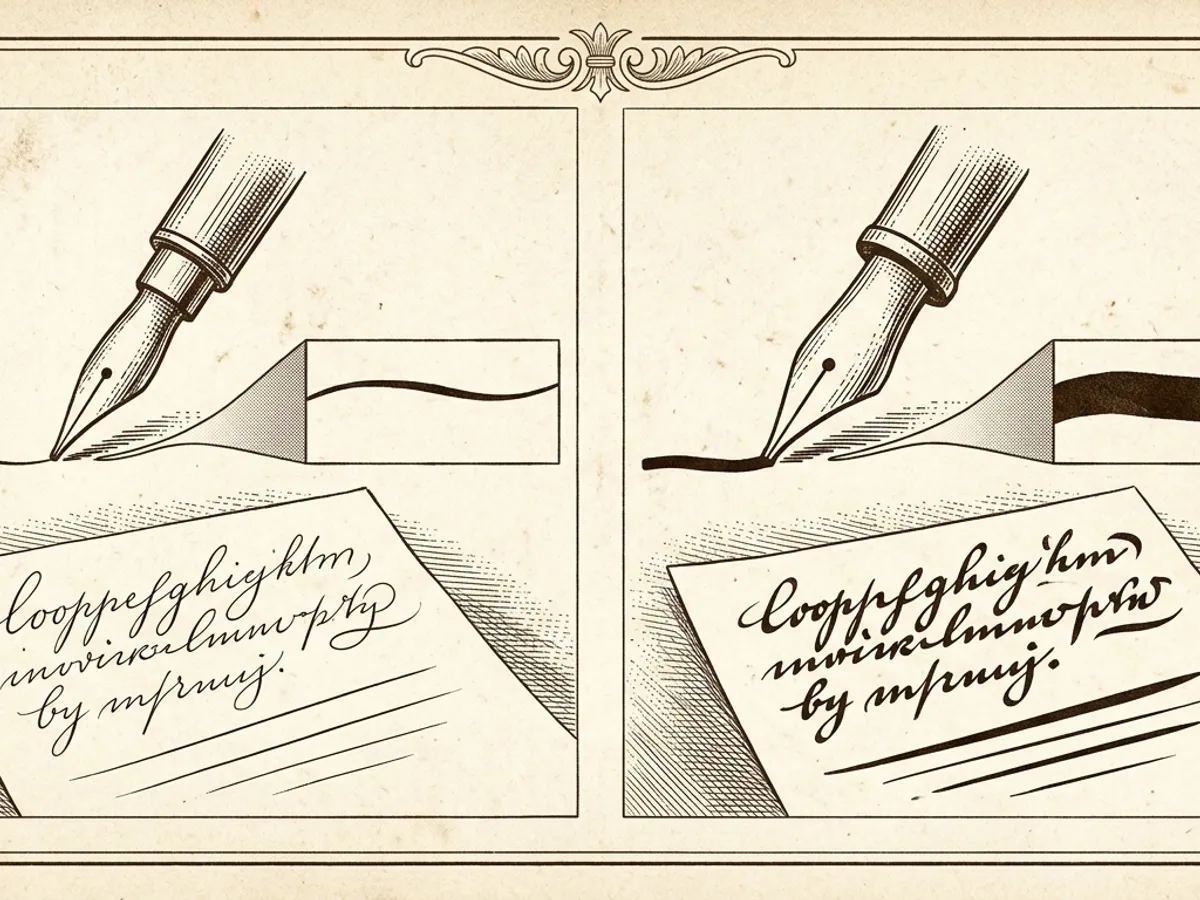
Nib size directly controls how much ink goes onto the page. A broad nib floods the paper; an extra-fine nib leaves a thin, quickly-drying line.
For left-handers, fine (F) or extra-fine (EF) nibs are the most forgiving choice. They deposit less ink, which means faster drying — a direct mechanical advantage.
Japanese nib sizing runs notably finer than Western equivalents. A Pilot or Platinum F nib writes closer to what a German manufacturer calls EF, which is an advantage when you want minimal ink on the page. The Pilot Metropolitan and Pilot Kakuno both offer fine nibs that run lean even by Japanese standards.
Stub and italic nibs produce expressive line variation but require precise angle alignment that can work against left-handed grips. These are better explored once you have a reliable everyday technique.
One useful exception: Lamy produces a nib labeled LH (left-hand oblique), cut specifically for overwriters. It is available as an accessory nib for the Lamy Safari, Al-Star, and Studio, and is worth trying if ink flow has been inconsistent at your natural writing angle.
For a broader look at how nib widths compare across brands, see Nib Sizes for Fountain Pens.
Quick-Drying Inks That Beat the Smear
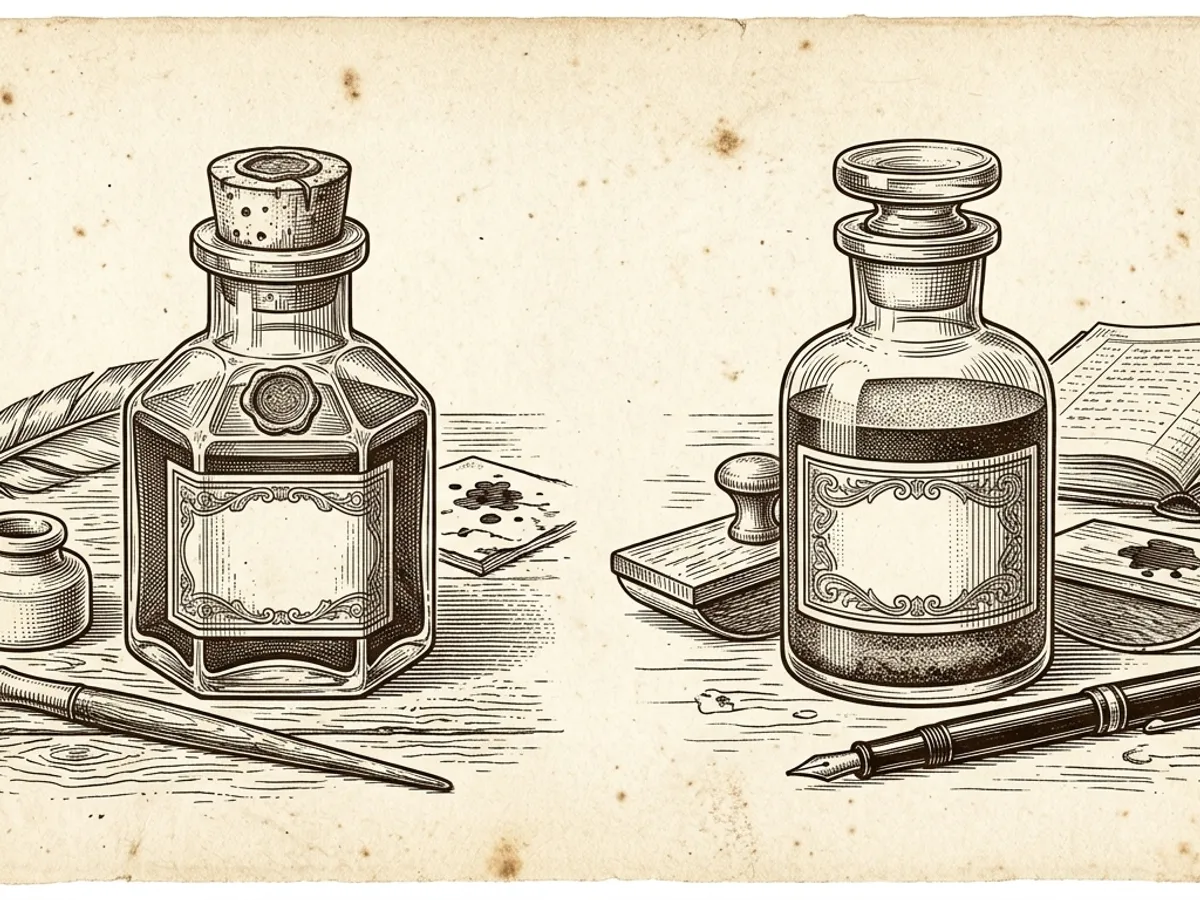
Standard dye-based fountain pen ink can take 10 to 30 seconds to fully absorb into paper. That is a long window when your hand follows the line within a second or two.
Some inks are formulated for faster drying:
Noodler’s Bernanke Black is widely cited in the fountain pen community as a fast-dry ink. It is a bottled ink designed to absorb quickly into paper fibers and is compatible with any fountain pen that accepts bottled ink through a converter or eyedropper fill.
Diamine Registrar’s Ink is a fast-drying, water-resistant formula from the UK brand Diamine. It is available in bottles and in standard international cartridges, making it compatible with pens such as the Kaweco Sport and others that accept SI cartridges.
Iron gall inks oxidize on the page and generally dry faster than standard dye inks. They also resist water once dry. The tradeoff is corrosiveness: iron gall inks require more frequent nib flushing — at least weekly — to prevent damage to metal components.
Heavily saturated inks with sheen or shimmer effects often sacrifice dry time for visual complexity. These are worth saving until after you have a reliable technique in place.
Paper That Works With Left-Handed Writers
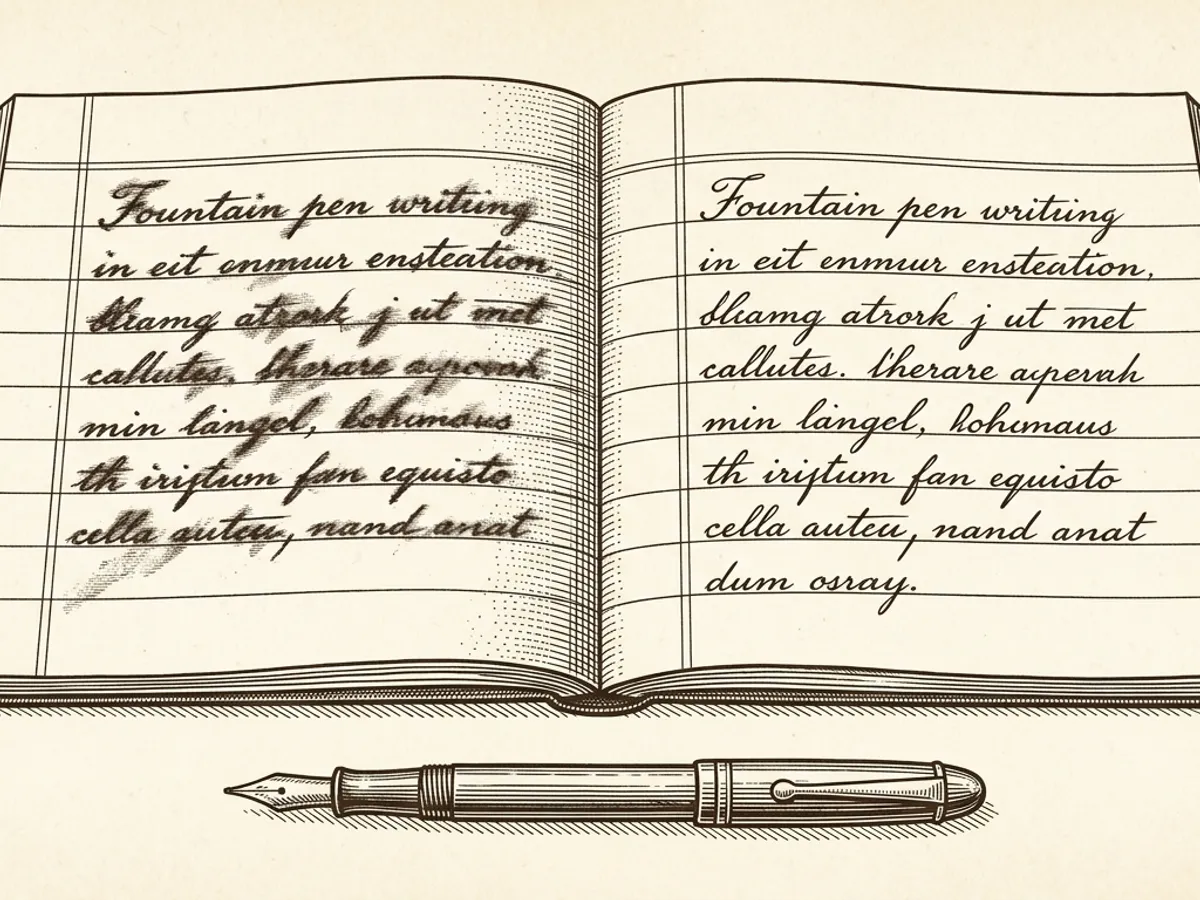
The conventional recommendation for fountain pen writers is smooth, coated paper — Rhodia, Clairefontaine, Leuchtturm1917, or Tomoe River. These prevent feathering and give crisp, clean lines. However, their coatings are designed to keep ink sitting on the surface longer, which also slows drying.
For left-handers, this tradeoff looks different:
HP Premium Choice Copy Paper is inexpensive office paper that dries fountain pen ink surprisingly fast because the ink soaks into the uncoated fibers quickly. It feathers slightly with very wet, broad nibs, but with a fine or EF nib the results hold up well. Many left-handed fountain pen writers keep a ream on hand for everyday journaling and note-taking.
Rhodia and Clairefontaine remain excellent for line quality — they just dry more slowly. Pairing them with a quick-dry ink from the options above produces a combination that works well.
Leuchtturm1917 notebooks land roughly in the middle: fountain-pen-friendly, with moderate dry times. A reasonable choice for overwriters who pair the notebook with a fine nib and a fast-dry ink.
Thick paper with a high GSM rating generally prevents bleed-through but does not inherently dry ink faster.
Fountain Pens Left-Handers Recommend
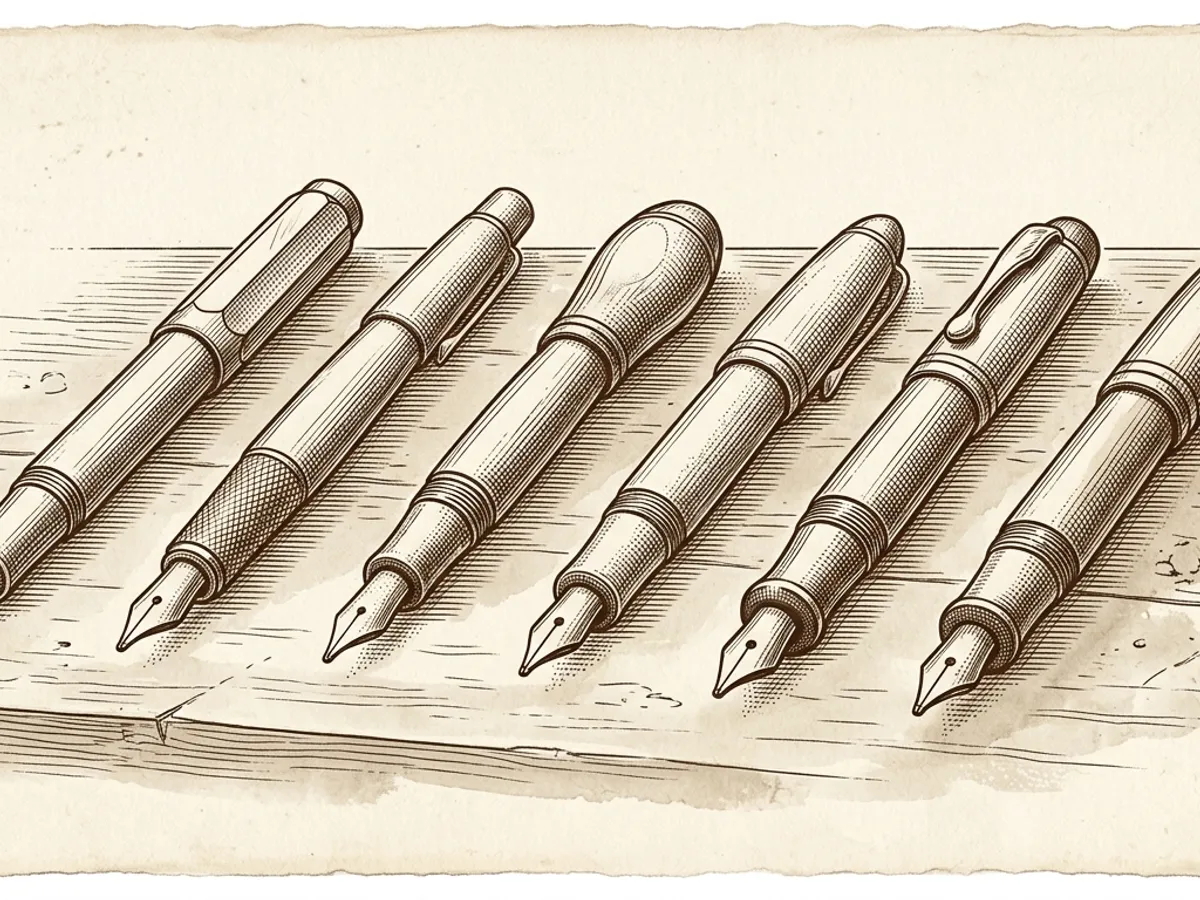
Any fountain pen can work for a left-hander with the right ink and technique. Some models come up repeatedly in left-handed writing discussions:
Pilot Metropolitan — Consistently recommended for beginners of any grip style. Available in fine and medium nibs. The Metropolitan uses Pilot’s proprietary cartridge system; you will need a Pilot-branded converter (CON-40 or CON-70) to fill from a bottle.
Pilot Kakuno — The Kakuno’s EF nib and low price make it a low-risk first pen. It also uses Pilot’s proprietary cartridges.
Kaweco Sport — The Sport’s compact size suits writers with a tight grip. It accepts standard international cartridges, giving access to a wide range of inks including quick-dry options from brands like Diamine.
Lamy Safari with LH nib — The Safari’s triangular grip section promotes a consistent finger position, and the LH oblique nib is the only mainstream left-hand-specific nib available at an accessible price. The Safari uses Lamy’s proprietary T10 cartridges.
Technique Tips to Reduce Smudging
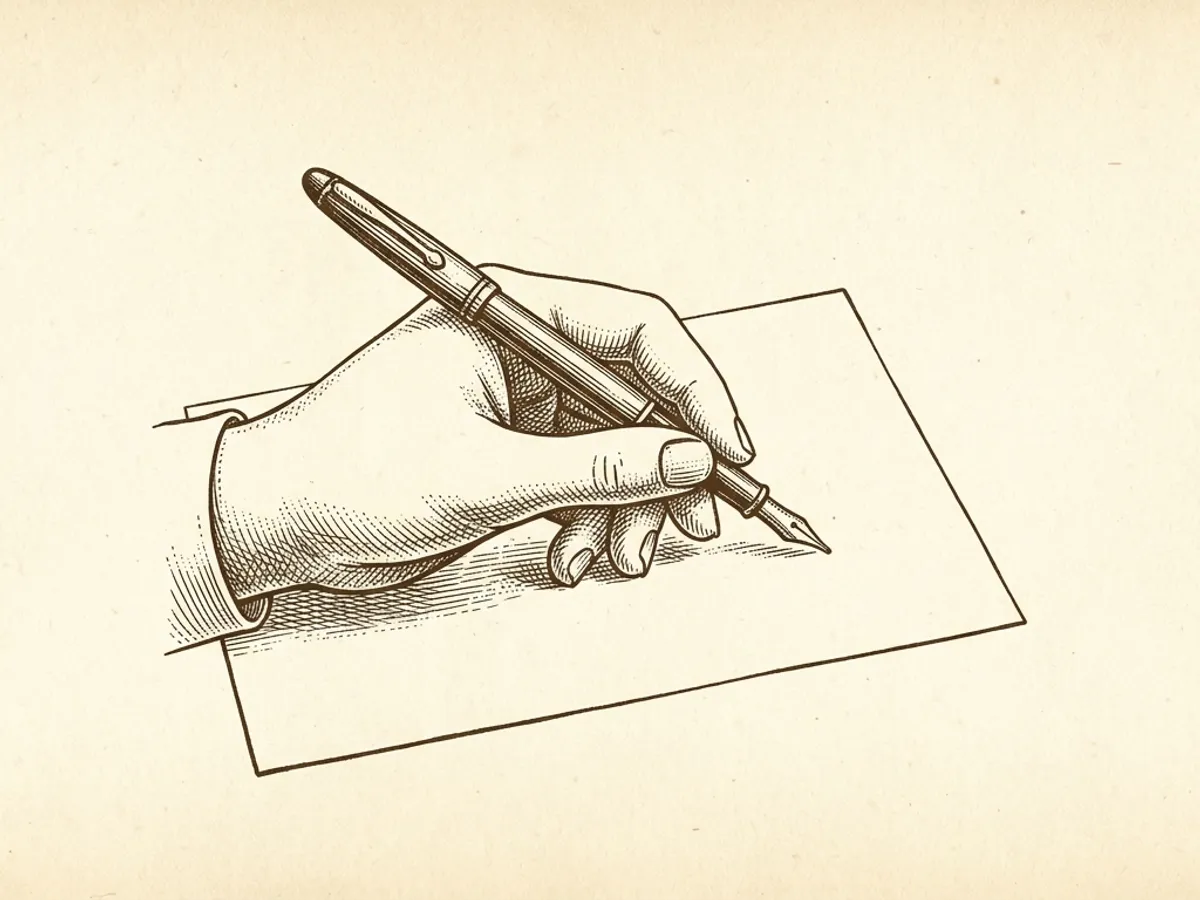
Pen and ink choices only go so far. Small habits close the remaining gap:
Rotate the page clockwise — Turning the page 30 to 45 degrees clockwise shifts the natural wrist angle and makes underwriting grips more accessible without forcing a complete style overhaul.
Write slightly faster — Fountain pen ink dries faster than most people assume if you keep moving. A brisker pace means the hand reaches ink that has had a second or two to set rather than fresh-from-the-nib wet ink.
Limit palm contact — Using the outer edge of the little finger as a contact point, rather than the full palm, reduces the surface area that drags through fresh ink.
Keep the nib clean — A clean, well-tuned nib flows consistently. A partially clogged nib can flood the page on the next stroke — the worst outcome for an overwriter. Flushing with plain water every few weeks keeps flow predictable. For a full walkthrough, see How to Fill a Fountain Pen With Ink.
With the right nib, ink, and a few deliberate habits, a fountain pen is as practical for a left-hander as for anyone else.