
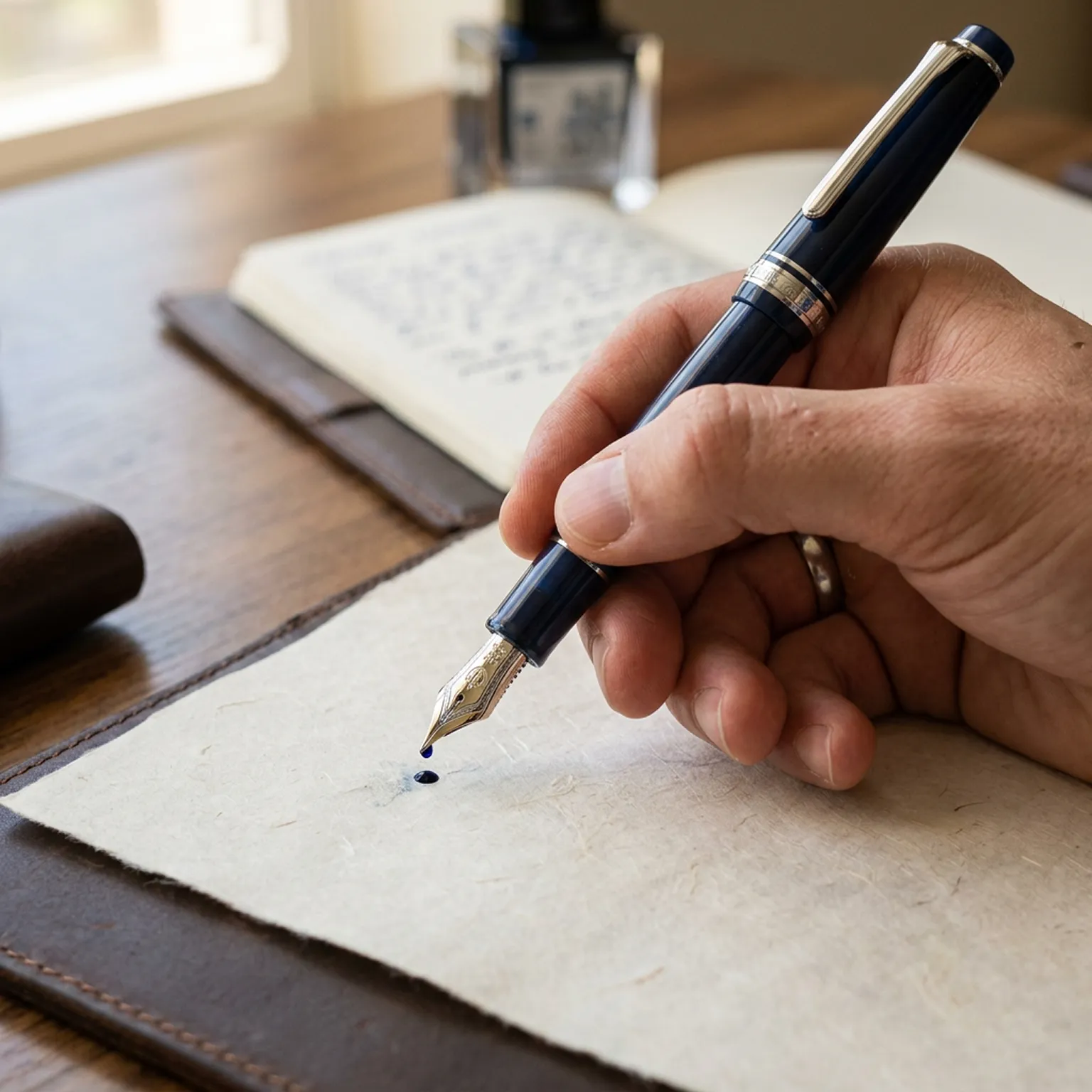
Why Fountain Pens Flow Without a Pump
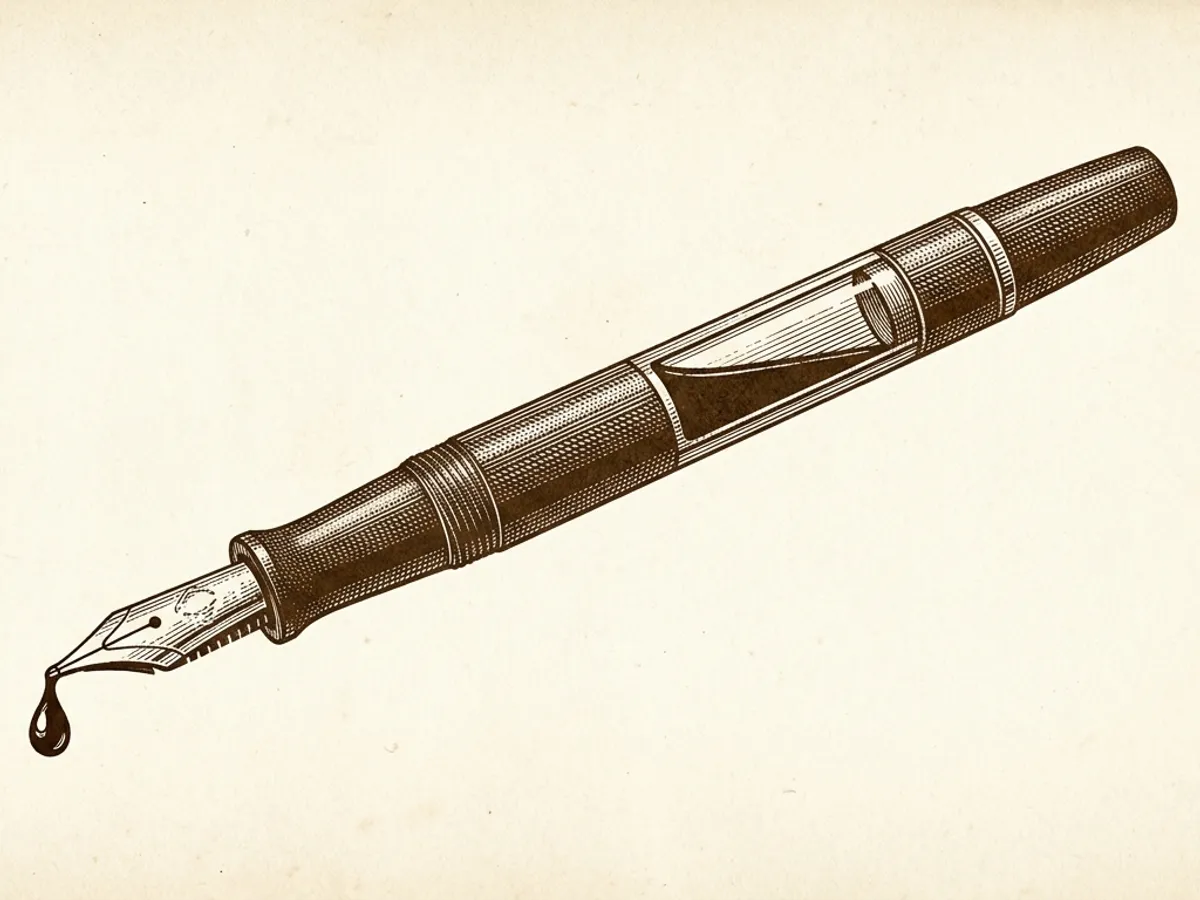
A fountain pen moves ink from its reservoir to the paper using two forces that cost nothing and require no moving parts: gravity and capillary action. Understanding both explains everything from why the pen writes so effortlessly to why it leaks when stored in your breast pocket nib-down on a hot day.
Capillary action is the tendency of liquid to flow into and along narrow spaces, even against gravity. It happens because the molecules in a liquid are attracted to surfaces as well as to each other; when a gap is narrow enough, that attraction pulls the liquid in and keeps it moving. The narrower the channel, the stronger the pull — which is why fountain pen feeds are precision-engineered components, not simple tubes.
Gravity provides a modest but real assist. Hold the pen at a 40–55° angle with the nib pointing down and gravity nudges ink toward the tip. The pen does not need you to press hard; the ink wants to arrive at the paper. This is also why storing a filled pen nib-down for days can push ink out through the nib slit — gravity plus capillary action working overtime with nowhere useful to go.
The two forces combine to create a self-regulating system: ink exits the tip at roughly the rate your hand moves across the page, a small amount of air enters the reservoir to replace it, and flow continues without interruption. Managing that air-ink exchange is the core engineering challenge in every fountain pen design.
Nib Anatomy: Tines, Slit, and Tip
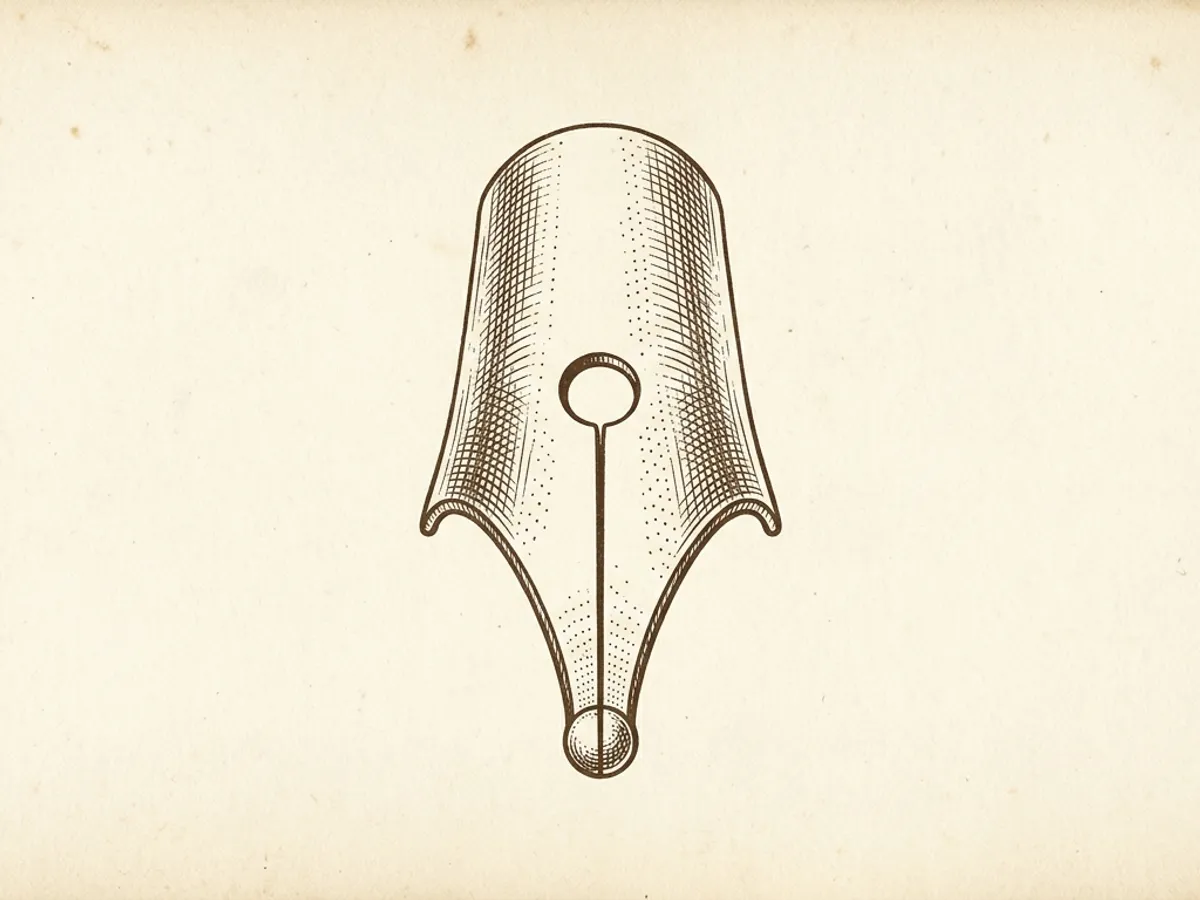
The nib is the thin metal plate that contacts the paper. Most modern nibs are made from steel or gold alloy, and their deceptively simple shape encodes several precise features.
The slit runs from the very tip of the nib up to the breather hole — a small oval or circle roughly two-thirds up the nib’s length. The slit is the primary ink channel; capillary action holds a thin column of ink along its entire length at all times. When the tip touches paper, that ink wicks onto the surface and the column advances to replace it.
The tines are the two halves of the nib divided by the slit. They flex slightly under writing pressure, widening the slit and allowing a slightly higher ink flow, then spring back to their resting position when you lighten your touch. A correctly adjusted nib flexes just enough to write smoothly; one with the tines too far apart floods the feed, while one with the tines too close gives a dry, scratchy result.
The tip is a tiny bead of hard, wear-resistant metal welded to the end of each tine. Nearly all modern nibs use an iridium-group alloy for tipping, which holds its shape through years of daily use. The shape and width of the tip determines the line width — a fine tip leaves a narrow precise stroke, a medium tip is more forgiving, and a broad or stub tip lays down a wide expressive mark. For a comparison of how these different sizes actually look on paper, see the guide to fountain pen nib sizes.
The breather hole at the top of the slit does two jobs: it acts as a stress-relief point, preventing the slit from cracking as the tines flex under use, and it plays a secondary role in the ink-flow system as part of the air-return path back to the reservoir.
The Feed: Moving Ink to the Nib
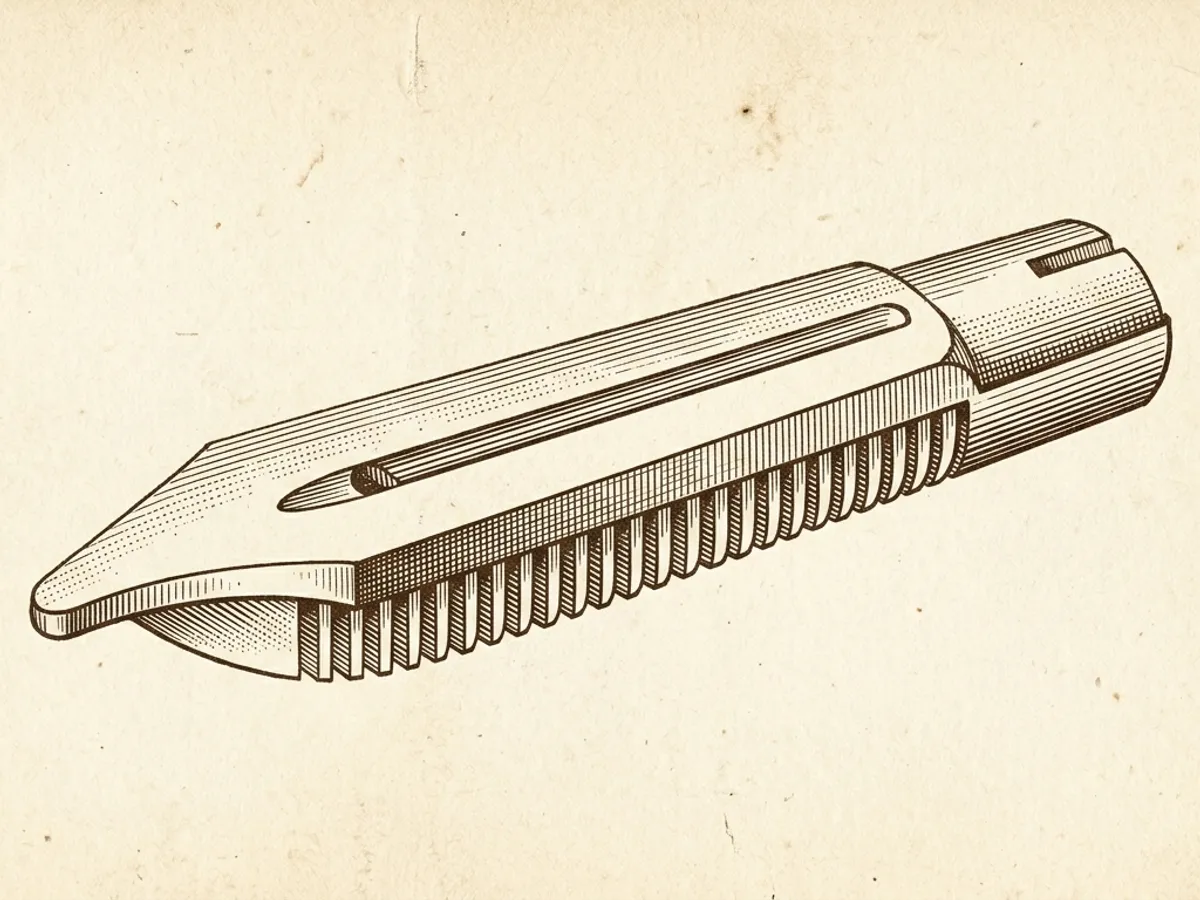
The feed is the plastic or ebonite component seated directly beneath the nib. It is the least glamorous part of a fountain pen and arguably the most important.
The feed has two simultaneous jobs: deliver ink forward to the nib and return air backward to the reservoir. These two flows travel in opposite directions and must never mix, or the pen expels a blob of ink instead of a controlled line.
The ink channel is a single narrow groove running along the top center of the feed, directly under the nib slit. Capillary action in this groove maintains a continuous column of ink from the reservoir mouth to the nib tip. When you write, ink exits the column’s front end; the whole column slides forward by the same amount, drawing more ink from the reservoir behind it.
The air channels — visible as a series of thin fins, combs, or grooves on the underside and sides of the feed — handle the return path. Every milliliter of ink that exits the reservoir must be replaced by a milliliter of air. That air travels back along these micro-channels from the nib region toward the reservoir, passing the ink column on a separate path. The fins also serve as an overflow buffer: when the pen warms up in a shirt pocket and the ink expands slightly, the fins absorb the excess before it can reach the nib and drip.
The contact fit between the feed’s top groove and the nib slit must be exact. Too much gap breaks the ink column; too little restricts flow. This is why professional nibmeisters spend time adjusting nib-to-feed alignment — the same nib can write wet or dry depending on that fit.
How Writing Triggers Ink Flow
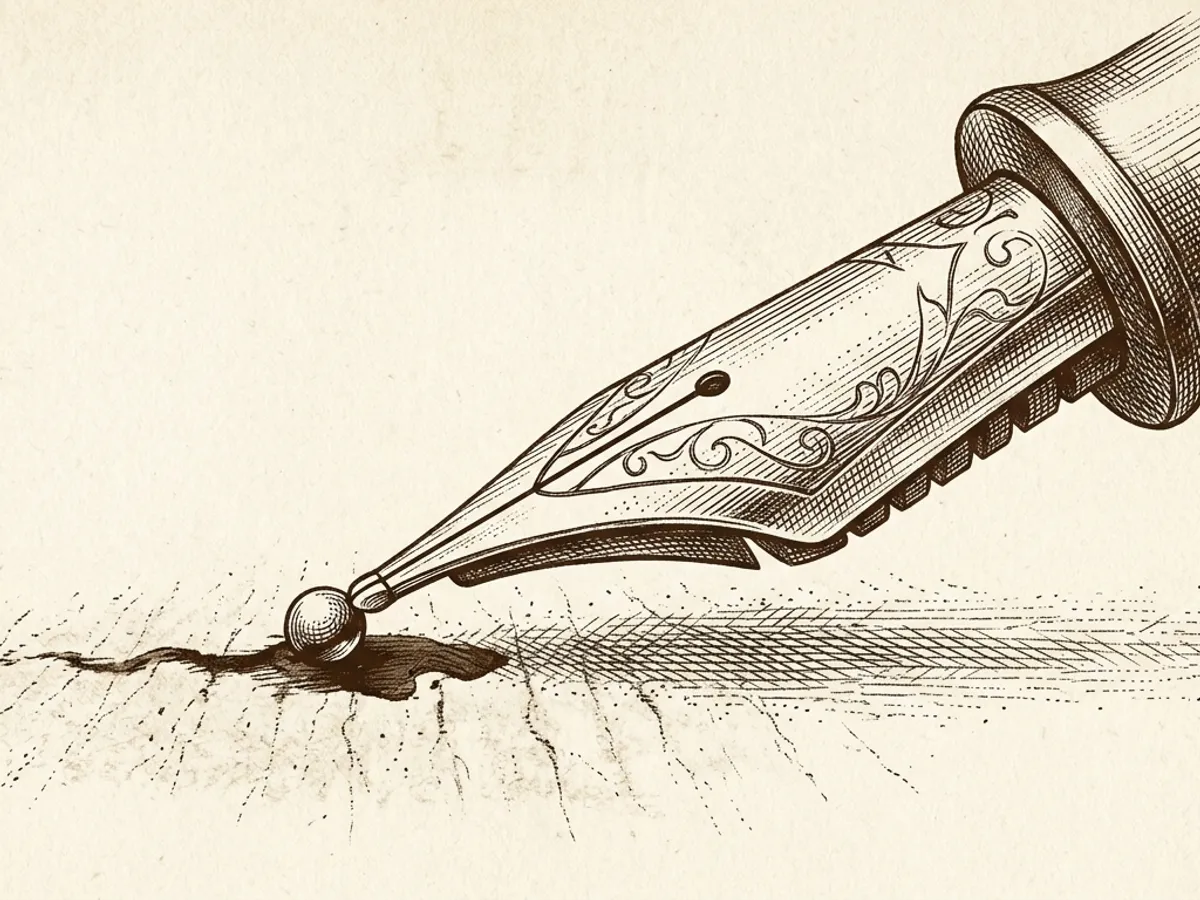
When the nib touches paper, something precise happens at a small scale. The ink column at the tip makes contact with the paper surface, and the paper’s fiber network pulls at the ink through its own capillary action — paper fibers form thousands of tiny gaps that are even narrower than the nib slit, giving them a stronger capillary pull.
As ink transfers to the paper, a deficit opens at the tip end of the ink column. That deficit draws the column forward. The column’s advance creates a slight negative pressure that pulls more ink from the reservoir. The reservoir simultaneously admits a small air bubble to equalize. The entire cycle — write, advance, refill, equalize — repeats many times per second during normal handwriting.
Writing angle affects the balance. Too steep (nib nearly vertical to the page) and the tines press closed, slowing flow. Too shallow and ink tends to pool before the paper can absorb it. Most nibs are designed with a sweet spot between 40° and 60° from the page surface. Within that range, the system is self-regulating; outside it, you compensate with pressure and the pen writes less well.
Paper quality matters more than most beginners expect. Cheap paper with loose fibers pulls at ink aggressively, causing feathering — ink spreading along fibers in spidery lines. Smooth, fountain-pen-friendly paper absorbs ink at a rate closer to what the feed delivers, giving cleaner lines. For your first fill, any reasonable paper will show you the basics; you will notice the difference when you try better stock.
Why the Cap Matters
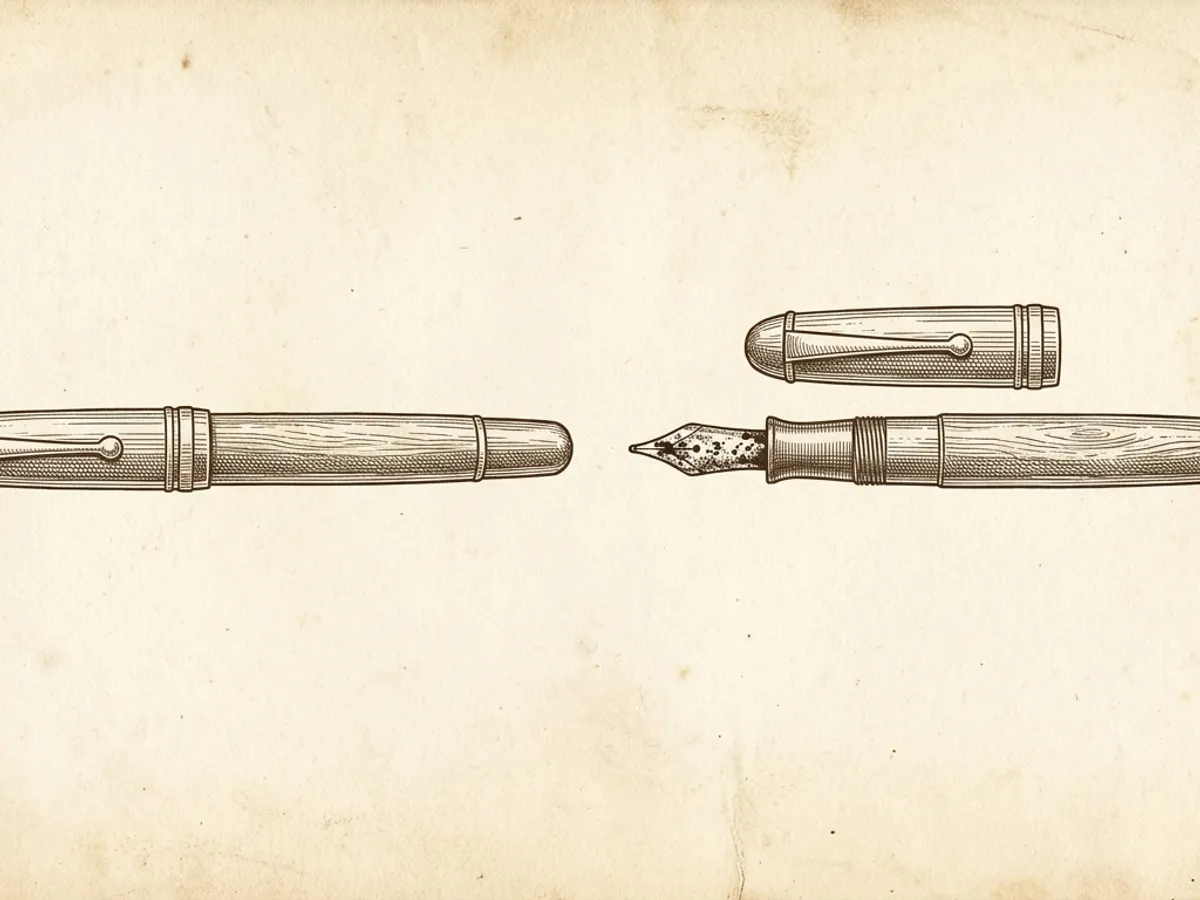
A fountain pen’s cap does one critical job: it maintains a small humid environment around the nib so the ink column does not dry between writing sessions.
Fountain pen inks are water-based. Without the cap, water evaporates from the exposed tip within minutes, leaving a dried residue in the slit. That residue blocks the channel and causes hard starts — the pen needs several strokes on scrap paper before flow normalizes. Leave a fine nib uncapped on a dry day and it may take minutes to clear.
The inner cap — a tight secondary sleeve inside the outer cap on well-made pens — creates a near-sealed microclimate. A good inner cap lets a filled pen sit for days or even weeks and still start instantly when uncapped. Pens with less effective sealing may need a few strokes after an overnight rest; this is normal and not a sign of a defect.
Leaving the pen uncapped for an active writing session is fine. The continuous ink flow keeps the nib primed. The risk is setting it down uncapped and walking away — ten minutes can be enough to cause a hard start in dry conditions.
For new fountain pen users, understanding this dynamic removes most of the frustration. A pen that seems broken after sitting on the desk for an hour is almost always just dried at the tip; a brief flush with water and a refill restores it. The guide to filling a fountain pen covers the full process step by step.
Common Problems and What They Mean
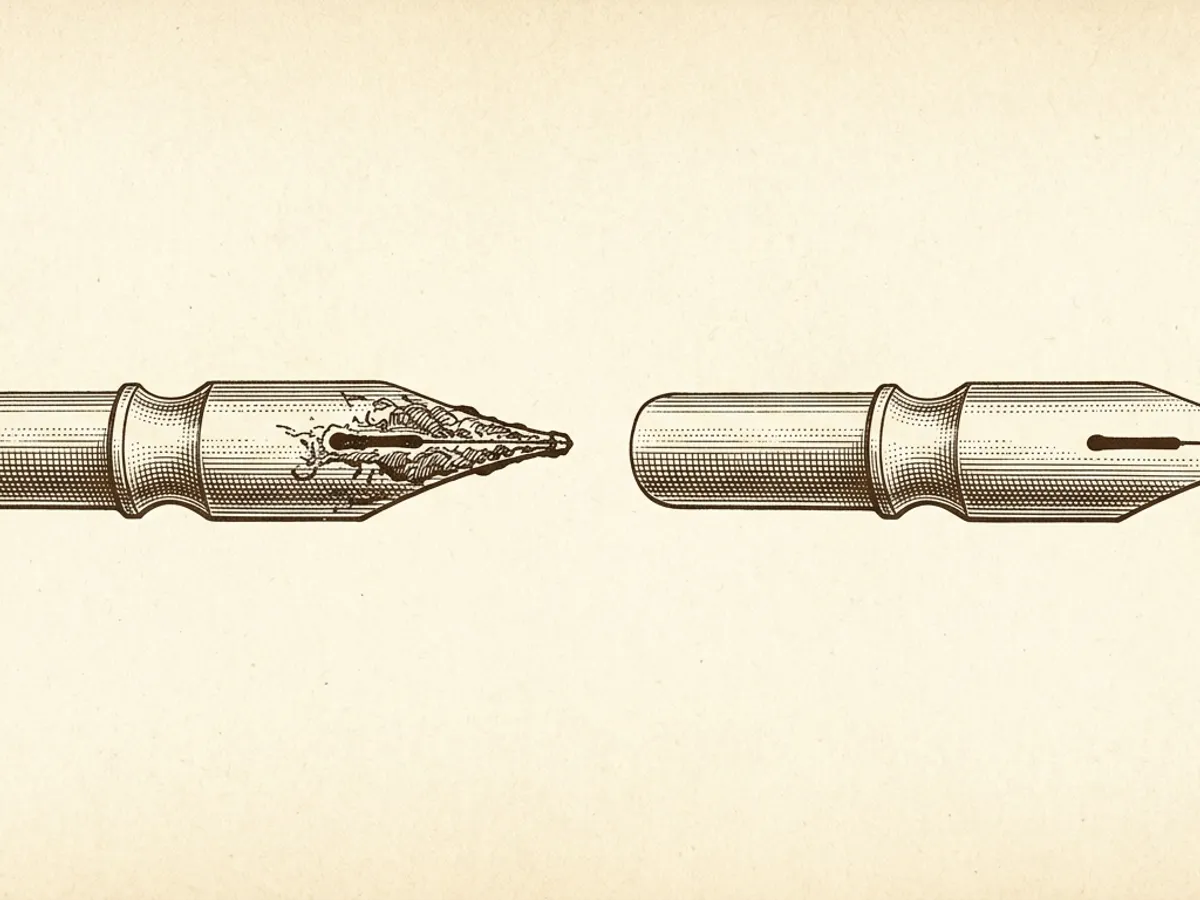
Once you understand the mechanics, most fountain pen problems have straightforward causes.
Hard starts — the pen skips or refuses to write on the first stroke after uncapping — mean the ink dried at the tip. This can be the ink itself (some inks have a higher solids content and dry faster), a cap that seals poorly, or simply leaving the pen uncapped too long. Trying a wetter, more lubricating ink often solves it; so does a cap replacement on older pens with worn inner caps.
Skipping mid-page — the pen writes for a line, then skips a word — suggests the feed cannot deliver ink fast enough for your writing speed or nib width. Writing with a slightly lighter touch usually helps; so does a wetter ink. If the problem persists, the tines may be too close together and the nib may need adjustment.
Flooding — ink blobs and wide patches that spread onto the page — means ink is arriving faster than the paper can absorb it. The tines may be too far apart, or the ink has unusually low surface tension. Try a drier, less saturated ink first before adjusting the nib.
Sudden dry-up mid-session — the pen was writing well and abruptly stopped — almost always means the reservoir is empty. Fountain pens do not warn you before running out; the writing simply stops. Refill and continue. If the reservoir still had ink, the culprit is an air lock in the feed — expelling a drop or two nib-down with the converter usually clears it.
Fountain pens reward patience and a basic mechanical understanding. The more you know about the capillary system, the more the maintenance steps — capping it every time, flushing before a color change, storing it nib-up when full — stop feeling like arbitrary rules and start making obvious sense. If you are still choosing your first pen, the fountain pen beginner’s guide walks through what to look for.