
This site is reader-supported. As an Amazon Associate we earn from qualifying purchases. When you buy through links on this page, we may receive an affiliate commission at no additional cost to you. Our editorial picks are independent of commercial relationships.
What Nib Size Numbers Mean
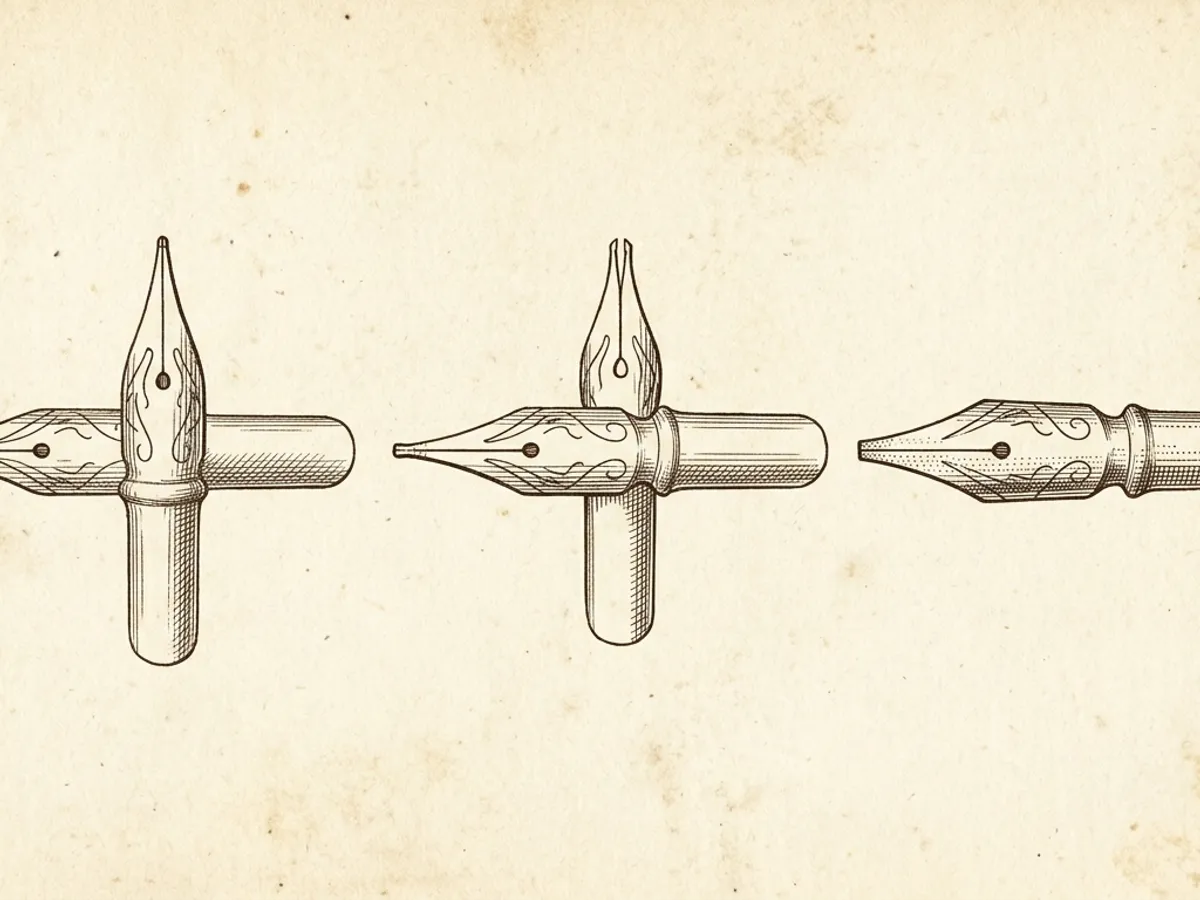
The nib is the metal tip at the writing end of a fountain pen — the split, two-tined piece that draws ink from the feed and deposits it on the page. Nib size refers to the width of the writing tip, which directly controls the line width the pen produces.
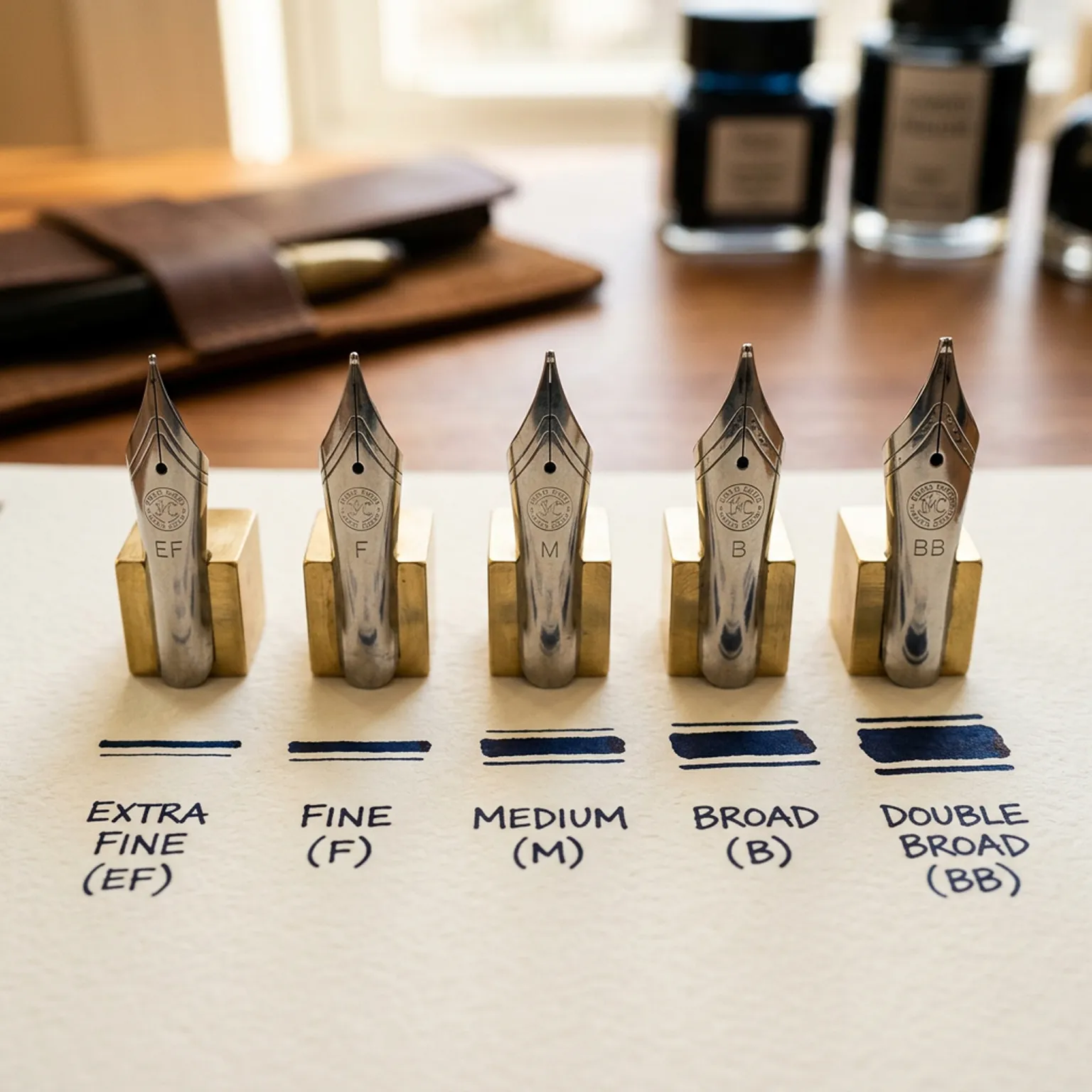
Unlike ballpoint or rollerball tips, which are stamped with precise millimeter values, fountain pen nib sizes use a traditional system of letters: EF (extra-fine), F (fine), M (medium), B (broad), and sometimes BB (double broad). These labels are not standardized across the industry. A medium nib from Lamy and a medium nib from Pilot write at noticeably different widths. There is no governing body that defines what “medium” means in millimeters; each manufacturer calibrates their own scale.
What the labels reliably describe is relative width within a single manufacturer’s lineup. A Lamy M nib is always wider than a Lamy F. A Pilot B is always wider than a Pilot M. But comparing across brands — especially comparing Japanese manufacturers to European ones — requires separate knowledge, covered in its own section below.
Why nib size matters beyond line width:
- Ink flow and wetness. Wider nibs typically flow more ink onto the page, producing a wetter, more saturated line. This can be a pleasure or a problem depending on your paper.
- Paper sensitivity. Narrow nibs — particularly extra-fine — are noticeably more affected by paper quality. Rough or absorbent paper causes feathering (ink spreading along paper fibers) and scratching under the nib. Wider nibs glide more forgivingly.
- Writing angle tolerance. Very narrow nibs reward a consistent pen angle. Medium and broad nibs tolerate more variation in how the pen meets the page.
- Drying time. A wetter, wider nib lays down more ink, which takes longer to dry on the page. For left-handed writers who smear wet ink, a finer, drier nib is often the practical choice.
The Full Nib Size Range
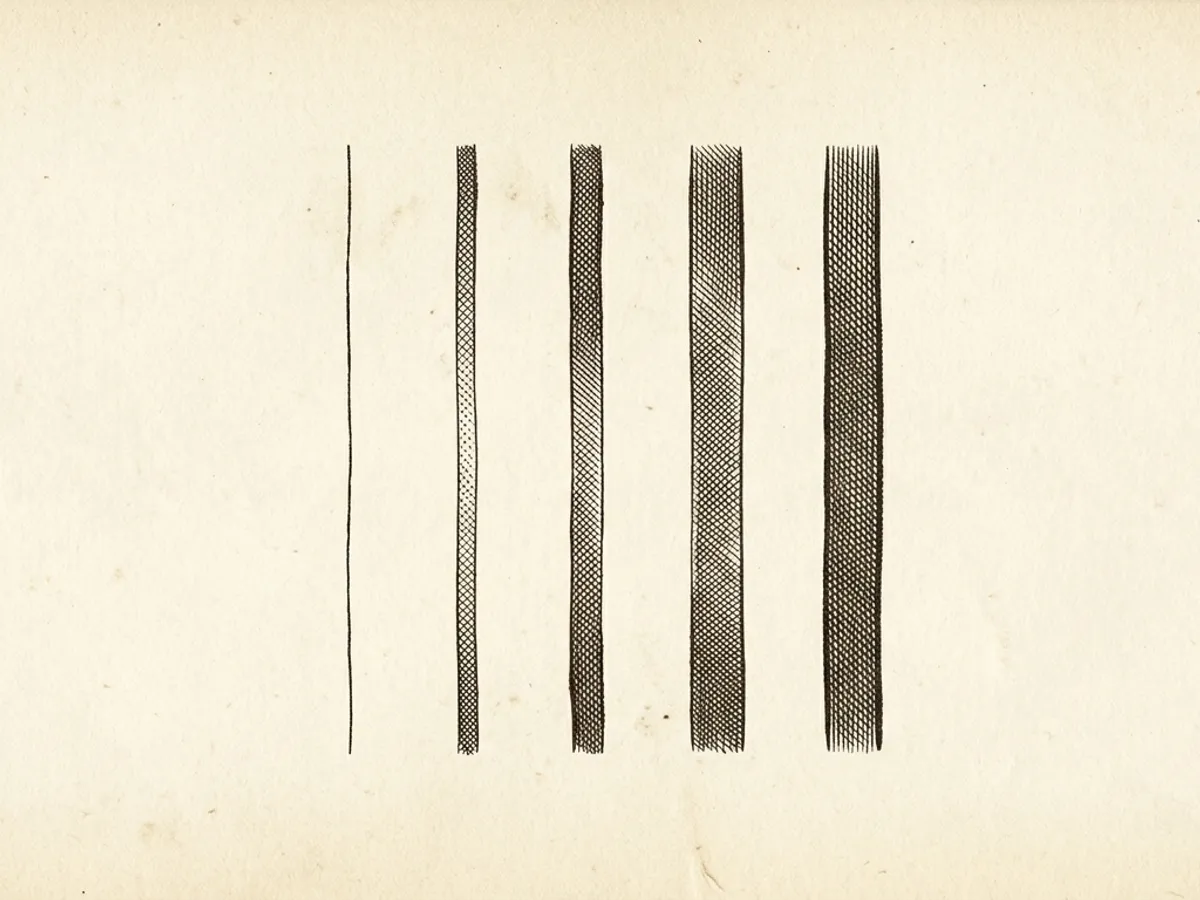
The core nib size progression covers five main widths. Each serves a different writing situation.
Extra-Fine (EF)
The narrowest nib in most manufacturers’ lineups. Extra-fine nibs produce a very precise line suited to small handwriting, dense technical notation, and annotation work. The trade-off is paper sensitivity: on rough copier paper or cheap spiral notebooks, an extra-fine nib may feather or feel scratchy. On smoother paper — Rhodia, Clairefontaine, Midori MD, Leuchtturm1917 — an extra-fine nib is crisp and satisfying.
Extra-fine nibs also tend to require more consistent pen angle and can start harder after the pen has been sitting idle. They are not the most forgiving first nib for someone new to fountain pens. Our guide to Fountain Pen Extra Fine Nibs covers who EF suits and the best EF pens available.
Fine (F)
A fine nib is the practical starting point for most writers with small-to-average handwriting. Fine nibs retain precision while tolerating a broader range of paper and pen angles than extra-fine. On typical notebook or journal paper, a fine nib performs reliably without special care.
Medium (M)
The most widely recommended starting size for new fountain pen users. Medium nibs flow generously, start easily even after the pen has been sitting overnight, and perform well on the widest range of paper types. If you are buying your first fountain pen and do not know your preference, a medium nib is the safest starting point. For specific first-pen picks, see our Best Beginner Fountain Pen guide.
Medium nibs suit most adults writing at a normal scale — lined notebooks, journal pages, everyday correspondence.
Broad (B)
Broad nibs produce a wide, expressive line that suits large handwriting, calligraphic writing, or any situation where character on the page matters more than precision. The trade-off is paper compatibility: a broad nib lays down more ink, which increases feathering and bleed-through on absorbent paper. Pair a broad nib with quality paper from the start, and the result is bold and satisfying.
Double Broad (BB) and Wider
Some manufacturers offer a double broad (BB) or wider options. These are primarily for calligraphic and artistic use, not everyday writing. Availability varies significantly across brands and often requires special ordering.
Specialty Nibs
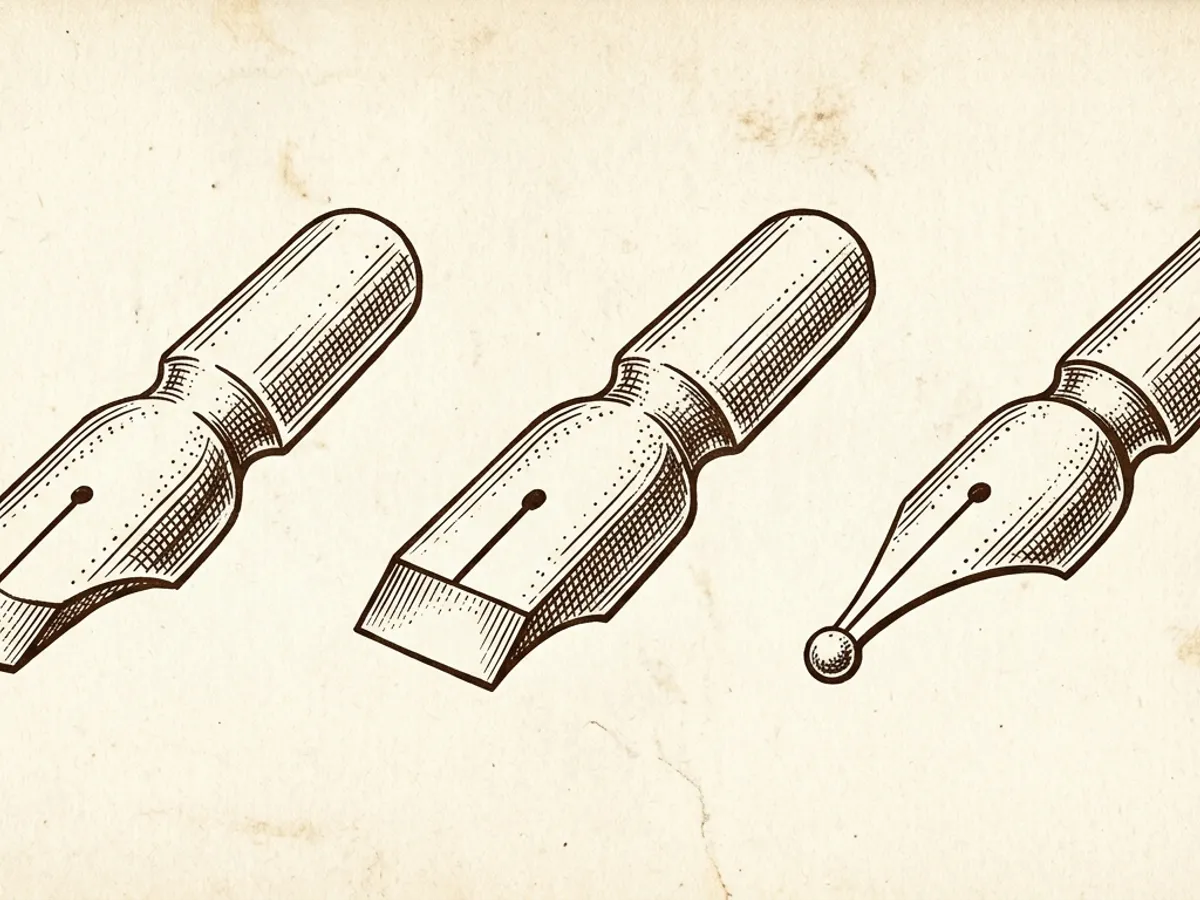
Beyond the standard EF/F/M/B range, several specialty nib types offer distinctive writing characteristics worth knowing before you buy.
Stub Nibs
A stub nib is ground flat — its tip is a blunt rectangle rather than a rounded dome. This geometry creates line variation: horizontal strokes appear wider, vertical strokes appear narrower. In everyday handwriting, the result is a subtle, pleasing calligraphic quality that adds rhythm to normal cursive without requiring a dedicated script or major technique change.
Stub nibs are typically described by millimeter width: 1.1mm and 1.5mm are the most common sizes available. The TWSBI Eco is one of the most accessible entry points for a stub nib. The Lamy Safari is also available with a 1.1mm nib option. We cover the format in depth in Fountain Pen Stub Nibs.
The constraint with stubs: they require a more consistent pen angle than round-tipped nibs. Rotating the pen while writing, or holding it at a very shallow angle, produces scratching or skipping. A stable, more upright writing position brings out the best in a stub.
Italic Nibs
Italic nibs share the flat-tip geometry of stub nibs but are ground to crisper, sharper edges. The line variation is more dramatic, and the writing experience is more demanding. Italic nibs are primarily for calligraphy practice or writers who want very pronounced thick-to-thin contrast. For general-purpose everyday writing, a stub is more comfortable and forgiving.
Flex Nibs
Flex nibs have springy tines that spread under downward pressure and snap back when pressure is released. This creates dramatic line variation — thick on the downstroke, thin on cross-strokes and hairlines. True, well-behaved flex is rare in modern fountain pens; most pens marketed as “semi-flex” offer some variation but not the full responsive spring of historical nibs.
Flex nibs are a specialty tool for writers specifically practicing pressure-and-release calligraphic scripts. They are not recommended as a first or everyday nib.
Japanese vs European Nib Sizing
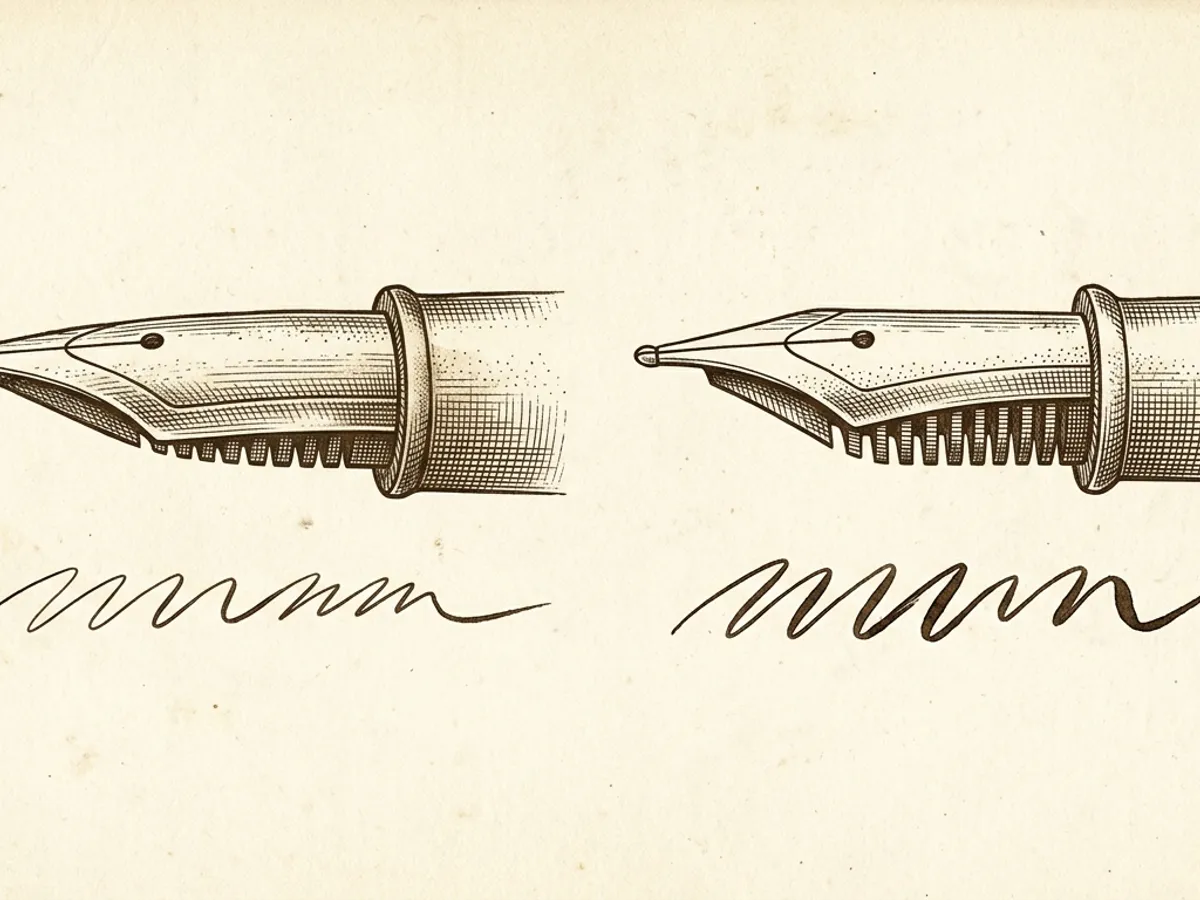
This is the most important practical detail when comparing fountain pen nibs across brands: Japanese manufacturers calibrate their nibs to produce significantly finer lines than European manufacturers at the same label designation.
A Pilot Fine (F) nib writes at a line width comparable to a European Extra-Fine (EF). A Pilot Medium (M) writes closer to a European Fine. This gap runs consistently across the major Japanese brands and is large enough to affect buying decisions.
The practical implications:
- If you are buying your first Pilot or Platinum pen and have only used European pens, consider choosing one size up from what you know. If you liked a Lamy Fine, start with a Pilot Medium.
- If you are comparing the Pilot Metropolitan and the Lamy Safari side by side, understand that a “medium” is not the same line width on both pens. The Lamy Safari M will produce a noticeably broader, wetter line than the Pilot Metropolitan M.
- If you write very small and found a European extra-fine too broad, a Japanese fine will be narrower still. If you are comparing to a European fine that you liked, a Japanese medium is the closer match.
No universal millimeter standard governs these labels, which is why brand-specific nib information matters before committing to a size. What the label says and what the nib actually writes can be very different across manufacturers.
Choosing Your Nib Size
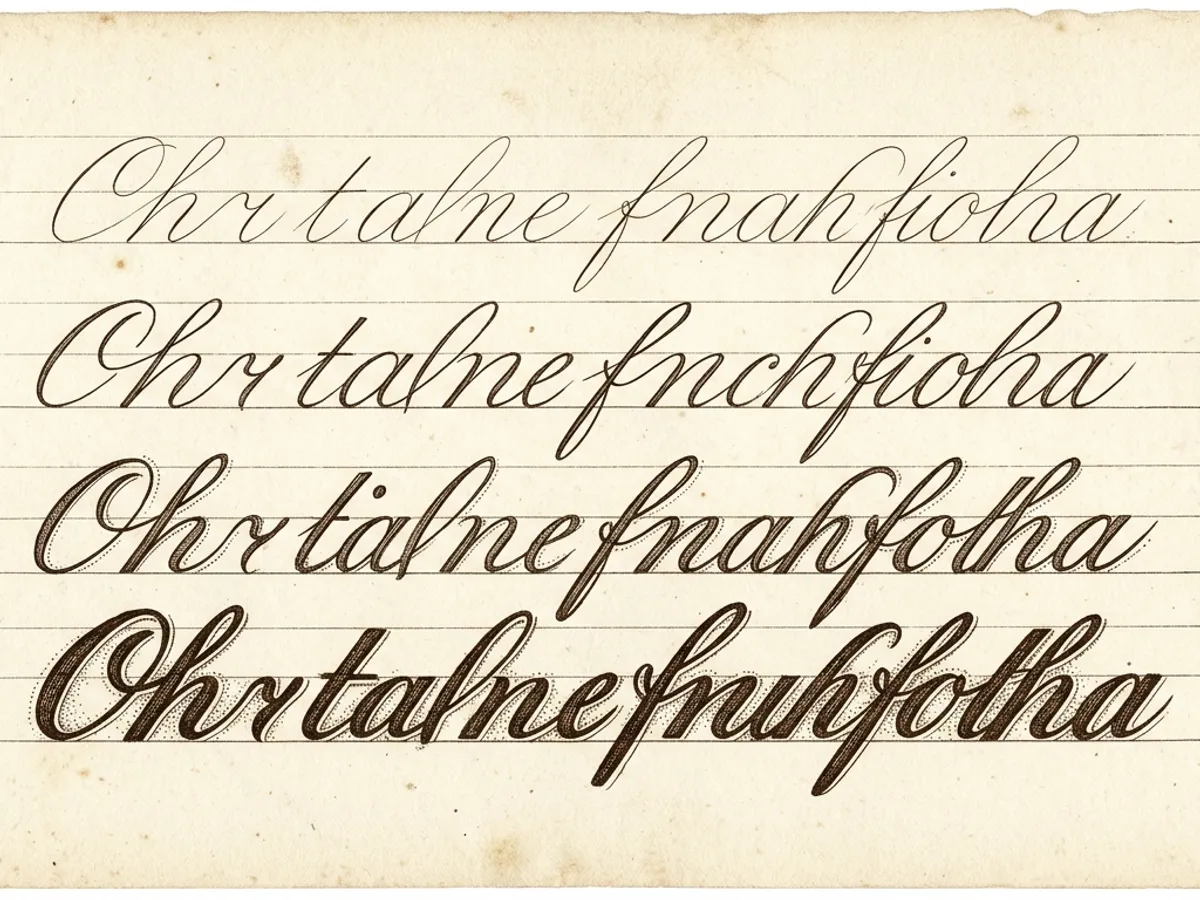
Selecting the right nib size comes down to four practical factors.
Your handwriting size. Small, compact handwriting is served by narrower nibs — the line weight stays proportional to the letter scale. Large, open handwriting looks better with medium or broad, where the line has enough weight to match the size of the strokes. A rough test: write a line of text in your normal handwriting and look at the weight of each stroke. A nib whose typical line width is less than half the height of your lowercase letters tends to look right at that scale.
Paper quality. This is the constraint most new fountain pen users underestimate. Standard copier paper, cheap lined pads, and typical spiral notebooks are absorbent and prone to feathering. On these papers, a medium nib is the safest choice — it flows well without the paper sensitivity of an extra-fine. On quality fountain-pen paper — Rhodia, Clairefontaine, Midori MD, Leuchtturm1917 — the full nib size range becomes practical, including extra-fine and broad.
Your writing use case. Dense technical note-taking, annotation, and margin writing favor finer nibs. Journaling, correspondence, and everyday writing suit medium well. Decorative writing and calligraphic practice benefit from a stub, italic, or broad nib.
Left-handed writers. Left-handed writers who write with an overhand hook (wrist curled over the line) often drag the hand through wet ink before it dries. A finer, drier nib lays down less ink, which dries faster. An extra-fine or fine nib in combination with a faster-drying ink brand is a practical solution.
The safe starting choice: if you are new to fountain pens and unsure, choose a medium nib from a manufacturer with consistent factory tuning. A medium nib is the most forgiving in terms of paper, angle, and reliable starting. It gives you a clear reference point for deciding whether you want to go narrower or wider from there.
Recommended Pens by Nib Size
The pens below are selected for consistent nib quality, availability, and good value at their price points. Each manufacturer has reliable factory tuning — the nib that arrives is almost always ready to write without adjustment.
For Extra-Fine and Fine
Platinum Preppy (0.3mm or Fine) — the most accessible entry point for fine-tipped fountain pen writing. The 0.3mm Preppy writes a narrow, precise line for its price, making it an excellent way to test extra-fine writing before committing to a more expensive pen. Platinum’s Slip and Seal cap mechanism prevents the nib from drying between uses, which is unusually practical at this price. The Preppy uses Platinum’s proprietary cartridge format; Platinum cartridges are widely sold online and in stationery shops.
View the Platinum Preppy on Amazon
TWSBI Eco (EF or F) — a transparent piston filler available in extra-fine and fine. The Eco fills directly from a bottle with no cartridges. Its piston reservoir holds more ink than any standard cartridge, which suits daily writers who go through ink at pace. The nib is consistently factory-tuned across the lineup and available in the full standard size range.
For Medium
Lamy Safari (M) — the Safari medium nib is one of the most widely recommended everyday nibs. The Lamy nib unit is interchangeable across Safari, Al-Star, and Vista pen bodies, and swaps in seconds. The Safari uses Lamy’s proprietary T10 cartridges, which are widely stocked, or the Lamy Z28 converter for bottled ink.
View the Lamy Safari on Amazon
Kaweco Sport (M) — a compact pocket pen that posts to full writing length. The Sport uses standard international cartridges, giving you access to ink from Diamine, Pelikan, Caran d’Ache, Faber-Castell, and dozens of other brands without being tied to any single manufacturer’s lineup.
View the Kaweco Sport on Amazon
For Stub
TWSBI Eco (1.1mm Stub) — among the most popular entry-level italic-style nibs. The 1.1mm width adds visible, pleasant line variation to normal handwriting without requiring a calligraphic script or specialized writing technique. Available as a standard option from most fountain pen retailers.
View the TWSBI Eco Stub on Amazon
Lamy Safari (1.1mm Nib) — the Lamy 1.1mm nib is sold separately and swaps directly into any Safari, Al-Star, or Vista pen body. Writers who already own a Safari can try stub-style writing without buying a second pen — a practical and cost-effective option.