
How Rollerballs and Fountain Pens Actually Work
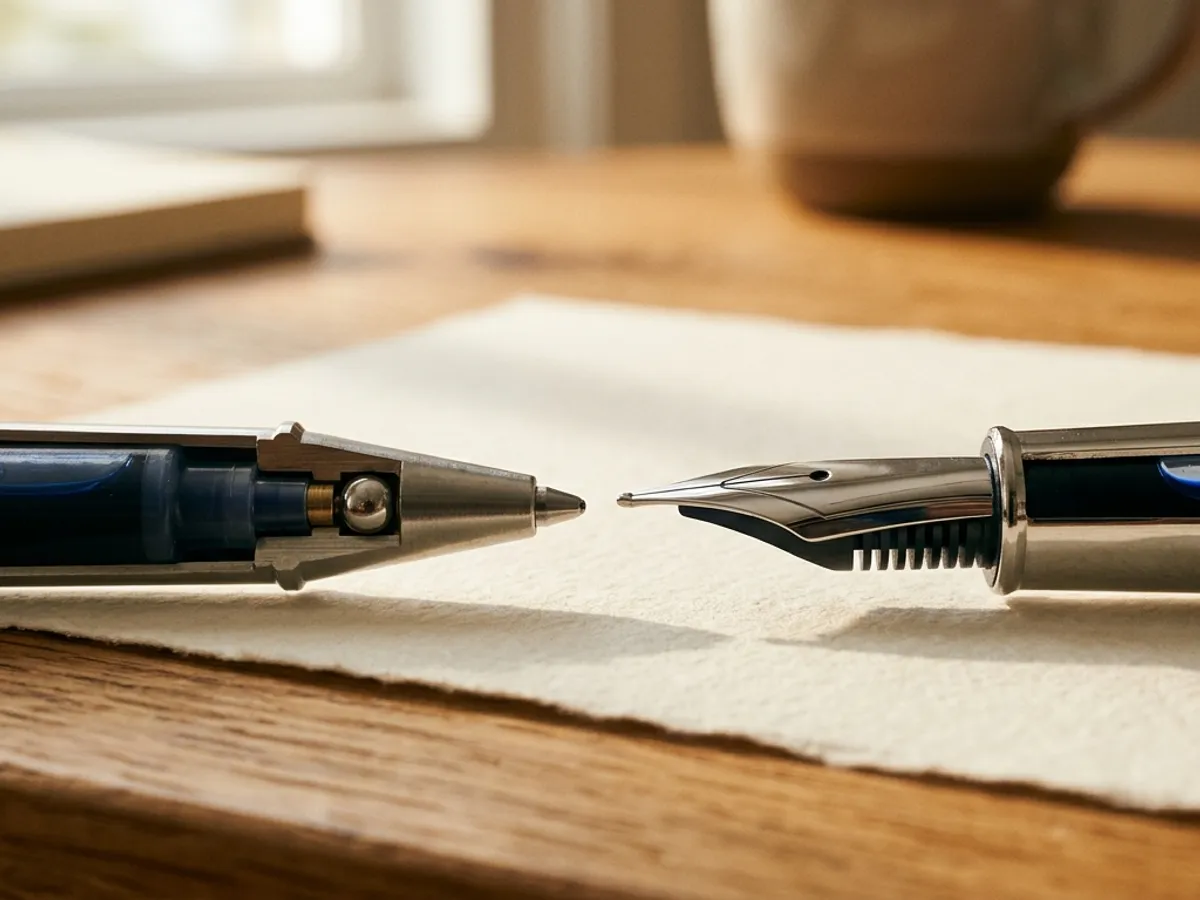
Both rollerballs and fountain pens use water-based liquid ink — and that shared chemistry is what makes them feel related on paper. But the mechanism that moves ink from reservoir to page is fundamentally different.
A rollerball pen uses a tiny free-spinning ball at the tip, typically 0.5–0.7mm in diameter, that rotates as you write. The ball picks up ink from a sealed reservoir and deposits it in a smooth line as it rolls across the paper. The ink is pre-sealed in a proprietary cartridge; when it runs out, you replace the cartridge or retire the pen.
A fountain pen works through capillary action. A split nib — two tines with a slit running between them — draws ink from a reservoir (a cartridge or a converter filled from a bottle) through surface tension and wicking, then releases it onto the page wherever the nib makes contact. There is no ball, no motor, no pressurized feed. The nib rests on the paper with minimal downward force; the paper absorbs ink from the slit by contact.
This mechanical difference has real consequences for how each pen behaves across different papers, angles, and writing pressures — and it explains most of the practical differences between them.
Writing Feel and Line Quality
Rollerballs write consistently. Because the ball does the work, a rollerball performs with similar character across most paper types — smooth, slightly lubricated, requiring light pressure. The line it produces is clean, uniform, and predictable. Rollerball lines are typically more saturated than ballpoint lines and dry faster than oil-based ballpoint paste, which makes them feel more fluid without requiring the grip adjustment that fountain pens demand.
Fountain pens are expressive. The nib makes direct contact with the paper, and that contact responds to factors a rollerball ignores: the angle you hold the pen, the pressure you apply, and the texture of the paper beneath it. A well-tuned nib on smooth paper produces a line that feels almost frictionless — responsive without resistance. Most nibs are designed to write with zero downward pressure; the pen’s own weight is sufficient. This feels unfamiliar at first, particularly for writers accustomed to pressing ballpoints, but it becomes natural quickly.
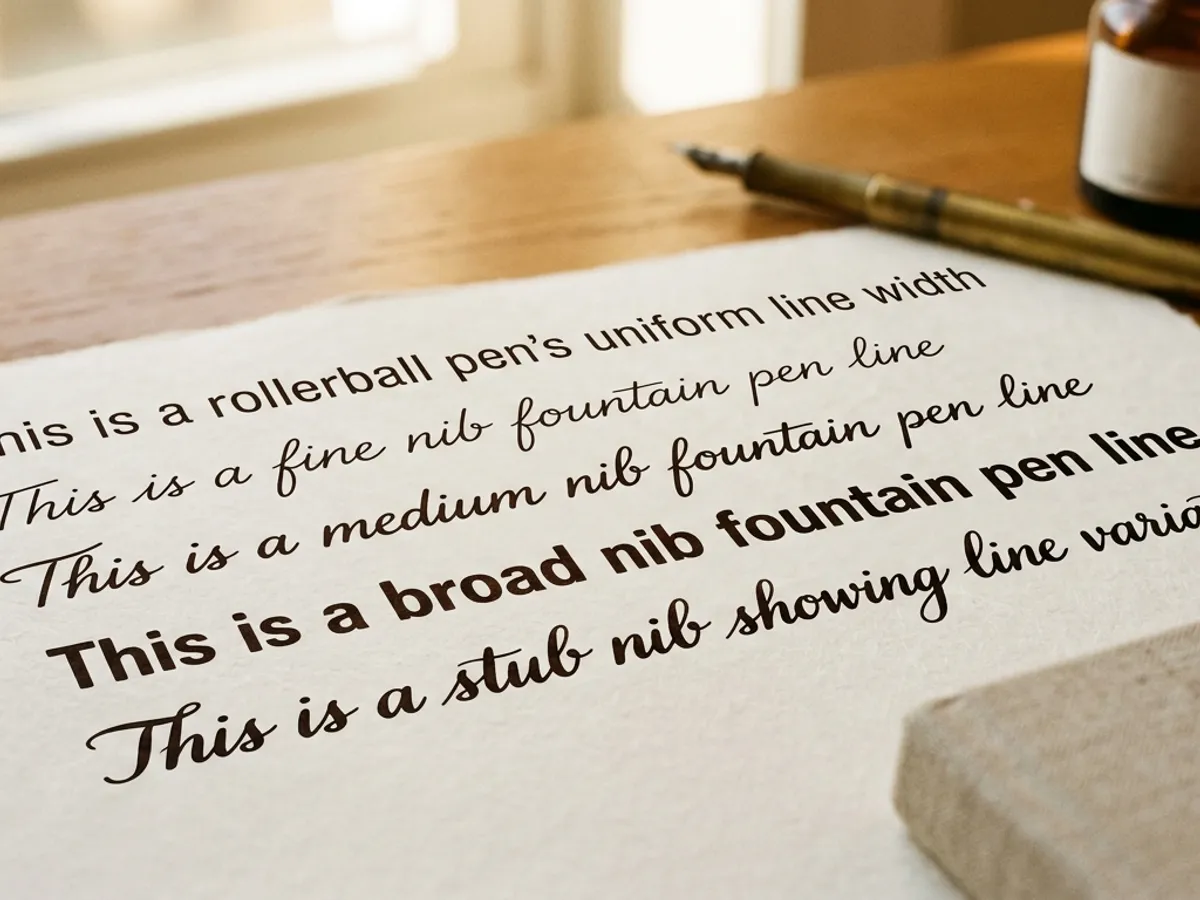
The key difference in line quality is flexibility. A rollerball’s line width is fixed by its ball diameter — a 0.5mm ball produces a 0.5mm line, always. A fountain pen nib can be selected in fine, medium, broad, stub, or italic widths, each producing a distinct line character. Stub and italic nibs create line variation — thicker horizontal strokes, thinner vertical ones — that gives handwriting a calligraphic quality no rollerball can replicate.
Both types of pen reward good paper. Rollerballs perform acceptably on most paper. Fountain pens perform best on paper designed to handle liquid ink: Rhodia, Leuchtturm, Clairefontaine, and similar brands with tight paper surfaces. On rough or low-quality paper, a fountain pen may feather (ink spreading along the paper grain) or bleed through.
Maintenance and Daily Use
Rollerballs require almost no maintenance. Uncap, write, recap. When the ink runs out, replace the cartridge or retire the pen. There is no cleaning routine, no dried feed to soak out, and no particular storage discipline.
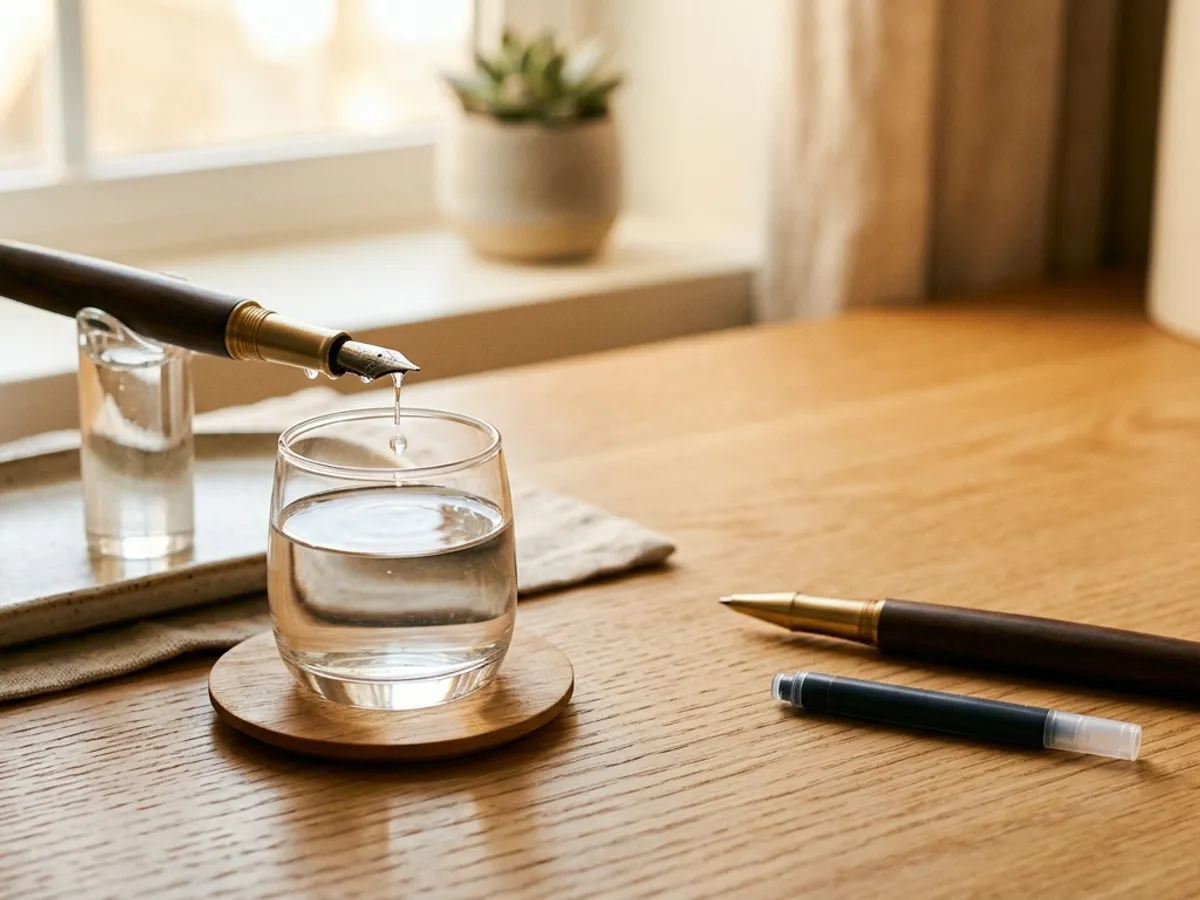
Fountain pens require some attention. If left uncapped or unused for extended periods, ink can dry in the feed and cause hard starts or no flow at all. Pens stored unused for weeks may need a flush with water before they write well again. Cleaning takes a few minutes — flush water through the converter or cartridge section, repeat until clear — and should be done before changing inks or storing the pen for an extended period.
In daily practice, however, the maintenance burden is modest. A fountain pen used regularly performs reliably with minimal intervention. The pens that develop problems are typically those left capped and forgotten in a drawer for months. If you write daily, a quality fountain pen will outlast dozens of rollerballs with nothing beyond occasional cleaning.
Ink Options and Availability
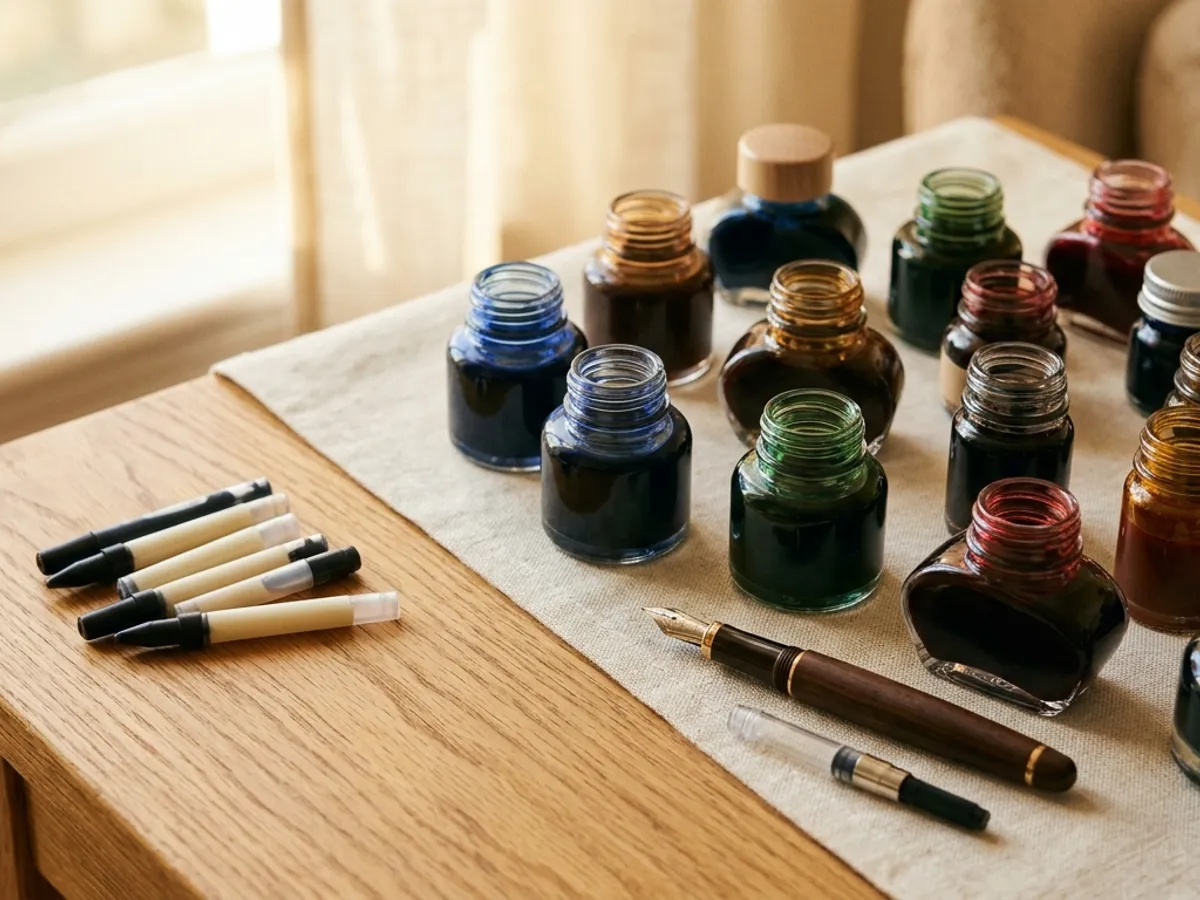
Rollerballs are limited to their manufacturer’s cartridges. Pilot, Uni-ball, and Pentel rollerballs use proprietary refills that are not cross-compatible. The available colors per brand are typically a handful of options: black, blue, blue-black, and red.
Fountain pens open access to a substantially wider range of inks. Hundreds of bottled formulations are available from brands including Diamine, Pilot Iroshizuku, J. Herbin, Noodler’s, Robert Oster, and many others — spanning colors from deep archival blacks to shimmering turquoises, iron gall blue-blacks, and seasonal specialty releases. For writers who find ink variety part of the pleasure of writing by hand, a fountain pen is the only delivery mechanism for that range.
Pens that accept standard international cartridges — Kaweco and Faber-Castell among the most common — can use any of the cartridges produced by dozens of third-party manufacturers. Proprietary systems (Pilot, Lamy, Platinum) require that brand’s specific cartridge, but all accept optional converters that allow the use of any bottled ink in the reservoir.
Cost Over Time
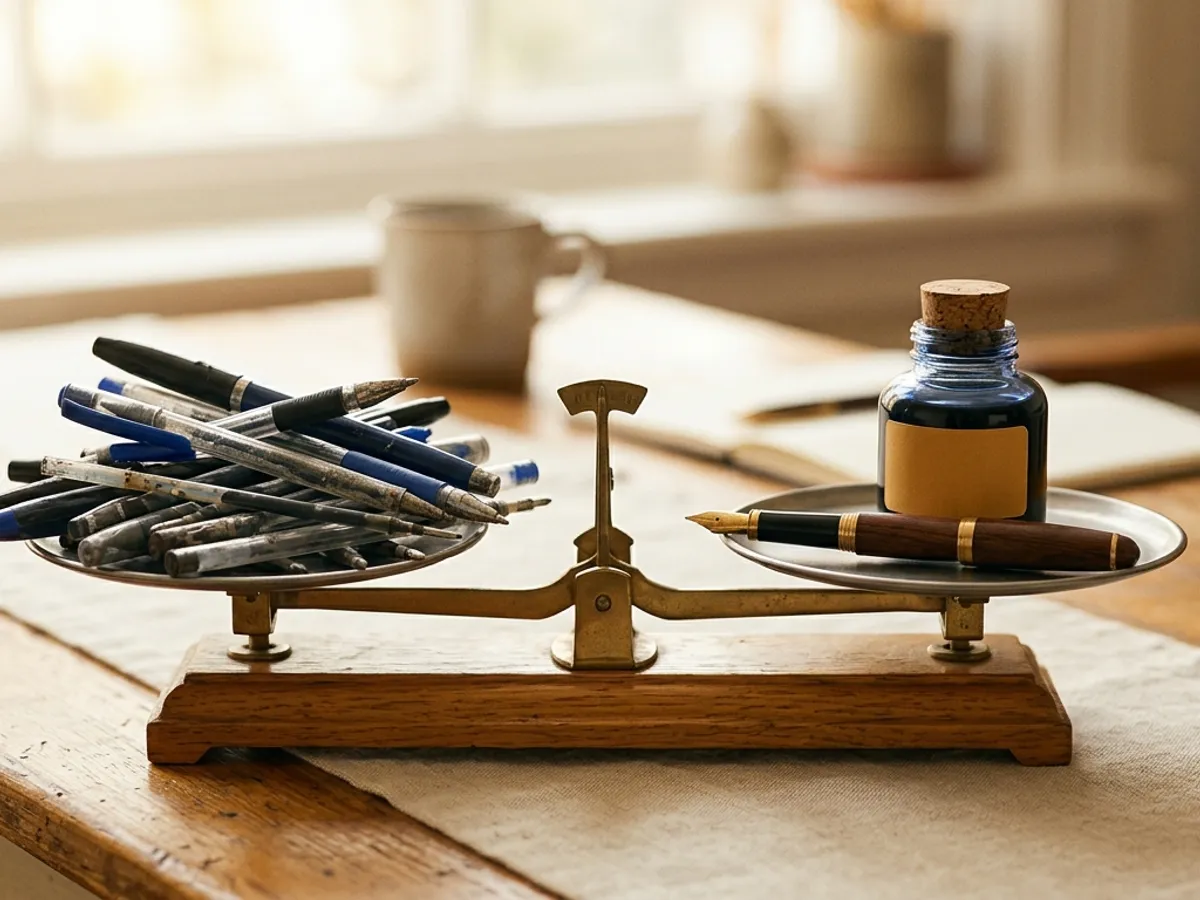
Entry-level rollerballs are inexpensive to start: typical disposables run $2–4 per pen, with replacement refills for reusable models available for $1–3. For an occasional writer, these costs feel low. For someone who writes daily, the ongoing cost accumulates.
A fountain pen requires more upfront: a reliable entry-level model such as the Pilot Metropolitan or Lamy Safari typically costs $15–40, and a bottle of ink adds another $10–20. After that initial investment, however, the ongoing cost is low. A 50ml bottle of ink, used through a converter, can supply several months of daily writing at a cost per page that is a fraction of rollerball cartridge replacement.
For regular writers, the long-term economics favor fountain pens. The pen itself can last years or decades with basic maintenance; the cost differential versus regular rollerball replacement becomes meaningful over time.
Which One Is Right for You?
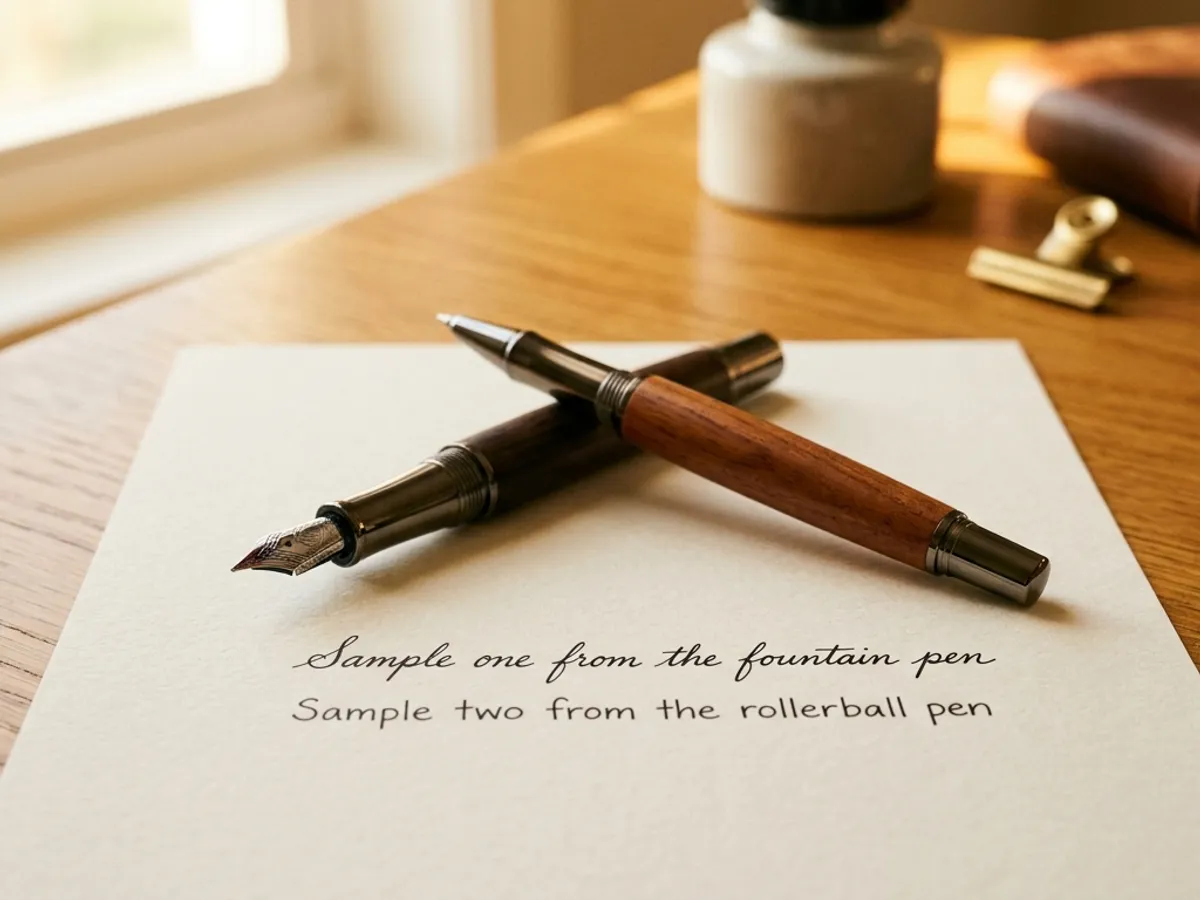
The right choice depends on how you write and what you want from the experience.
Choose a rollerball if you write occasionally, want zero maintenance, and value consistent performance across conditions. Rollerballs are reliable workhorses — they perform when picked up infrequently, travel without special handling, and require no adjustment from ballpoint habits. For office environments where pens are shared or frequently misplaced, the disposable economics also make practical sense.
Choose a fountain pen if you write regularly by hand and want writing to be a deliberate, enjoyable activity rather than incidental to a task. Fountain pens offer more control over line quality, a far wider ink selection, and a writing experience that is noticeably different from any other instrument. They also represent better long-term value for daily writers.
For a practical first fountain pen, the Pilot Metropolitan is a widely recommended starting point — it writes with the smooth, wet character typical of Pilot’s nibs, accepts Pilot’s proprietary cartridges with a CON-40 converter option for bottled inks, and costs well under $30. For a deeper look at how a fountain pen’s mechanism actually works, how fountain pens work covers capillary action and nib function in detail. And if you’re deciding between pen types more broadly, our fountain pen vs. ballpoint comparison covers the other end of the writing-instrument spectrum.