
What a Converter Actually Does
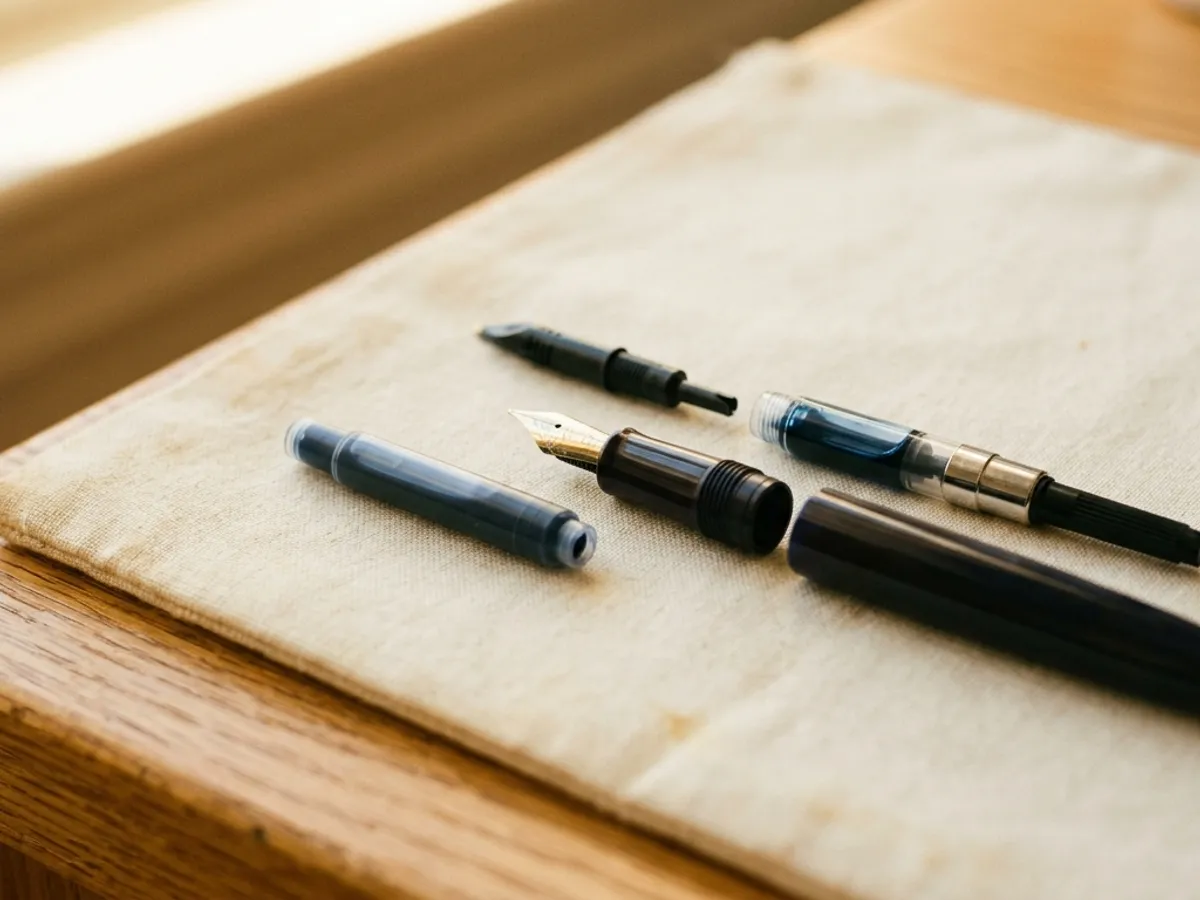
A fountain pen converter is a small, refillable reservoir that fits inside a fountain pen in exactly the same slot as a pre-filled ink cartridge. Its purpose is straightforward: instead of snapping in a factory-sealed cartridge and discarding it when the ink runs out, you fill the converter directly from a bottle of ink. The pen’s section, feed channel, and nib all function identically whether a cartridge or a converter is installed—the only difference is where the ink supply comes from.
Most converters are made from translucent or semi-translucent plastic, so you can monitor the ink level without disassembling the pen. Capacity varies by model, but a typical converter holds between 0.7ml and 1.2ml of ink—broadly similar to a standard cartridge.
The real advantage of switching to a converter is ink choice. Pre-filled cartridges are limited to whatever colors a brand chooses to offer in that proprietary format. Bottled ink, by contrast, is available in hundreds of colors and formulations: waterproof pigmented blacks, shimmering inks with fine metallic particles, iron-gall inks valued for their archival permanence, and an enormous range of blues, greens, reds, and other colors that no cartridge catalogue approaches. If you want to write in a specific shade of teal or a muted vintage gray, a bottled ink and a converter are almost certainly the only way to get there.
For anyone interested in exploring fountain pen inks more deeply, it helps to first understand how fountain pens work and the role the feed plays in delivering ink to the page.
Types of Fountain Pen Converters
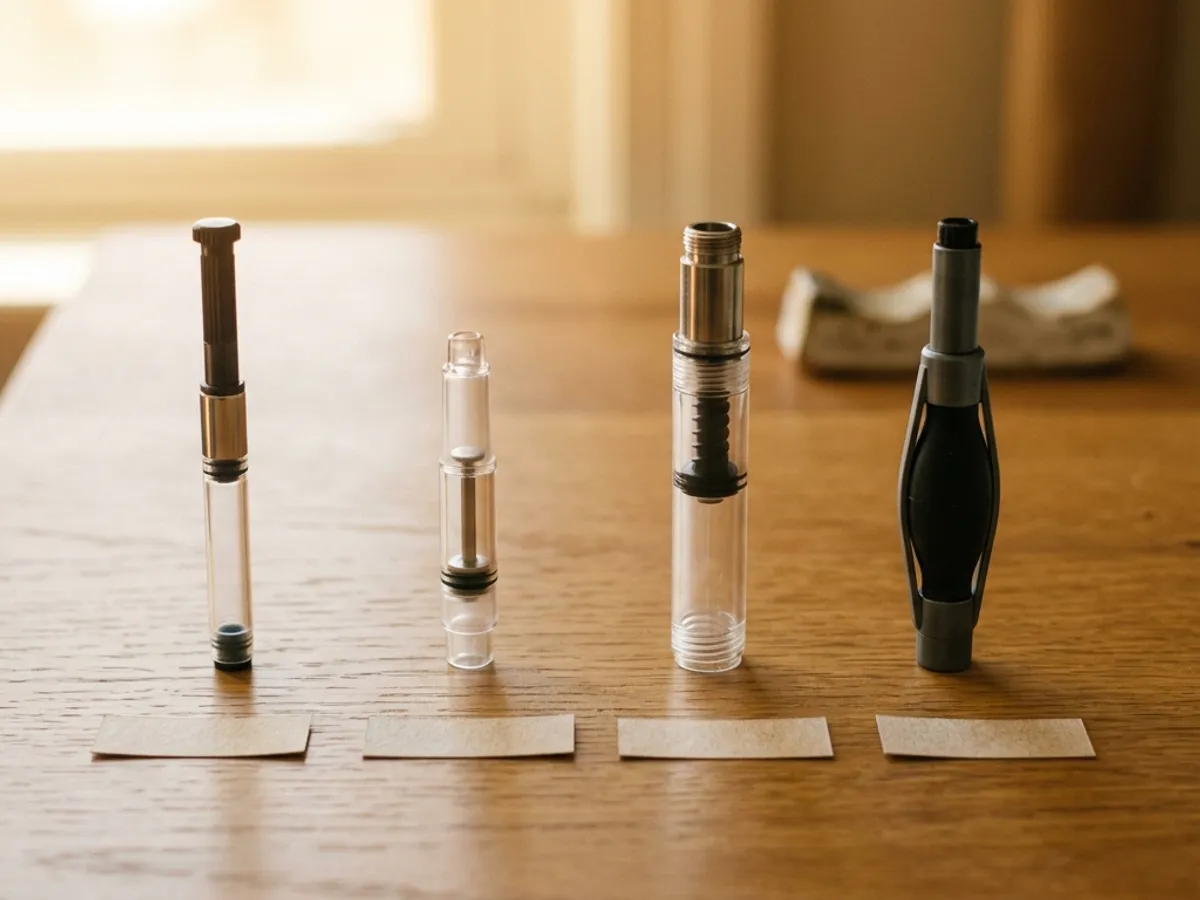
Converters are not all the same design. The filling mechanism varies by manufacturer, and each type differs in capacity, ease of use, and reliability.
Twist-piston converters use a screw-driven piston inside the converter barrel. Rotating a knob at the top drives the piston downward to expel air, and reversing the twist draws it back, creating suction that pulls ink up through the nib. This mechanism is reliable and widely used in European pen lines. Lamy’s Z26 converter—compatible with the Safari, AL-Star, Studio, and other Lamy models—operates this way. The Lamy Safari with converter is one of the most popular entry points to bottled ink for new fountain pen users.
Pilot’s CON-40 is another twist-piston design — a compact converter with a knurled knob and small agitator balls inside the reservoir to keep ink flowing — used with pens including the Metropolitan, Kakuno, and Prera.
Push-button converters work by compressing an internal pressure plate. Pressing the button down expels air, and releasing it creates suction when the nib is submerged in ink. Pilot’s high-capacity CON-70 is the most widely encountered example — its noticeably wider barrel holds considerably more ink than a compact twist converter, but it requires a pen with a barrel section wide enough to accept it, so compatibility depends on the specific Pilot model.
Squeeze-bladder converters operate by pinching an external bladder or sac. You compress it before submerging the nib, then release it while the nib is in the ink. Platinum uses this mechanism in their line of converters.
Cartridge vs. Converter: Which Should You Use?
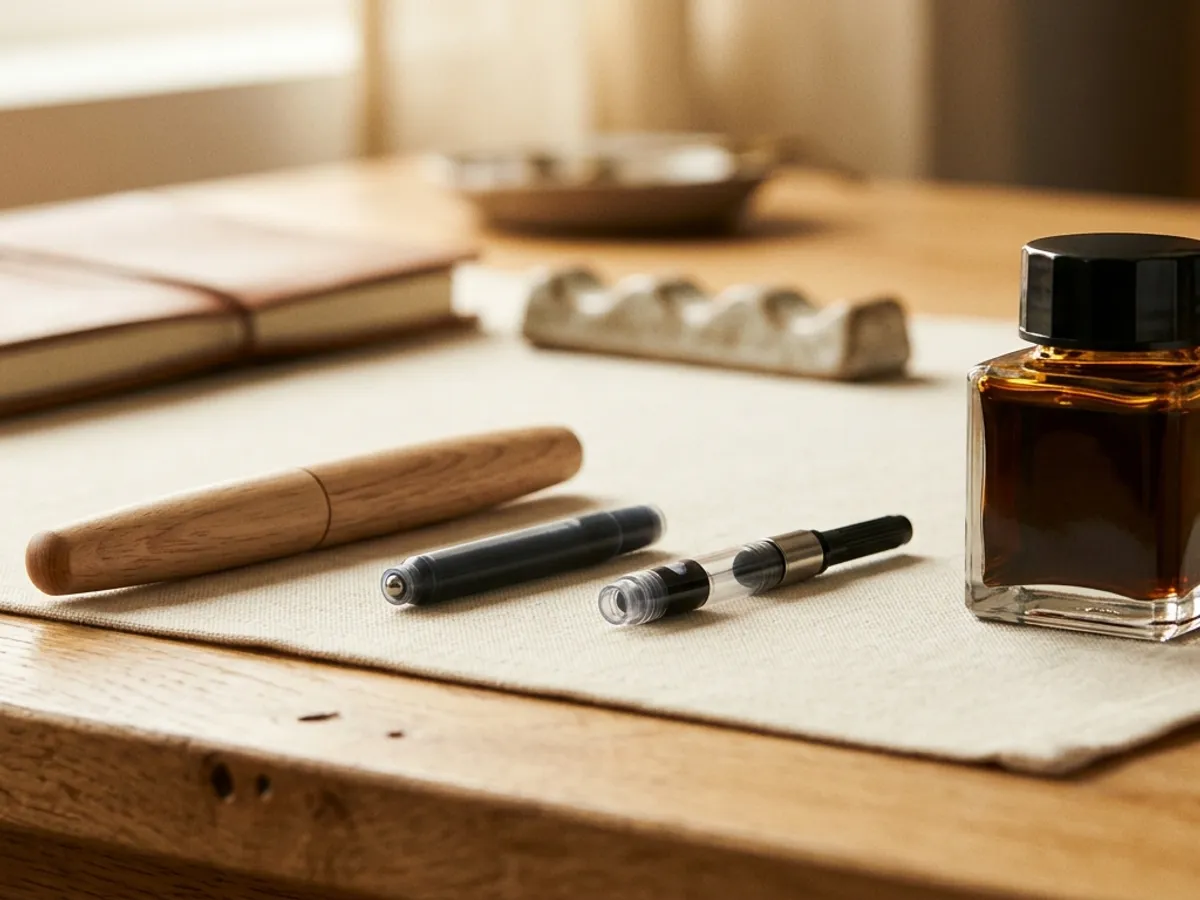
Both formats have genuine advantages, and the right choice depends on how and where you write.
The case for cartridges: They are sealed, mess-free, and require no preparation. Cartridges are practical for a pen kept in a bag or jacket pocket, for travel when carrying an open bottle is impractical, or for situations where you want to pick up and write with no setup at all. If you write infrequently, a cartridge-loaded pen is also less likely to dry out in storage.
The case for converters: They unlock the full range of bottled inks, which extends your color options dramatically. Bottled ink is also significantly cheaper per milliliter at volume—a 50ml or 80ml bottle of quality ink will far outlast the equivalent in cartridges at a fraction of the ongoing cost. There is also a practical environmental argument: eliminating single-use plastic cartridges reduces waste for anyone who writes regularly.
For most people who use fountain pens consistently, the converter becomes the preferred daily option, with a cartridge or two kept as backup for travel. The two approaches are not mutually exclusive—the same pen accepts either, and switching takes less than a minute.
New to fountain pens entirely? The guide to choosing a pen for beginners covers the full landscape before you get to the question of converters.
How to Fill a Fountain Pen Converter

The filling process is the same regardless of which converter mechanism your pen uses. Have a soft cloth or paper towel nearby before you start.
- Unscrew or separate the pen body from the grip section to expose the converter. On most pens the barrel simply unscrews or pulls off.
- If you are switching from a cartridge, remove it and press the converter firmly onto the pen’s feed post until it seats with a snug fit.
- Open your ink bottle. Submerge the nib and the lower part of the grip section into the ink—far enough that the ink intake is fully below the surface and not drawing in air.
- Operate the converter: turn the piston knob, press and release the button, or squeeze and release the bladder. Do this slowly to maximize how much ink the converter draws in.
- Withdraw the pen from the ink bottle with the nib still pointing downward.
- Wipe the nib and grip section clean with your cloth, then reassemble the pen.
On a completely dry pen, the first fill sometimes takes a few writing strokes to prime—ink may need a moment to travel through the feed channel to the nib. Writing circles or figure-eights on scratch paper for a few seconds usually gets it flowing.
For a more detailed walkthrough of the filling process, including tips for vacuum-fill and piston-fill pens, see the full guide to how to fill a fountain pen with ink.
Converter Compatibility: What Works in Your Pen
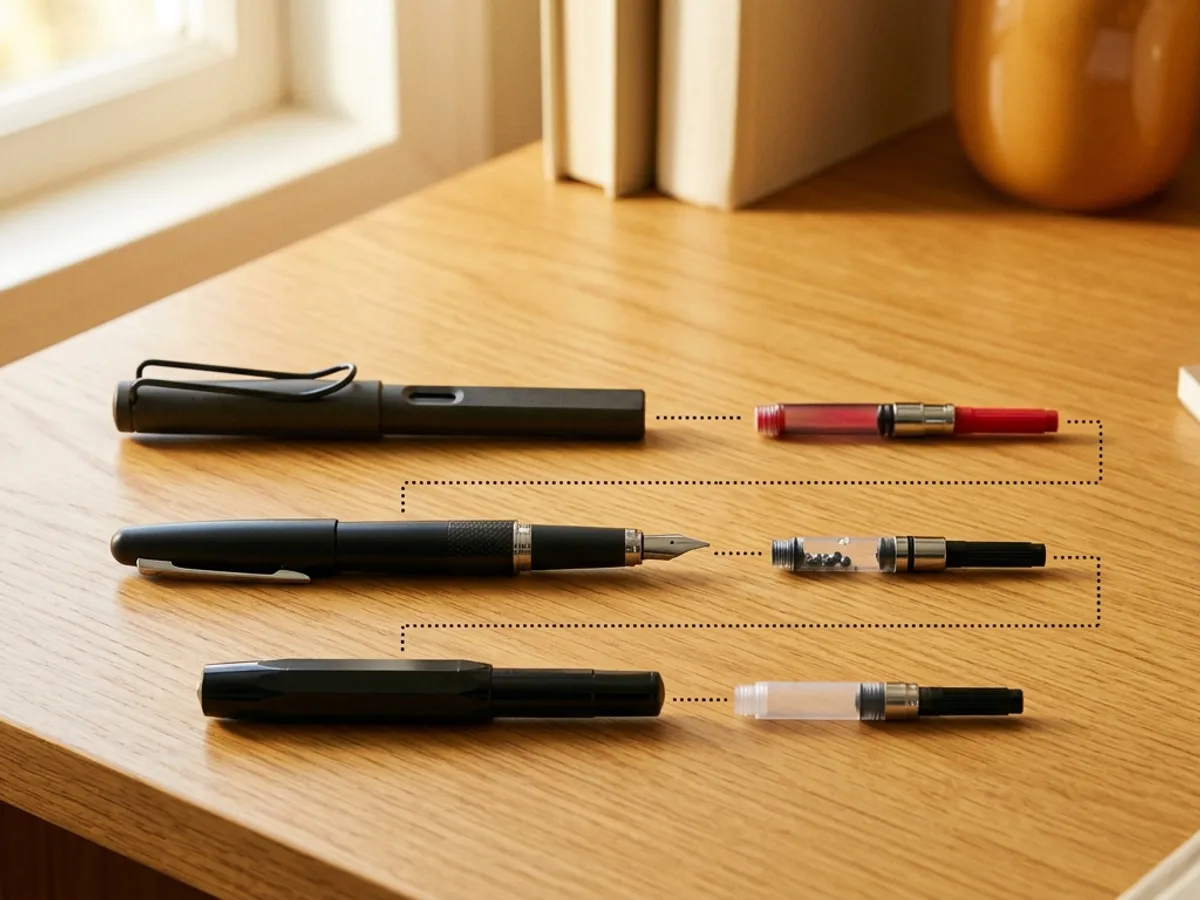
This is the area that catches most beginners off guard. Converter compatibility is brand-specific and often model-specific within a brand. A converter designed for one pen will not necessarily fit another, even if it looks similar in size.
Lamy pens require Lamy’s Z26 converter. No other converter seats correctly on the Lamy feed post, regardless of size.
Pilot pens require either the CON-40 or CON-70, depending on the pen model. The CON-40 is the standard choice for most Pilot pens; the CON-70 fits pens with a barrel wide enough to accommodate it. Pilot pens do not accept standard international converters.
Platinum pens require Platinum’s own proprietary converters.
Standard International converters fit pens from Kaweco, Faber-Castell, Monteverde, Pelikan (most of their lineup), and other brands that use the standard international cartridge format. Standard International converters come in two sizes—long and short. Kaweco Sport pens use the short cartridge and converter because of the pen’s compact barrel.
The most reliable approach when buying a converter: check your pen’s documentation or the manufacturer’s website to confirm the exact compatible model number. Buying the manufacturer’s own converter guarantees a correct fit and a reliable seal. Third-party standard international converters from reputable brands can work well as alternatives for pens in that system, but fit and seal quality vary.
When you are ready to explore the bottled inks a converter opens up, starting with a versatile, widely available ink in a color you will actually use daily makes the switch much easier to commit to.