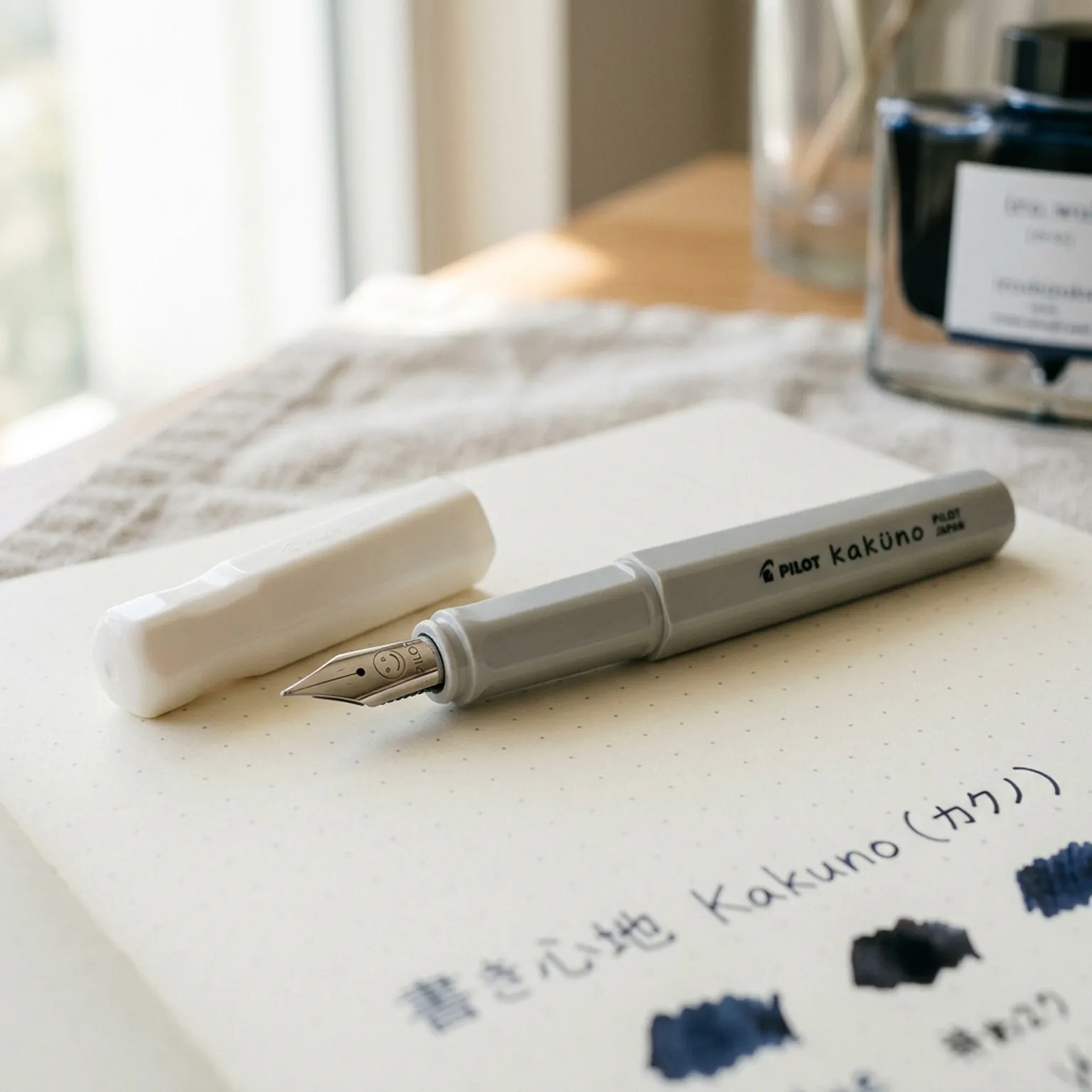
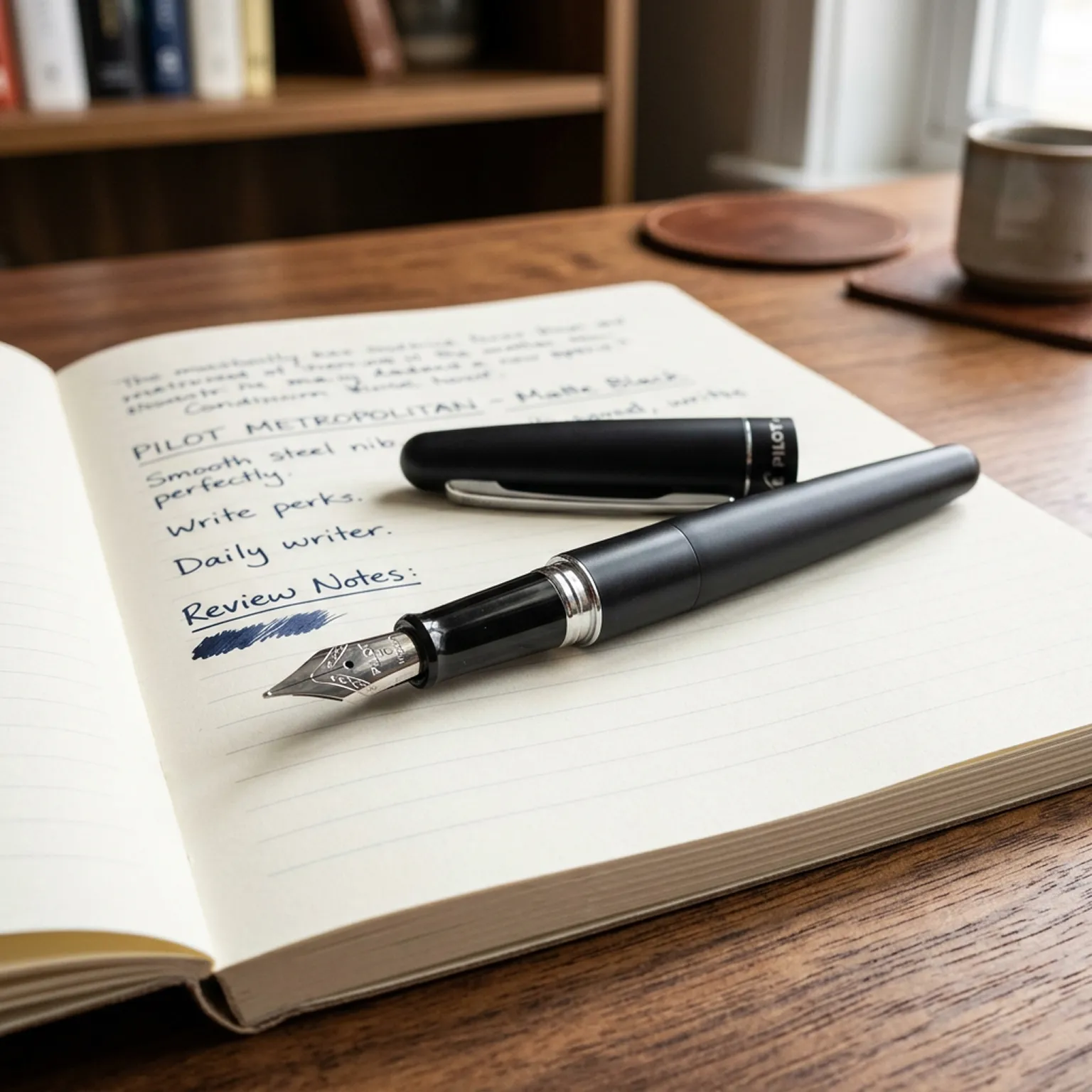
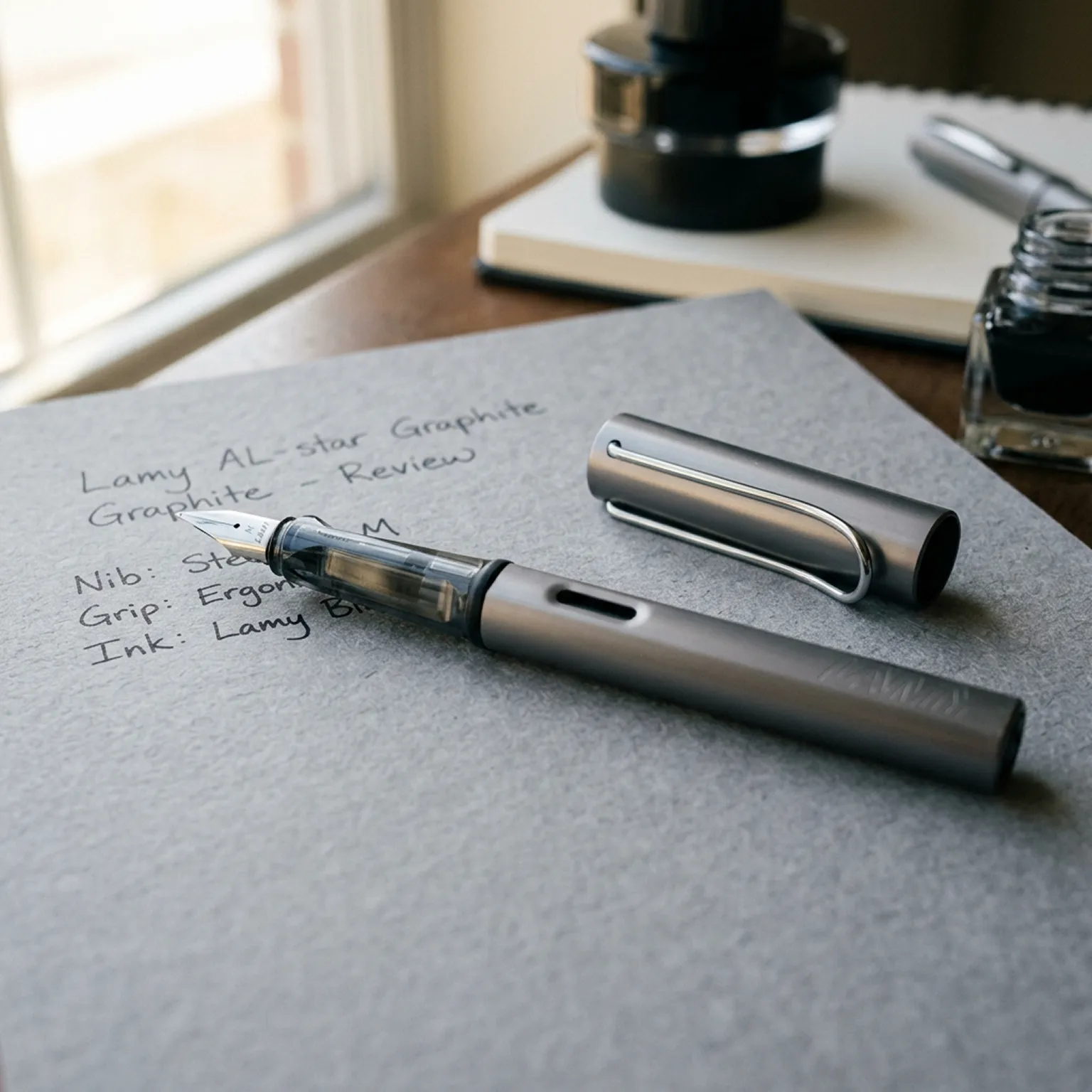
Best ink flow in the catalog.
6 specimens scored on ink flow.
Read the method →What ink flow measures.
Ink flow is the consistency of ink delivery from reservoir to page: whether the line starts the moment the nib touches paper, stays saturated through long sessions, and survives a few minutes uncapped without drying to a hard start. The feed — the finned channel under the nib — does this work, balancing air intake against ink delivery.
Flow problems are the most functional of all fountain pen failures. A pen with mediocre hand feel still writes; a pen with poor flow simply stops. Owner reports are unusually reliable here because flow failures are unambiguous — a hard start is a hard start regardless of the writer's grip or paper choice.
How we score it
We score ink flow from the frequency of hard-start, skipping, and dry-out complaints in aggregated owner reports, cross-checked against expert long-form reviews that track behavior over full fills. High scorers keep a wet, consistent line across cartridge and converter use; low scorers show recurring reports of flow interruptions or drying between sessions. Read the full methodology →
What to look for
Wetter flow means more vivid color and smoother feel but longer dry times and more show-through on thin paper. If you use cheap office paper daily, a moderately dry writer is often the more practical pick than the wettest pen on the leaderboard.
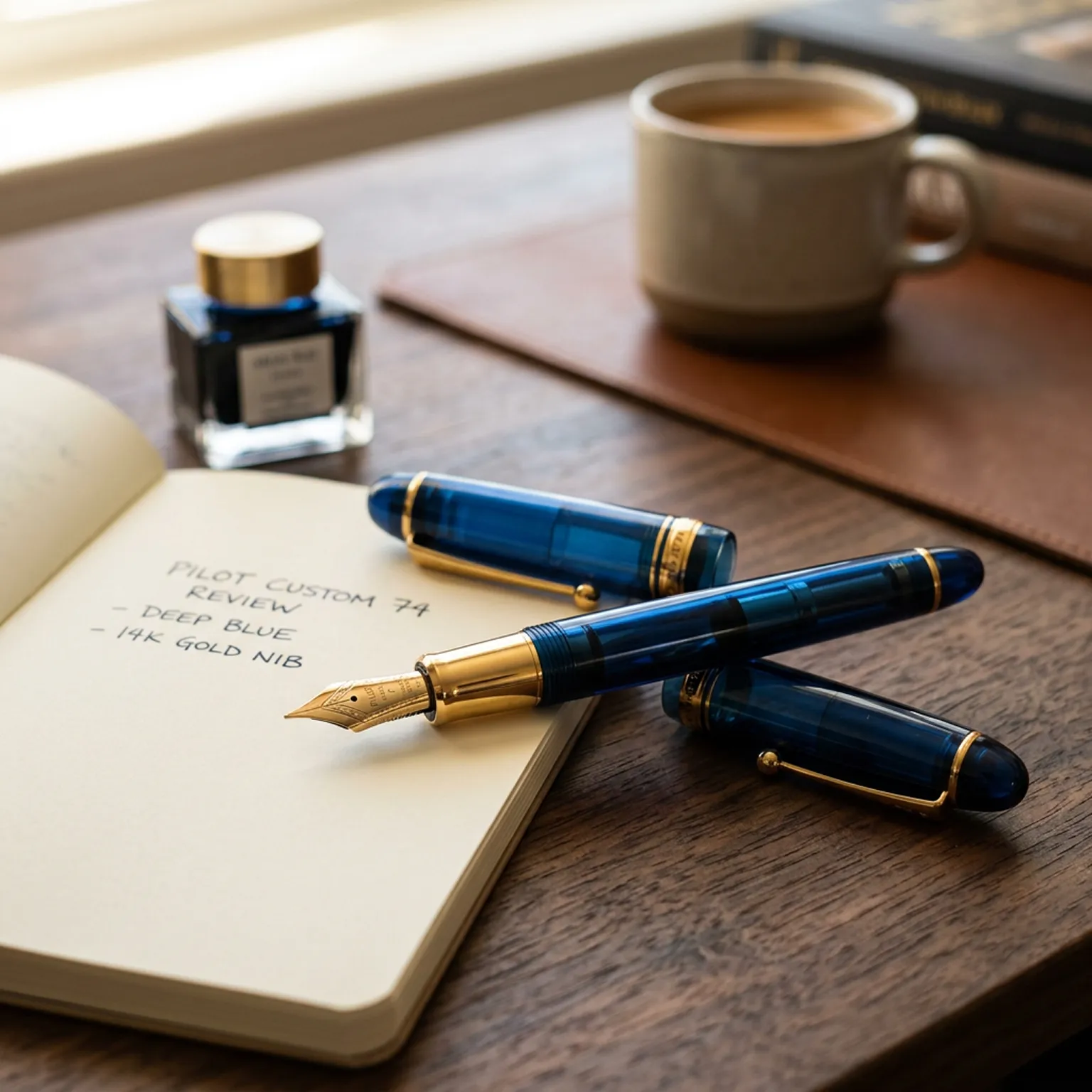
Why Pilot Custom 74 Fountain Pen leads
Consistently wet, with immediate starts every time and no dry-out thanks to the screw cap. Fine sizes run a touch drier (Japanese tuning); the medium is the characteristically wet one.
— from our Pilot Custom 74 Fountain Pen review, ink flow dimension