The smoothest nibs in the catalog.
6 specimens scored on nib smoothness.
Read the method →What nib smoothness measures.
Nib smoothness describes how much feedback a nib transmits as it moves across paper — the difference between a tip that glides and one that scratches. It is governed by the polish of the tipping material, the alignment of the tines, and the size of the nib: broader tips present more polished surface area to the page, which is why a medium almost always feels smoother than an extra-fine from the same maker.
Smoothness is the single most-cited quality in owner reviews of entry-level pens, and the most common source of out-of-box disappointment. A pen that skips or bites on the upstroke gets returned; one that glides gets recommended. It is also the dimension where factory quality control matters most — two copies of the same model can land on opposite ends of the spectrum when tine alignment drifts.
How we score it
We score nib smoothness by synthesizing aggregated owner reports — with extra weight on recurring complaints like scratchiness, hard starts, and baby's-bottom skipping — alongside published expert reviews that compare factory tuning across copies. A high score means the consensus is smooth-out-of-the-box across nib sizes; a low score means feedback or skipping shows up repeatedly in independent reports. Read the full methodology →
What to look for
If you write small or favor extra-fine nibs, expect more feedback at any score — that is physics, not a defect. Japanese fine nibs run finer than European equivalents, so a Pilot fine gives a smoother fine-line experience than most European extra-fines.
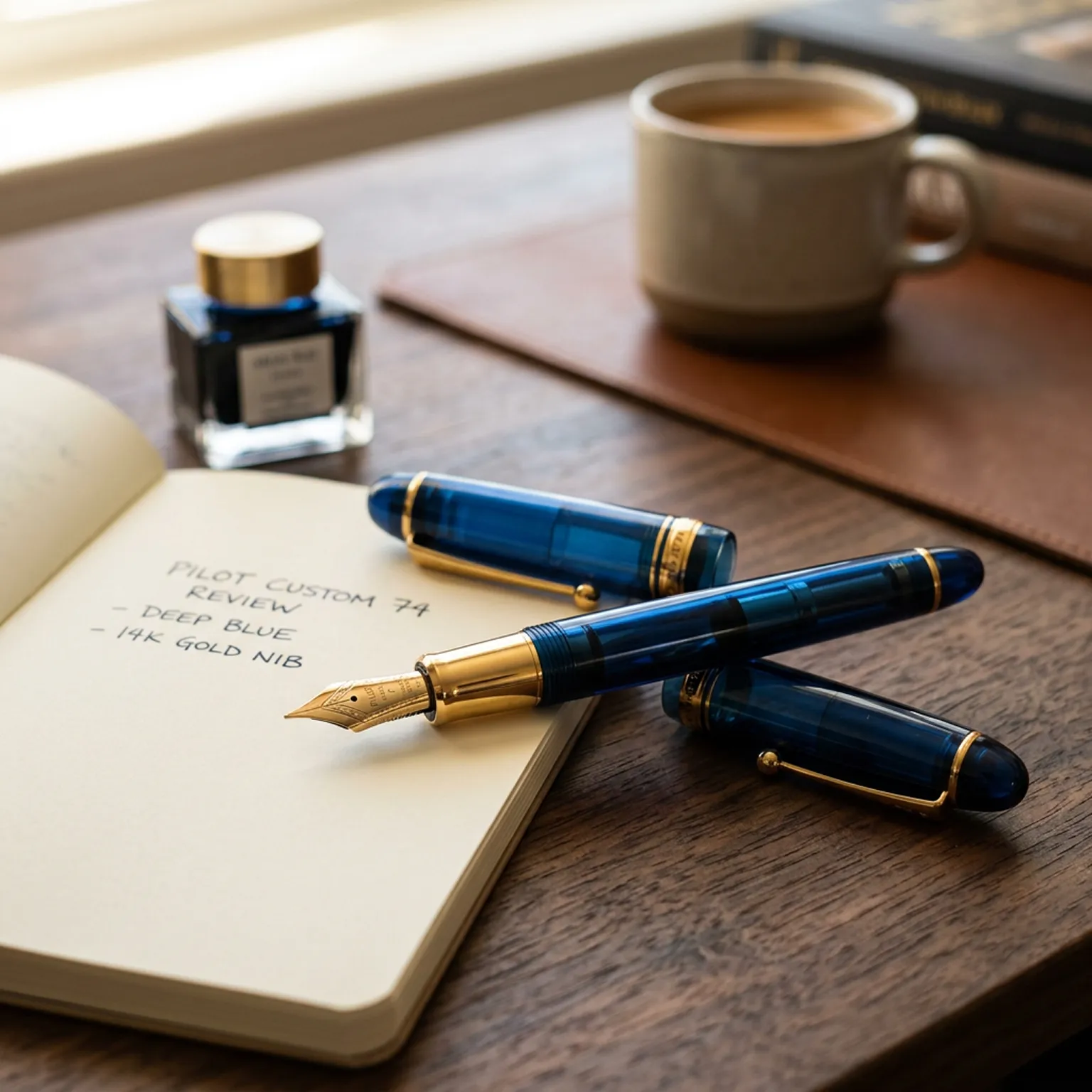
Why Pilot Custom 74 Fountain Pen leads
The headline. Owners repeatedly rank the 14k gold nib the smoothest in head-to-head comparisons against six to eight other pens — wettest and smoothest, with feedback 'like a sharp pencil on good paper.' A decade-later expert re-review speaks to how well it holds up.
— from our Pilot Custom 74 Fountain Pen review, nib smoothness dimension