Best weight and balance.
6 specimens scored on weight & balance.
Read the method →What weight & balance measures.
Weight and balance describe how the pen's mass distributes in the hand — total weight, where the center of gravity sits, and how both change when the cap posts on the back of the barrel. A pen can be light yet back-heavy, or substantial yet neutral; the number on the scale tells you less than where that weight sits relative to your grip.
This dimension separates pens that disappear during a writing session from pens you negotiate with. Fatigue over a full page of writing correlates more strongly with balance than with raw weight in owner reports — a nose-heavy 17-gram pen tires the hand faster than a neutral 25-gram one.
How we score it
We score weight and balance from manufacturer specifications (weight, dimensions, posted length) interpreted through aggregated owner reports of session fatigue, posted versus unposted preference, and pocket-carry practicality. High scorers stay neutral in the hand both ways; low scorers shift uncomfortably when posted or demand a specific carry style to work. Read the full methodology →
What to look for
Decide whether you post the cap before you weigh this leaderboard: some pens are designed around posting and feel stubby without it, while others go tail-heavy the moment the cap goes on. Owner reports usually say which camp a pen falls in.
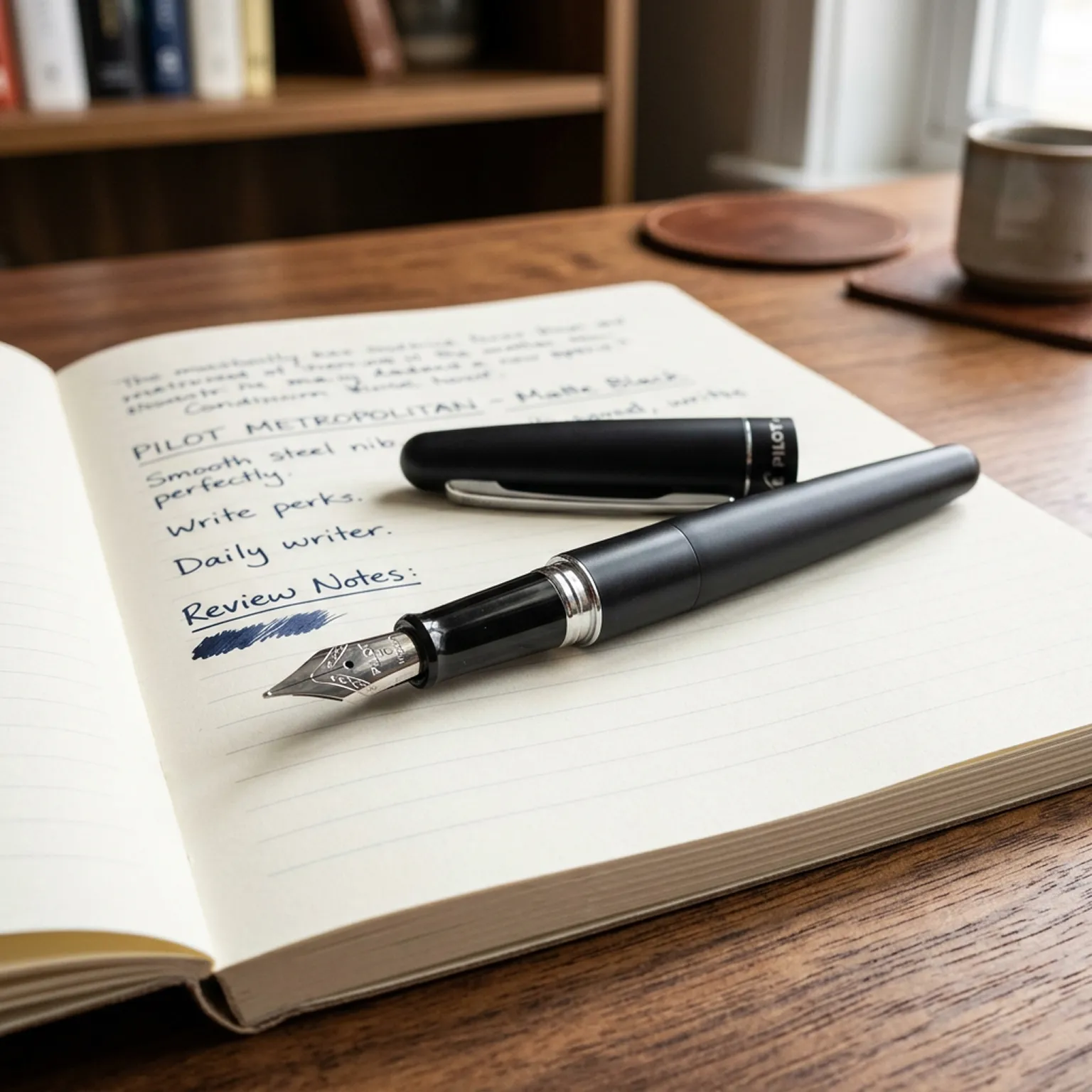
Why Pilot Metropolitan Fountain Pen leads
At ~25g, the Metropolitan is noticeably heavier than plastic competitors. Unposted balance is excellent for long sessions; posted, it becomes slightly cap-heavy but stays usable.
— from our Pilot Metropolitan Fountain Pen review, weight & balance dimension